
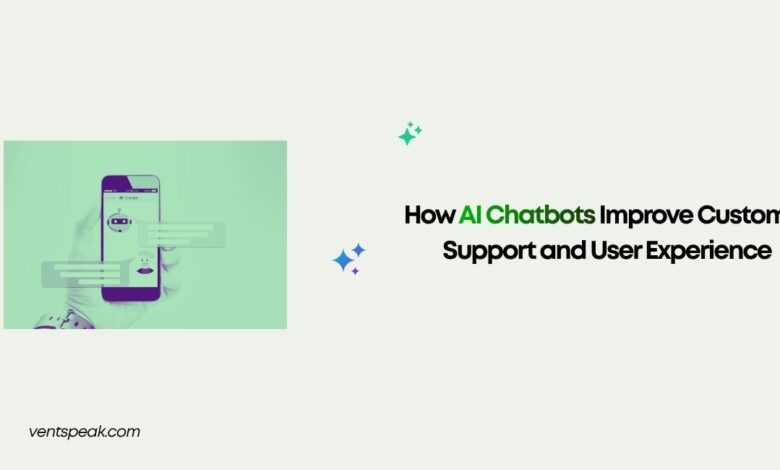
AI chatbots improve customer support and user experience (UX) by providing 24/7 instant issue resolution, hyper-personalized interactions, and omnichannel assistance. Built on advanced machine learning and Natural Language Processing (NLP), these smart virtual assistants automate up to 75% of routine inquiries, eliminate wait times, and streamline enterprise workflows. This allows human agents to focus on complex problem-solving, driving a 24% increase in customer satisfaction (CSAT) and scaling operations seamlessly.
The Evolution of AI in Modern Customer Experience (CX)
Customer experience (CX) encompasses every interaction a consumer has with a brand across their buying journey, heavily dictating brand loyalty and retention. Today, customer dynamics have shifted dramatically: 74% of customers will make a purchase based solely on their experience with a company.
Legacy, rule-based chatbots often frustrated users with rigid, scripted responses. Modern AI chatbots, powered by Large Language Models (LLMs) and conversational AI architectures, have transformed this paradigm. These tools understand context, intent, sentiment, and nuances, transforming static customer service into automated, friendly engagement.
Data indicates that customer loyalty is no longer tied strictly to product pricing or brand names; it hinges on speed and personalization. In fact, over 70% of customers expect personalized interactions, and 76% experience immediate frustration when brands fail to deliver this. For younger generations like Gen Z, AI-driven automation is the preferred first touchpoint—provided the support is instantaneous.
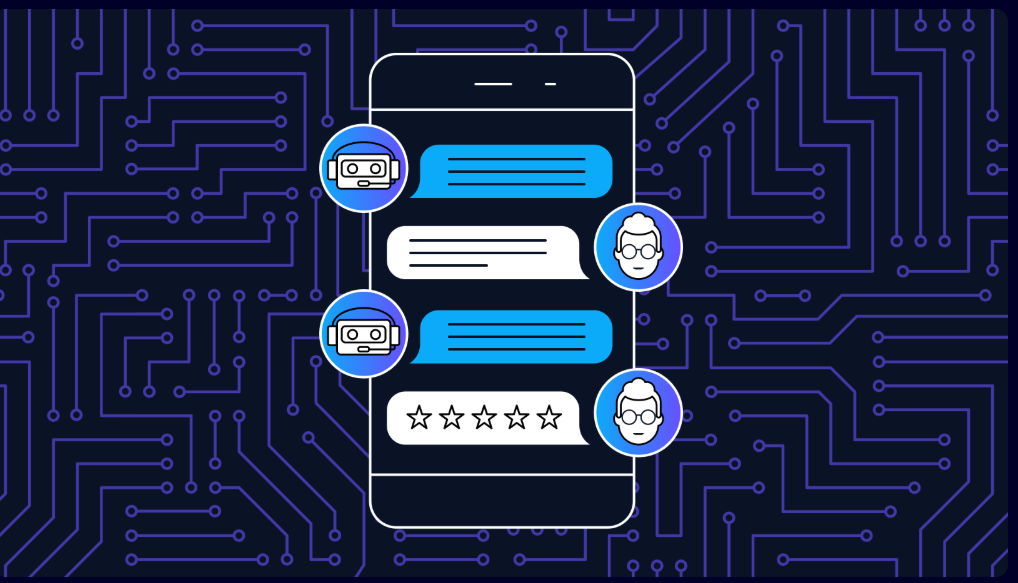
Benefits of AI Chatbots in Customer Support & UX
Integrating AI tools into customer-facing operations offers significant advantages for scalable SaaS systems, enterprise frameworks, and e-commerce platforms alike.
1. 24/7 Availability and Instant Resolution
Unlike human support teams, AI workflows operate continuously without breaks. By handling the first line of customer inquiries instantly, chatbots eliminate high queue wait times, which are a leading cause of customer churn.
Read More Blog :The Future of SaaS: Emerging Trends and Technologies in 2026
2. Advanced Personalization Through Data-Driven Insights
By scanning vast arrays of customer data, user history, and behavior patterns, machine learning algorithms allow chatbots to tailor conversations dynamically. They provide hyper-personalized product recommendations, targeted troubleshooting, and contextual solutions based on the user’s specific stage in the buying journey.
3. Streamlined Corporate Workflows and Agent Productivity
When AI automation handles up to 75% of standard Frequently Asked Questions (FAQs), enterprise helpdesks experience drastically reduced ticket volumes. This unclogs current service queues, giving human agents more time to resolve high-tier, empathetic, or structurally complex technical issues, boosting overall operational efficiency.
4. Predictive Behavioral Modeling
By processing behavioral cues, geographical data, and psychographic analytics, AI-powered systems can anticipate user needs before they explicitly state them. This predictive capacity allows SaaS tools and digital platforms to optimize touchpoints, serving relevant help documentation or promotional assets precisely when needed.
Read More Blog : How to Build a No-Code AI Workflow for Your Business
Performance Comparison: Traditional Support vs. AI-Driven Chatbots
| Performance Metric | Traditional Human Support | AI-Driven Conversational Chatbots |
| Response Time | Minutes to hours (subject to queue lengths) | Sub-second, instantaneous responses |
| Availability | Limited to standard business operating hours | Continuous 24/7/365 coverage |
| Scalability | Requires scaling head count and operational costs | Infinitely scalable via cloud infrastructure |
| Data Processing | Manual entry and silod review | Real-time analysis of customer databases |
| Average Cost per Ticket | High ($15–$25+ per manual interaction) | Ultra-low (fraction of a cent per API call) |
| Primary Focus | Complex problem-solving and emotional escalation | Routine FAQ automation & triaging |
Real-World Examples & SaaS Use Cases
Organizations across B2B and B2C verticals leverage productivity tools and automated conversational workflows to drive tangible growth:
- Epson (B2B Lead Engagement): Partnering with Conversica, the printer enterprise deployed an AI-powered automated email assistant to interact with enterprise leads using natural human syntax. The campaign resulted in a 51% response rate (a 240% increase over their baseline) and boosted qualified leads by 75%.
- ServiceMax (Website Optimization): Utilizing predictive customer behavioral data via Demandbase, ServiceMax anticipated user pathways on their site. This AI implementation successfully reduced the homepage bounce rate by 70% while boosting time-on-site and pages-per-session by 100%.
- Intercom Industry Research: Aggregate data from live chatbot deployments indicates that integrating intelligent conversational agents increases digital sales by 67%, accelerates support response speeds threefold, and elevates overall customer satisfaction scores by 24%.
Read More Blog :Top 5 Gadgets for Your Home Office
Read More Blog :How AI Agents Are Replacing Apps in 2026
Implementation Strategies for Businesses
To successfully leverage automated AI tools within business workflows, organization leaders should adopt a structured deployment framework:
Map Core Customer Journeys
Analyze your current support desk tickets to isolate repetitive queries. Create structured knowledge bases that your AI tool can ingest to handle high-frequency FAQs flawlessly from day one.
Leverage Low-Code Development Tools
Deploying AI workflows does not require months of custom core coding. Modern low-code development platforms enable citizen developers and product managers to quickly orchestrate, test, and embed hyper-personalized customer tools into apps and websites without straining engineering departments.
Read More Blog :Best AI Automation Tools for Small Businesses in 2026
Establish Seamless Human-in-the-Loop (HITL) Handoffs
Ensure that if a chatbot detects a high emotional threshold or an intricate problem, it routes the conversational history to a live human agent via CRM APIs (like Salesforce or HubSpot) without forcing the user to repeat their issue.
Common Mistakes to Avoid & Technology Limitations
While future technology trends point toward autonomous customer service, organizations frequently stumble due to predictable implementation errors:
- Over-Automation Without Human Backups: Forcing an entirely gated AI experience without giving users an option to escalate to a human agent damages user experience. Approximately 40% of customer support requests contain emotional components that require human empathy.
- Training on Poor Data Quality: AI models are only as effective as the data they consume. Training a customer assistant on fragmented, outdated internal documentation causes “hallucinations,” leading the bot to present incorrect policy or product details to users.
- Neglecting Privacy and Security Compliance: Modern enterprises must guarantee that AI endpoints comply fully with data isolation frameworks like GDPR, HIPAA, or CCPA. Failing to redact Personal Identifiable Information (PII) within chat prompts poses significant security risks.
Future Technology Trends: The Next Frontier of CX
Looking forward, artificial intelligence is projected to drastically change global economic productivity, with projections estimating a $16 trillion contribution to global GDP by 2030.
The future of customer support will center on multimodal AI agents capable of seamlessly transitioning between voice, text, and visual inputs. As generative AI models mature, these systems will move from reactive conversationalists to fully autonomous execution networks. They will proactively correct software errors, modify subscription settings via integrated APIs, and predict user intent with high accuracy.
By building customer-centric operational workflows powered by conversational AI tools today, businesses ensure scalability, lower transactional overhead, and create a distinct competitive advantage in an increasingly automated marketplace.
Frequently Asked Questions (FAQs)
How do AI chatbots improve customer satisfaction (CSAT)?
AI chatbots improve CSAT by providing instant, zero-latency answers to urgent questions around the clock. By removing traditional friction points—such as waiting on hold or navigating complex telephone menus—users experience rapid, accurate support, which correlates with higher satisfaction scores.
Can AI tools replace human customer support agents entirely?
No, AI tools are designed to augment human workforces rather than replace them. While machine learning algorithms excel at automating repetitive, data-heavy tasks, human support agents remain essential for handling complex technical troubleshooting, regulatory escalations, and highly empathetic customer encounters.
What is the role of machine learning in conversational AI tools?
Machine learning enables conversational tools to move past rigid scripts. Through natural language processing (NLP), bots analyze context clues, historical interactions, and feedback loops to continuously improve the accuracy, tone, and relevance of their answers over time.
How does hyper-personalization impact business growth?
Mastering hyper-personalization helps businesses achieve revenue growth between 6% and 10%. By utilizing AI insights to tailor marketing messaging, recommend relevant products, and deliver individualized support journeys, brands lower customer acquisition costs and increase customer lifetime value (LTV).