How to Optimize Content for AI Search Engines & Generative Search

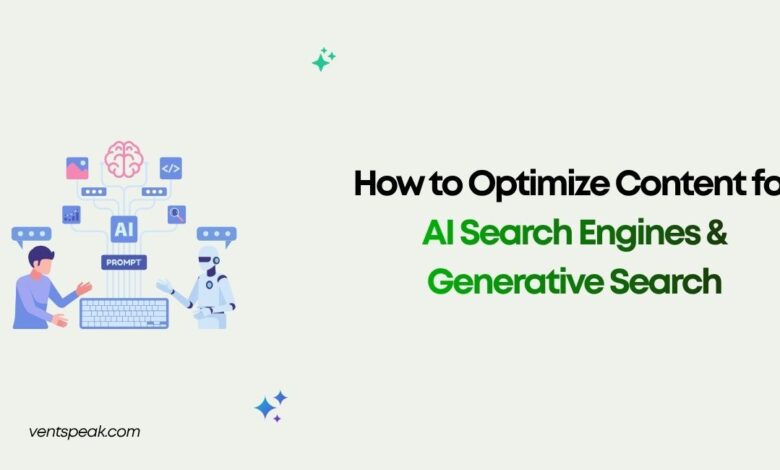
The search ecosystem has fundamentally shifted. Traditional search engine optimization (SEO) focused heavily on driving clicks to a list of blue links is no longer sufficient. In 2026, the rise of LLM-driven discovery platforms—such as Google AI Overviews, ChatGPT Search, Gemini, Claude, and Perplexity—has introduced a new paradigm: Generative Engine Optimization (GEO) and Answer Engine Optimization (AEO).
To maintain brand visibility, content creators can no longer just optimize for search crawlers; they must optimize for the AI agents that synthesize, summarize, and cite information. This comprehensive framework details how to adapt your content architecture to rank, get cited, and dominate across AI search engines & generative search.
How to Optimize for AI and Generative Search
To optimize content for AI search engines & generative search, you must pivot from keyword density to Entity-Based SEO, structural clarity, and direct answer delivery. AI engines rely on retrieval-augmented generation (RAG) to find authoritative sources.
- Structure Content for RAG: Use clear H2/H3 question headers followed immediately by a direct, 40–50 word answer block.
- Build Entity Authority: Embed clear subject-predicate-object relationships and leverage schema markup to help LLMs map your data.
- Prioritize EEAT: Include unique data, expert quotes, and verifiable facts. Generative models heavily favor highly cited, primary sources.
The Shift from Traditional SEO to GEO & AEO
Traditional search engines index keywords and rank pages based on backlink metrics and user signals. AI search engines & generative search platforms behave as reasoning engines. They crawl the web to extract facts, synthesize concepts across multiple domains, and build a conversational response for the user.
This evolution splits optimization into two primary disciplines:
- Generative Engine Optimization (GEO): Structuring content so an LLM can easily pull, rephrase, and synthesize your text into its final summary.
- Answer Engine Optimization (AEO): Crafting authoritative, highly specific answers optimized for direct voice, chat, and rapid-response engines.
Core Comparison: Traditional SEO vs. Generative Search Optimization
| Architectural Element | Traditional SEO Focus | AI & Generative Search Focus (GEO/AEO) |
| Primary Target | Search engine indexing crawlers (Googlebot). | Large Language Models (LLMs) & RAG vector databases. |
| Optimization Focus | Keyword density, URL strings, anchor text. | Semantic entities, informational density, structure. |
| Content Format | Long-form articles, listicles, broad guides. | Direct answer definitions, structured lists, bulleted data. |
| Discovery Model | User browses indexed web pages via links. | AI synthesizes answers, citing trusted sources as footnotes. |
| Success Metrics | Organic impressions, keyword rank, CTR. | Citation share, brand mentions, conversion attribution. |
Step-by-Step Strategy to Optimize Content for AI Engines
1. Master the “Blended Structure” Content Model
AI models value efficiency. When a generative engine scans your page to answer a user prompt, it looks for quick, explicit declarations.
- The Inverted Pyramid: Place the core conclusion or answer immediately beneath your H2 or H3 heading.
- The 45-Word Benchmark: Keep this initial summary paragraph between 40 and 50 words. This matches the ideal token window that AI models extract for featured snippets and AI overview snapshots.
- Deep Elaborations: Follow the brief summary with deep, technical context, case studies, or step-by-step implementations to satisfy human readers and verification algorithms.
2. Leverage Entity Realism and Semantic SEO
AI engines do not look at words as isolated strings; they view them as entities (objects, people, concepts) with distinct relationships.
- Avoid Vague Pronouns: Instead of writing “This software helps you do it faster,” use explicit entity terms: “Our automated workflow engine accelerates B2B lead scoring.”
- Implement Schema Markup: Use advanced JSON-LD schema (such as Product, Article, Organization, and FAQ schema) to explicitly define your data relationships to search engines.
3. Optimize for the RAG (Retrieval-Augmented Generation) Framework
Platforms like Perplexity and ChatGPT Search use RAG pipelines to pull web context before generating a reply. To ensure your text is chosen during the retrieval stage:
- Include Unique Statistics: Publish original data, internal benchmark metrics, and proprietary research reports. AI engines constantly seek fresh data points to justify their answers.
- Cite Authoritative Experts: Include clear, attributed quotes from recognized industry professionals. This builds your Experience, Expertise, Authoritativeness, and Trustworthiness (EEAT) baseline.
Read More Blog: What is Digital marketing — A complete guide 2026
Digital Marketing Fundamentals: Key Concepts, Tools, and Techniques
Digital Marketing Pillar: The Comprehensive Guide 2026: Ai in Digital Marketing
Common Pitfalls in Generative Engine Optimization
- Over-Optimizing for Single Keywords: Focusing purely on single search terms makes your text sound unnatural and leaves out the contextual variations that conversational AI tools look for.
- Gating Critical Data behind Forms: If your best insights, statistics, and answers sit entirely behind a hard registration firewall or inside an un-indexed PDF, AI search crawlers cannot use them as citations.
- Neglecting Content Freshness: Generative models are trained or grounded on real-time web context. If your core guides contain outdated facts from years ago, RAG filters will drop your pages in favor of modern resources.
Frequently Asked Questions (FAQs)
What are the main differences between SEO and GEO?
SEO focuses on boosting website visibility in traditional organic search listings through keyword targeting and technical site fixes. GEO (Generative Engine Optimization) adapts content so LLMs can easily read, summarize, and display it inside generative AI responses.
How do conversational engines choose which websites to cite?
Conversational engines select citations based on source authority (EEAT), structural clarity, and direct alignment with the user’s prompt. Platforms prioritize sites that deliver fast, accurate, and structurally clear answers to multi-step questions.
Does long-form content still rank well in AI-driven search engines?
Yes, but only if it remains highly informative and fluff-free. Long-form content ranks well if it uses clear headings, structured tables, and specific subtopics that allow an AI engine to easily parse and extract distinct parts of the page.
How can I track my performance inside AI Overviews and ChatGPT Search?
Traditional rank trackers cannot fully map dynamic AI responses. To measure performance, monitor brand impression changes inside Google Search Console’s AI Overview metrics, analyze referral traffic shifts from AI platforms, and track your total share of voice for key conversational prompts.