
The debate over whether artificial intelligence will reshape the marketing ecosystem is officially over. In 2026, we are no longer just experimenting with isolated prompts or basic automated email responses. We are fully operating in an era dominated by hyper-advanced AI automation, unified SaaS technologies, autonomous AI workflows, and generative search visibility.
According to global research data, including the McKinsey Global Survey on AI, organizations are capturing massive bottom-line value by completely redesigning their operational workflows around generative technologies. Marketers who fail to adapt find themselves invisible on modern search platforms.
This comprehensive guide serves as your strategic blueprint to mastering AI infrastructure, deploying the right AI tools, and building a highly scalable tech stack that dominates both traditional search engine results and modern AI search ecosystems.
What is AI in Digital Marketing?
Artificial Intelligence (AI) in digital marketing is the strategic integration of machine learning algorithms, natural language processing (NLP), advanced data analytics, and automation systems to streamline business operations and deliver hyper-personalized customer experiences.
Instead of relying on manual data analysis or generic, broad-bucket audience segmentation, modern marketing setups harvest vast data pools to predict precise customer intent, behaviors, and long-tail query patterns in real-time. This allows brands to shift from reactive marketing to predictive, scalable engagement.
Core Applications of AI in Digital Marketing
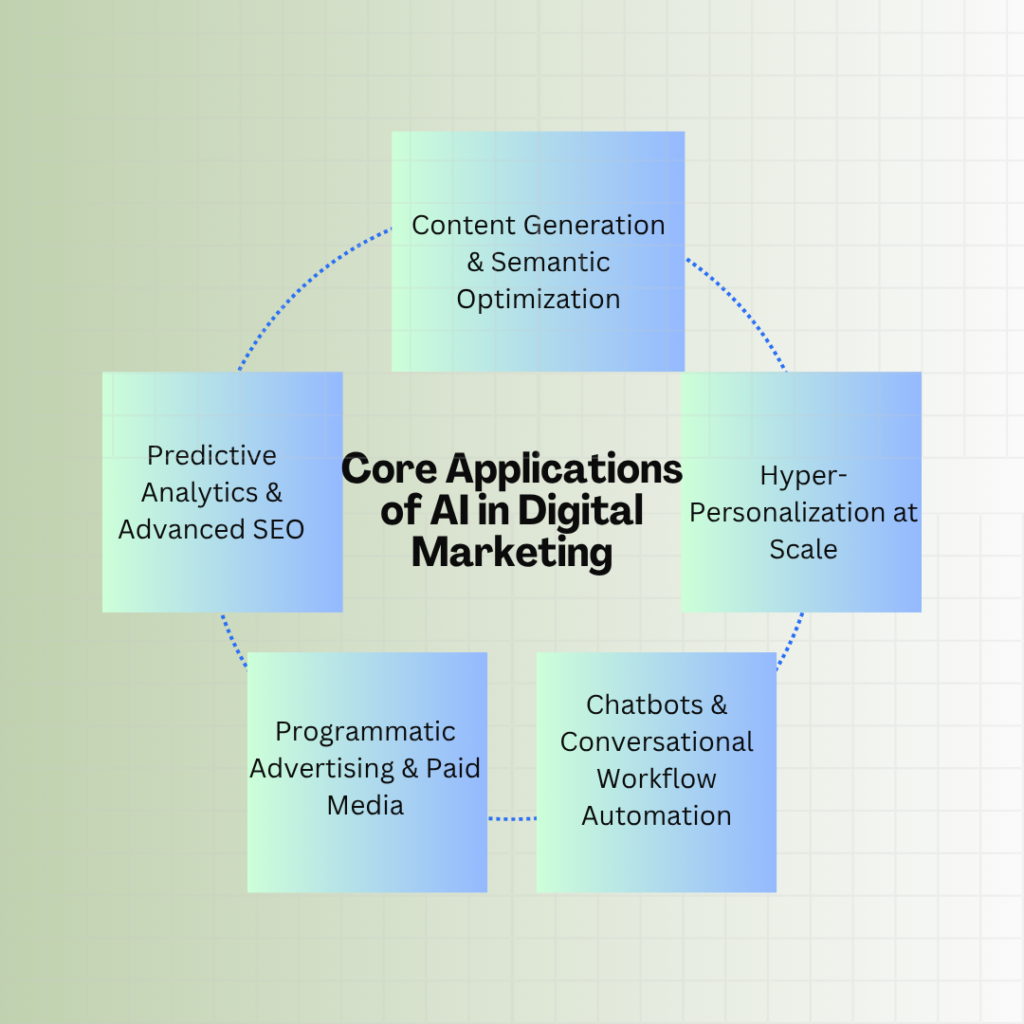
Integrating AI into your digital roadmap requires a clear understanding of where automation can act as a force multiplier. Let’s explore the core pillars where modern SaaS features and machine learning deliver the highest return on investment (ROI).
Read more blog : GEO Explained: How Generative Engine Optimization Works Alongside SEO
1. Content Generation & Semantic Optimization
The volume of content required across omni-channel campaigns leaves traditional creative teams resource-poor. Advanced generative platforms like Writer or Claude allow teams to produce high-quality, long-form content, ad variations, and localized copy at scale. However, the rulebook has changed: content must be tailored for semantic entity-based search and optimized to rank within AI search summaries.
2. Predictive Analytics & Advanced SEO
Traditional keyword research has evolved into predictive search analysis. By using smart tools like Surfer SEO, machine learning models analyze changing search engine results pages (SERPs) to forecast algorithmic shifts. This ensures your content retains high topical authority and visibility against evolving generative search layouts.
3. Hyper-Personalization at Scale
Modern customer data platforms, such as Optimove, continuously track user data points—including historical browsing actions, device profiles, and content engagement patterns. Much like Netflix’s recommendation algorithm, this structural data triggers dynamic web layouts and tailored product recommendations automatically.
4. Programmatic Advertising & Paid Media
Managing manual bidding strategies for pay-per-click (PPC) media is increasingly inefficient. Smart bidding systems analyze real-time intent data to optimize ad placements, generate contextual ad copy, split-test creative assets automatically, and mitigate click fraud across major channels like Google and Meta Ads.
5. Chatbots & Conversational Workflow Automation
Customer support acts as the frontline for modern lead qualification. Using NLP platforms like Manychat or Drift, conversational virtual assistants manage 24/7 client interactions on global channels, instantly qualifying marketing leads while lowering overall operational costs.
Implementation Strategy: The Modern AI Marketing Tech Stack
Navigating the vast ecosystem of AI tools requires a structured approach to selection and software integration. The implementation framework below outlines how to organize your marketing stack around specific functional areas for maximum efficiency.
| Marketing Function | Core AI Tool | Primary Business Value | Key Automation Workflow |
| Content Creation | Writer / Midjourney | High-volume asset creation & cross-platform repurposing | Automated brief-to-draft asset generation pipelines |
| Data & Analytics | Tableau / ChatGPT Advanced | Rapid pattern extraction & anomaly detection | Automated data pipeline cleansing and predictive forecasting |
| Workflow Connections | Zapier | Eradicates manual cross-platform data handling | Real-time lead sync from ad platforms straight to CRMs |
| On-Page SEO Optimization | Surfer SEO / Perplexity | Maps semantic entities & topical authority | Real-time SERP competitive gap analysis and content grading |
| Email Marketing | Mailchimp / HubSpot AI | Hyper-personalized delivery times and content triggers | Behavioral-based automated email flows |
Real-World Case Study: Sephora’s Omnichannel AI Scaling
A prime example of execution is global beauty retailer Sephora. By embedding conversational AI chatbots and custom digital tools like their Virtual Artist App directly into their e-commerce environment, the brand transformed how consumers sample and select cosmetics online.
Instead of relying on traditional, flat product listings, the brand used machine learning to deliver individual shade matching and targeted product recommendations. According to Statista data tracking digital innovation metrics, Sephora’s e-commerce ecosystem successfully scaled from $580 million to over $3 billion in annual digital sales, proving the immense financial impact of automated customer experiences.
How We Evaluate AI Marketing Tools & Frameworks
To build a reliable digital framework, our methodology assesses marketing applications, SaaS technologies, and automated software against six key performance standards:
- Algorithmic Innovation: Does the platform utilize state-of-the-art NLP, predictive modeling, or computer vision, or is it just a basic wrapper API?
- Scalability & Infrastructure: Can the software process massive customer datasets and handle fluctuating traffic spikes without latency spikes?
- Ease of Integration: How easily does the tool sync with legacy CRMs, database configurations, and standard API frameworks?
- Workflow Automation Capabilities: Does it provide cross-app triggers, autonomous workflow paths, and hands-off background execution?
- User Experience (UX): Is the interface intuitive enough for marketing managers to extract actionable data insights without needing data engineering degrees?
- Security & Compliance Protocols: What measures are built-in to protect sensitive user records and comply with global data regulations like GDPR?
The Operational Balance: Mitigating Risks and the “Human in the Loop”
While the advantages of productivity gains are clear, businesses must actively address the technical and ethical limitations of artificial intelligence:
- Algorithmic Bias: Machine learning models mirror the data they are trained on. Teams must continuously monitor outputs to prevent systemic bias.
- Data Accuracy & Hallucinations: AI tools can generate incorrect data patterns. Relying blindly on unverified analytics can lead to costly strategic missteps.
- The HITL Framework: Maintaining a Human-in-the-Loop approach is essential. AI functions best as an incredibly fast co-pilot. Human oversight is still required to handle high-level strategic alignment, brand compliance, and genuine emotional resonance.
Read more blog : 10 Instagram Growth Hacks for Small Businesses 2026
Future Trends: The Road Ahead for AI and SaaS
Looking forward, the digital marketing ecosystem is transitioning toward fully autonomous operations:
- AIOps & Autonomous Workflow Agents: The industry is moving past basic software integrations. Future tools will independently manage cross-channel budget reallocations based on performance data without requiring manual sign-offs.
- AEO & GEO Optimization Dominance: Traditional search ranking factors have permanently adapted. To stay visible in AI-driven search environments, content must prioritize conversational sentence structures, schema markup, and clear semantic logic.
Conclusion: Driving Long-Term Growth with Integrated AI
Embracing AI in digital marketing is no longer about deploying a standalone chatbot or using a copy assistant out of novelty. True competitive advantage belongs to businesses that seamlessly weave machine learning, scalable SaaS systems, and data-backed insights directly into their operational strategies. By designing structured automation pipelines while preserving human creativity, your brand secures long-term growth on the modern web.
Frequently Asked Questions (FAQ)
What is the core difference between SEO, GEO, and AEO in 2026?
Search Engine Optimization (SEO) focuses on ranking web pages in traditional search engine results. Generative Engine Optimization (GEO) ensures your content is picked up, cited, and summarized by AI search engines. Answer Engine Optimization (AEO) specifically optimizes content to answer direct conversational user queries within featured snippets, voice search, and AI overviews.
Will AI automation completely replace human digital marketing professionals?
No. While AI handles repetitive, data-heavy tasks, it lacks genuine emotional intelligence, abstract cultural understanding, and high-level strategic vision. The future belongs to marketers who understand how to co-pilot with AI, utilizing automation to scale their creative output and technical precision.
How can small businesses implement AI workflows without enterprise budgets?
Smaller businesses can leverage affordable, low-code SaaS technologies like Zapier to link existing tools, or utilize built-in AI modules within mainstream platforms like Mailchimp, Canva, and Google Ads. Focusing on micro-automations allows small teams to scale their marketing without heavy upfront engineering costs.