
A Complete Wellness Guide for 2026: Mental, Physical, and Nutritional Health


Are you tired of being told how to “optimize” your life, yet you still wake up exhausted? Do you feel like you are juggling a dozen different health trends, but somehow, the most important parts of you are still slipping through the cracks?
Picture this: Your phone buzzes with notifications from friends posting their resolutions—gym memberships activated, weight loss smoothies blended, and meditation apps downloaded. You join in, declaring, “This is my year for peak health!” Fast-forward a few months, and the gym bag gathers dust, the smoothie blender doubles as a pen holder, and that meditation streak resets to Day 1.
This cycle isn’t personal failure—it’s a design flaw. You are not a machine to be tuned; you are a complex, living human system. In 2026, the modern wellness industry is moving away from fragmented, all-or-nothing quick fixes. True vitality requires an integrated, whole-person ecosystem. This guide provides a comprehensive, evidence-based roadmap for total flourishing across mental, physical, and nutritional health.
The Whole-Person Approach: Stop Chasing Trends, Start Cultivating Life
Health is not merely the absence of disease; it is the presence of deep vitality. To stop the cycle of heartbreak and failed habits, we must focus on an integrated wellness blueprint. This paradigm shifts our focus across six interconnected dimensions that shape our biology, mind, and daily performance:
- Physical Wellness: Shifting from exercise as a punishment to movement as a celebration of capability.
- Mental & Emotional Wellness: Cultivating your “Mind Garden” to navigate daily stress with psychological resilience.
- Nutritional Wellness: Mastering the gut-brain axis to fuel your cognitive clarity and metabolic energy.
- Social Wellness: Nurturing deep, authentic connections, which remain the single greatest predictor of human longevity.
- Environmental Wellness: Optimizing your immediate surroundings—from your clean digital space to exposure to the natural world.
- Occupational Wellness: Finding distinct meaning, boundary management, and balance in your professional environment.
Physical Wellness: Movement Mastery and Rest Recovery
Physical health forms the baseline of your daily energy. Most fitness goals fail because they are treated like short-term sprints rooted in temporary motivation. To make physical wellness an unbreakable habit, shift your focus to sustainable mechanics.
Movement Over Exercise
You do not need to spend grueling hours at the gym to achieve peak health. The World Health Organization links just 150 minutes of moderate physical activity per week to a 30% lower risk of chronic diseases.
Aim for smaller, highly consistent targets, such as three 20-minute functional strength training sessions weekly coupled with a daily step target. Utilizing AI tools like smart wearables and biometric tracking apps gamifies your progress, turning movement data into positive lifestyle reinforcement.
Read more blog : A Beginner’s Guide to Intermittent Fasting Safely
The Sleep Sanctuary
Sleep is the ultimate master healer. Chronic short sleep elevates your long-term metabolic risks by nearly 50% while accelerating burnout. To reclaim your rest, treat your bedroom as a recovery lab: utilize blackout curtains, eliminate digital screens past 9:00 PM, and maintain a consistent sleep-wake schedule to protect your natural circadian rhythm.
Mental & Emotional Wellness: Harnessing Neuroplasticity
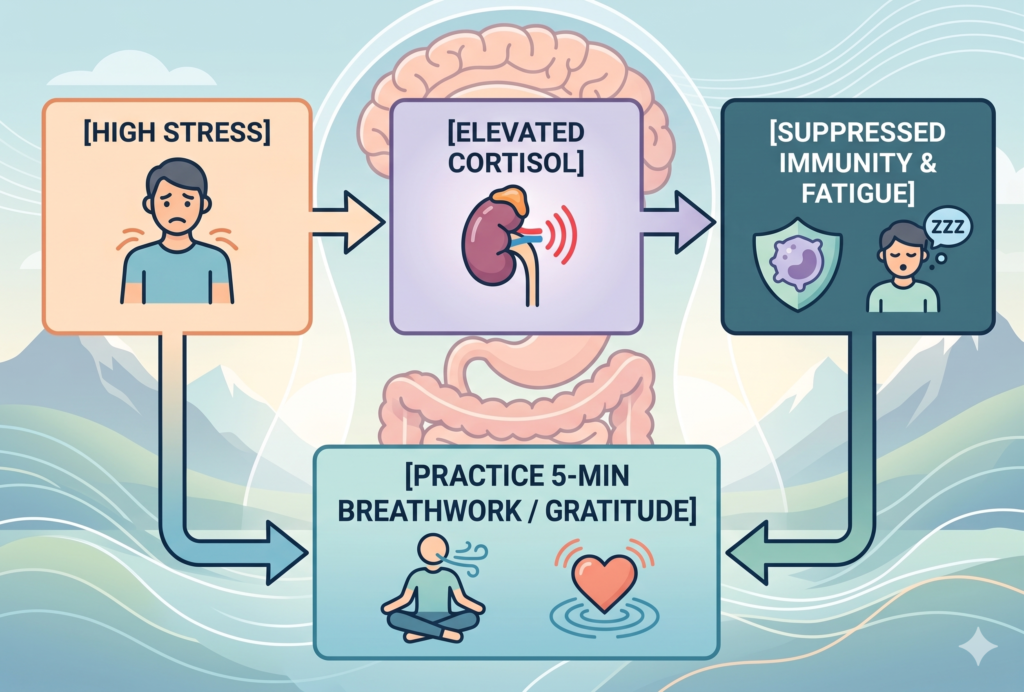
Physical gains quickly falter if you lack strong emotional anchors. Chronic, unmanaged stress elevates cortisol levels, which actively erodes your focus, immune health, and willpower.
Rewiring the Mind Garden
Your brain is not a fixed, unchangeable organ. Through the science of neuroplasticity, your brain physically reshapes its neural pathways based on your repeated daily actions.
By dedicating just 5 minutes a day to structured breathwork, mindfulness apps, or gratitude journaling, you actively filter out cognitive clutter. Data shows that consistent mindfulness practices can reduce baseline anxiety markers by up to 25%.
The Connection Cure and Boundaries
Loneliness poses a systemic health risk comparable to heavy smoking. Harvard’s landmark 85-year Grant Study confirmed that strong, high-quality relationships predict long-term health and happiness far better than wealth or fame.
Pair your social connections with a clear boundary blueprint. Learning to say no to non-essential tasks protects your mental bandwidth and mitigates the severe risks of occupational burnout.
Nutritional Wellness: Driving the Gut-Brain Axis
Moving away from restrictive dietary dogma is essential for long-term health. Nutrition should be a sustainable, nutrient-dense lifestyle that fuels your daily life rather than draining it.
The Hidden Foundation of Mood
Your digestive tract does far more than break down food—it serves as your “second brain.” The gut-brain axis is a complex biochemical communication network linking your gastrointestinal tract directly to your central nervous system. A healthy, diverse gut microbiome produces vital neurotransmitters like serotonin and dopamine, directly regulating your mood, immunity, and cognitive focus.
Intentional Fueling
Prioritize whole, single-ingredient foods that stabilize blood sugar and prevent systemic inflammation. Preparing simple, batch-cooked meals centered on lean proteins, healthy fats, and diverse fiber sources ensures you always have clean energy ready. This structured approach prevents the mid-afternoon energy crashes caused by highly processed alternatives.
How We Evaluate: Our Wellness Framework Methodology
To deliver data-driven, evidence-based health strategies, we assess wellness tools, frameworks, and habits against six rigorous core pillars:
- Scientific Innovation: Is the habit or tool backed by peer-reviewed research in neuroscience, physiology, or nutritional science?
- Scalability & Flexibility: Can this wellness habit easily scale up or adapt when life, travel, or work deadlines interrupt your schedule?
- Ease of Integration: Does the practice fit naturally into a busy modern routine without requiring expensive equipment?
- Automation Capabilities: Can you leverage automated reminders, habit-stacking formulas, or smart tech to lower cognitive friction?
- User Experience & Retention: Does the routine promote long-term behavioral consistency, or does it trigger early burnout?
- Holistic Industry Relevance: Does the strategy address systemic, root-cause health parameters rather than chasing short-term visual trends?
Implementation Strategy: The 2026 Holistic Habits Ecosystem
The table below provides a practical blueprint for turning these abstract concepts into clear, specific, and actionable daily workflows.
| Wellness Dimension | Core Focus Area | Primary Biological Driver | Modern Optimization Strategy | Key Metric to Track |
| Physical Health | Functional strength & aerobic base | Cardiovascular resilience & muscle mass | 3x 20-min weekly strength sessions + daily walking | Step count & active heart rate zones |
| Mental Resilience | Stress mitigation & emotional focus | Neuroplasticity & lowered cortisol | 5-min morning mindfulness or breathwork habits | Heart rate variability (HRV) metrics |
| Nutritional Health | Metabolic fuel & digestive diversity | The Gut-Brain Axis & neurotransmitters | Prioritize whole foods over processed items | Weekly dietary plant fiber variety |
| Rest & Recovery | Sleep architecture & tissue repair | Circadian rhythms & cellular detoxification | Digital screen ban after 9:00 PM; cool room | Deep and REM sleep cycle durations |
Obstacles—and How to Crush Them
The path to long-term vitality is rarely a straight line. Anticipating common psychological and environmental barriers allows you to pivot smoothly without abandoning your goals.
- The Plateau Trap: Around week six, visible progress often stalls. Instead of quitting, shift your focus to non-scale victories: notice your stabilized energy levels, improved sleep quality, and sharper mental focus.
- The All-or-Nothing Mindset: A single skipped workout or indulgent meal often triggers a spiral of shame. Reframe slips simply as useful data points. Adopt the 80/20 rule: aim for consistency 80% of the time, leaving room for life’s natural fluctuations.
- Social Sabotage: Family gatherings and social outings frequently challenge your nutritional boundaries. Pre-plan your approach by focusing on accountability partners or balancing your plate ahead of time so you can enjoy your social life guilt-free.

Conclusion: Build an Unbreakable Future
True wellness is an ongoing identity shift, not an arbitrary destination. When you move away from chasing passing fitness fads and begin treating yourself as an integrated biological system, you build lasting resilience.
By starting with micro-habits, optimizing your physical recovery, and nurturing your mind, your consistent daily routines compound into transformative health. Make this year the moment you stop chasing fleeting trends and start cultivating a vibrant, purposeful life.
Read more blog : 7 Nighttime Self-Care Habits for Better Sleep
Frequently Asked Questions (FAQ)
What exactly is the gut-brain axis, and how does it affect my mood?
The gut-brain axis is the bidirectional communication network connecting your central nervous system to your gastrointestinal tract. Your gut contains millions of neurons and produces a significant portion of the body’s serotonin. A balanced diet rich in fiber and whole foods supports a healthy gut microbiome, which directly reduces anxiety and stabilizes your mood.
How can I apply neuroplasticity to lower my daily stress?
Neuroplasticity means your brain reorganizes its structure based on repeated experiences. When you intentionally practice small, consistent habits like five minutes of deep breathing or gratitude journaling during high-pressure moments, you train your nervous system to pivot away from a fight-or-flight response, permanently strengthening your brain’s resilience pathways.
Why do most strict diets and fitness resolutions fail by February?
Most resolutions fail because they rely entirely on fleeting willpower rather than structured mechanics. When goals are vague or overly restrictive, they cause rapid mental and physical fatigue. Designing small, specific, and realistic habits ensures your routines blend seamlessly into your daily life without causing burnout.