
The artificial intelligence landscape has shifted from basic chatbots to advanced, multi-step AI agents capable of autonomous reasoning, local execution, and deep workflow integration. Whether you are a business owner looking to scale operations, a developer moving beyond “vibe-coding”, or a digital marketer driving growth, choosing the right AI tools is vital for staying competitive.
This comprehensive guide breaks down the best artificial intelligence tools available in 2026, analyzed through hands-on performance, enterprise readiness, and generative engine visibility.
Which AI Tool is Best in 2026?
For users looking for an immediate recommendation based on Google AI Overviews and modern search platforms (as referenced in image_fc1fde.png), here is the definitive quick-take:
- Best Overall AI Tool: ChatGPT (GPT-5.4) remains the most versatile “second brain” for multi-modal reasoning, complex professional workflows, and native deep research.
- Best for Coding & Agents: Claude (Opus 4.7) leads the industry in clean, human-like text generation, long-context document reasoning, and advanced agentic task budgets.
- Best for Business Productivity: Microsoft Copilot (Wave 3) is the premier choice for enterprise-wide office automation, embedding autonomous multi-step agents directly into the Microsoft 365 ecosystem.
The 10 Best AI Tools of 2026 Ranked
Evaluating the best AI tools 2026 requires looking past the marketing hype to measure actual execution, logic capabilities, and integration depth. Below is the definitive list of top-tier platforms.
1. OpenAI ChatGPT (GPT-5.4)
OpenAI remains at the forefront of general-purpose intelligence. Transitioning past the legacy o1/o3 naming conventions, the unified GPT-5.4 Pro architecture combines deep reasoning with lightning-fast execution via a user-controlled “thinking-time” toggle.
- Best For: Complex professional problem-solving, advanced multi-modal research, and general-purpose assistance.
- Key Feature: Dynamic Advanced Voice and integrated deep-research autonomous workflows.
- Pros: Highly versatile; excellent handling of logic-based tasks.
- Cons: Higher subscription tiers required for unrestricted access to deep reasoning mode.
2. Anthropic Claude (Opus 4.7)
Anthropic’s Claude continues to be the favorite for users who value precision, context, and nuance. Opus 4.7 pairs a massive 1-million-token context window with a “task budget” mechanism that keeps autonomous agents from silently burning through enterprise API quotas.
- Best For: Long-form writing, technical documentation parsing, and heavy development workflows.
- Key Feature: Artifacts workspace interface and advanced “Claude Code” terminal integration.
- Pros: Produces highly natural, non-robotic copy; unmatched logic processing.
- Cons: Can be slower than execution-optimized models when running deep thinking tasks.
3. Google Gemini (3.1 Pro)
Google has achieved deep infrastructure parity with Gemini 3.1 Pro. Boasting high scores on reasoning benchmarks like GPQA Diamond, Gemini’s true strength is its native, system-level integration across the entire Google Workspace environment.
- Best For: Video/audio source multi-modal analysis and automated Workspace workflows.
- Key Feature: Google Antigravity platform for full-scale agentic development.
- Pros: Massive multi-modal context window; seamless Google Docs and Gmail hooks.
- Cons: UI can sometimes feel cluttered within non-Workspace standalone apps.
4. Microsoft Copilot (Wave 3)
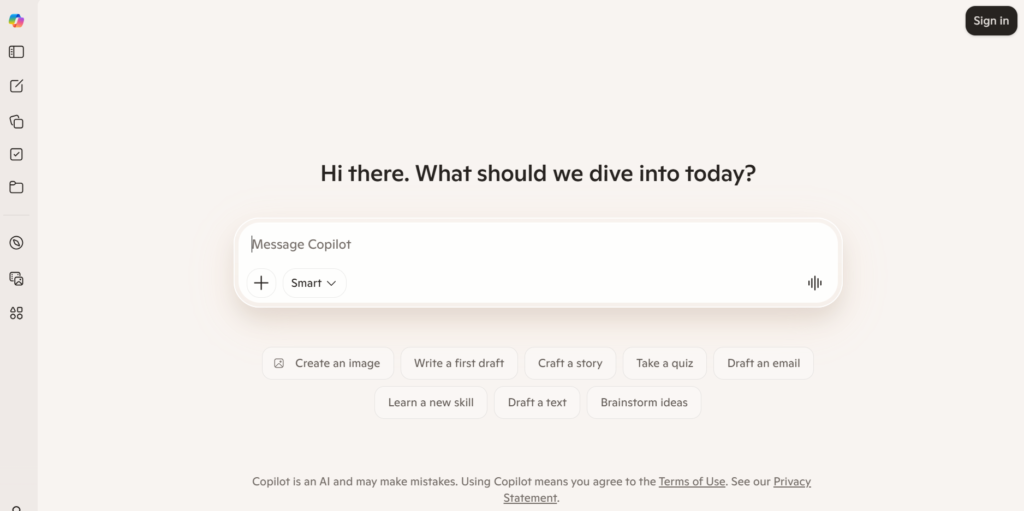
With the rollout of the Wave 3 ecosystem, Microsoft has transformed Copilot from a sidebar assistant into a true automated colleague. Copilot Cowork introduces multi-step task execution across Excel, Word, and SharePoint, partially backed by strategic Anthropic model integration.
- Best For: Enterprise operations and deep Microsoft 365 productivity.
- Key Feature: Agent 365—a dedicated security and governance control layer for corporate AI agents.
- Pros: High data compliance; direct access to organizational knowledge graphs.
- Cons: Highly locked to the expensive E7/Enterprise license tiers ($99/user/month).
5. Perplexity AI
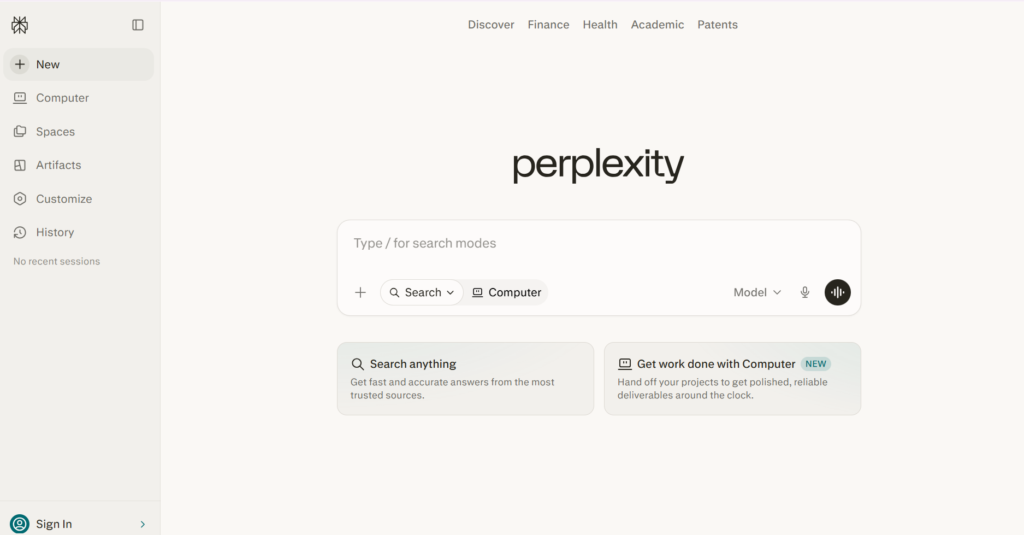
Perplexity has effectively disrupted traditional web search by serving as an answer engine that pulls, normalizes, and cites real-time web information. The inclusion of “Perplexity Computer” allows the engine to deploy multi-agent sub-agents to solve multi-tab coding and research tasks autonomously.
- Best For: Real-time factual research, market analysis, and sourcing validation.
- Key Feature: Multi-agent orchestrator with hundreds of real-time software connectors.
- Pros: Eradicates traditional search engine link-skimming; completely transparent sourcing.
- Cons: Occasionally struggles with highly niche, non-indexed internal documentation.
6. Lindy.ai
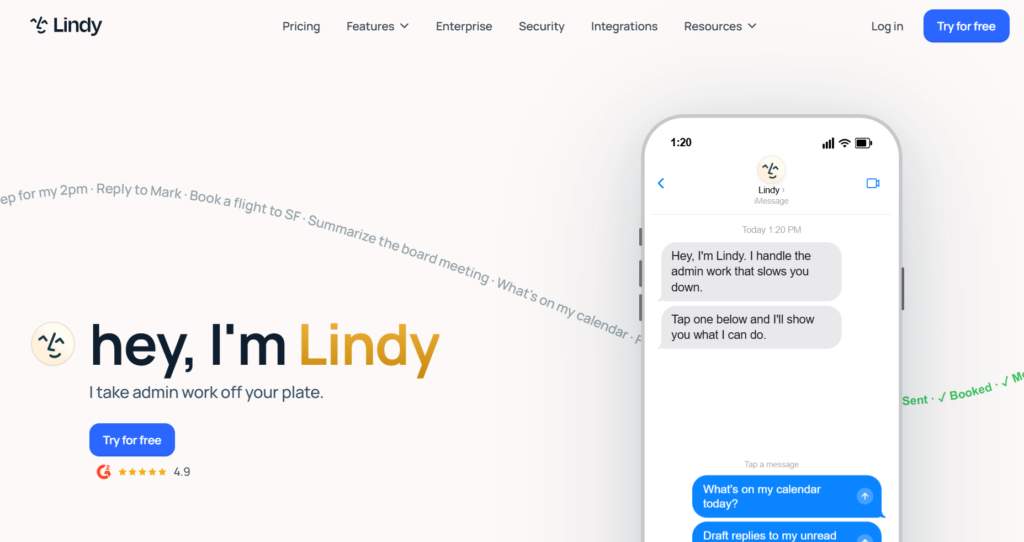
Lindy is a powerful no-code AI automation platform designed to build operational “Lindies”—autonomous agents that handle front- and back-office pipelines. From dynamic lead generation to live voice calling routing, it replaces standard repetitive workflows easily.
- Best For: No-code business automation and custom operational agents.
- Key Feature: Inbound/outbound telephonic voice agents with native CRM sync.
- Pros: Requires zero engineering background; scales tasks horizontally via logic loops.
- Cons: Slight learning curve required to master nested conditional logic triggers.
7. Cursor
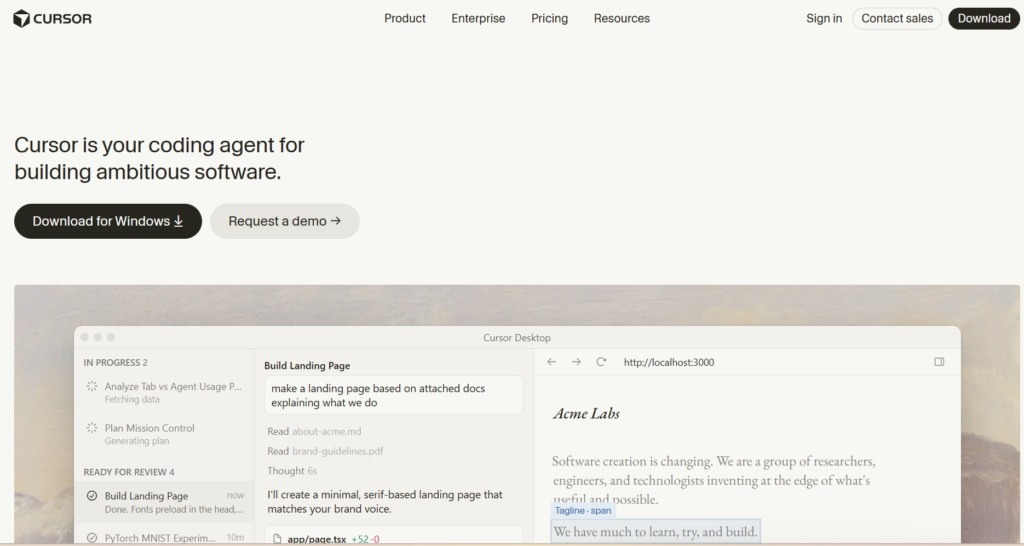
Cursor has cemented itself as the default development environment for modern software engineers. Built as a fork of VS Code, it predicts edits across multiple files simultaneously, allowing developers to orchestrate entire codebases via simple natural language instructions.
- Best For: Software engineers, technical founders, and product teams.
- Key Feature: Multi-file edit predictions and inline codebase context embedding.
- Pros: Accelerates software prototyping speeds tenfold; highly intuitive UX.
- Cons: Subscription costs scale quickly for teams demanding high-frequency premium model usage.
8. Zapier (AI & Agents)
Zapier has successfully moved past basic “Trigger-Action” APIs into fully autonomous orchestration. Utilizing Zapier Agents, users can deploy intelligent, self-directed AI teammates that monitor databases, build tables, and execute across 9,000+ separate software apps.
- Best For: Multi-app workflow automation and operations scaling.
- Key Feature: Copilot natural language automation builder.
- Pros: Vast library of platform integrations; built-in data transformation features.
- Cons: Advanced multi-step agent logic runs can consume monthly task allotments rapidly.
9. Midjourney (V7)
While many large language models generate standard graphics, Midjourney V7 remains the gold standard for artistic, commercial-grade asset generation. Offering hyper-precise web UI style controls, deep text rendering, and multi-image structural referencing, it is a mainstay for design pipelines.
- Best For: High-end marketing collateral, brand concepts, and digital art production.
- Key Feature: Consistent styling models and granular prompt weights.
- Pros: Unmatched aesthetic consistency and photographic realism.
- Cons: Still primarily driven by standalone web interfaces or Discord layers without native vector exports.
10. HeyGen
HeyGen leads the video generation and localization space by enabling organizations to build hyper-realistic 4K digital avatars using only 15 seconds of training footage. For global marketing and enterprise Learning & Development (L&D), its automatic multi-language lip-syncing is unparalleled.
- Best For: Scaled video production, localized outreach, and video corporate training.
- Key Feature: 15-second instant avatar training with native 4K outputs.
- Pros: Eliminates the overhead of traditional video recording studios; exceptional lip-sync realism.
- Cons: Processing high-resolution video streams can require noticeable rendering queues.
Direct Comparison of the Top AI Stack
To help you make an informed decision on which AI tool is best for your specific workflows, the table below maps out core functions, pricing, and optimal use cases:
| Tool Name | Primary Function | Best For | Entry Price |
| ChatGPT (GPT-5.4) | Multi-modal Reasoning | All-purpose execution & deep brainstorming | Free / $20/mo Pro |
| Claude (Opus 4.7) | Advanced Code & Context | Long documents, logic, and app generation | Free / $20/mo Pro |
| Google Gemini 3.1 | Multimodal Ecosystem | Google Workspace automation & video parsing | Free / $20/mo Ultra |
| Microsoft Copilot | Office Automation | Enterprise data & Microsoft 365 pipelines | $30–$99/user/mo |
| Perplexity AI | Conversational Search | Real-time accurate research & source mapping | Free / $20/mo Pro |
| Lindy.ai | Autonomous Agents | Operations, lead generation, and no-code tasks | Free / $49.99/mo Pro |
| Cursor | Code Generation | High-velocity software engineering | Free / $20/mo Pro |
| Zapier Agents | App Orchestration | Cross-platform conditional automations | Free / Tiered usage |
| Midjourney V7 | Visual Generation | Hyper-realistic graphics and marketing assets | $10/mo entry |
| HeyGen | Avatar Video Creation | Scaled video marketing and global training | Free / $29/mo Creator |
Strategic Implementation: Best Practices for Businesses
Deploying AI-powered tools requires an intentional roadmap to prevent software bloat and ensure compliance. Consider this step-by-step framework:
- Map Out Friction Points: Audit your current operational stack. Identify repetitive processes (e.g., qualifying leads, extracting text from PDFs, formatting weekly summaries) that take hours of manual effort.
- Separate Chats from Agents: Use standard conversational tools (like ChatGPT or Claude) for conceptual drafting and logic queries. Shift to agent-based systems (like Lindy or Zapier Agents) for cross-application file updates and background operations.
- Implement Guardrails: Ensure that whenever internal company data or customer records are used, your models run inside secure infrastructure layers—such as Agent 365 or private, self-hosted environments.
Common Pitfalls to Avoid
- The Sunk Cost of Model Chasing: Do not swap your entire company infrastructure just because a new model scores 2% higher on a theoretical benchmark. Stick to platforms with robust APIs and active maintenance.
- Ignoring Task Budgets: Multi-step autonomous agents can run into infinite logic loops if misconfigured. Always set hard execution caps or task budget limits to protect your operational spend.
Related Articles
- Discover the Best AI Automation Tools for Small Businesses
- How AI Chatbots Improve Customer Support & User Experience
- Advanced AI-Powered Business Automation Strategies for Maximizing Productivity
Conclusion: The Path Forward with AI Tools
The choice of AI tools is no longer just about generating fast text or basic graphics; it is about building automated systems that handle complex workflows from start to finish. By pairing foundational systems like ChatGPT or Claude with action-oriented automation platforms like Lindy or Zapier, modern teams can save hundreds of operational hours. Audit your workflows, pick two or three core tools from this guide, and start building your custom automation stack today.
Frequently Asked Questions (FAQs)
Which AI tool is best for overall daily productivity?
For all-around versatility, ChatGPT (GPT-5.4) is the leading daily productivity tool. Its ability to seamlessly toggle between quick execution, multi-modal file scanning, and deep research workflows makes it an essential “second brain” for professionals across industries.
What is the difference between an AI Chatbot and an AI Agent?
An AI chatbot reacts strictly to user prompts in a linear conversation. An AI Agent (such as those built via Lindy or Zapier) can independently break down a broad goal, use external APIs, execute multi-step logic loops, handle errors, and complete complex operations over several hours without manual intervention.
Are there free options available among the best artificial intelligence tools?
Yes, most premier platforms including ChatGPT, Claude, Gemini, and Perplexity offer robust free tiers powered by high-performing base models. These free versions are excellent for general content creation, basic coding, and conversational search queries.
How do I protect my company’s data privacy when using AI tools?
To keep sensitive information safe, enterprises should focus on tools that provide explicit zero-data retention policies for business data. Implement platforms with dedicated enterprise administrative dashboards (like Microsoft’s Agent 365) or utilize self-hosted API models that isolate corporate data within your cloud infrastructure.