
Complete Daily Wellness Checklist: Nutrition, Movement, Sleep, and Self-Care

Navigating modern life often leaves little room for deliberate self-care. Between personal responsibilities and professional demands, our emotional and physical stability can easily be compromised. Maintaining optimal mental and physical health is not about drastic overhauls; Nutrition, Movement, Sleep it requires building consistent, evidence-based mental wellness habits into your everyday life.
By integrating a structured daily mental health checklist into your morning, afternoon, and evening routines, you create a protective barrier against chronic stress, cognitive fatigue, and burnout. Combining core pillars—such as nutrient-dense food, daily movement, restorative sleep, and intentional self-care—establishes a comprehensive mental health self-care routine that nurtures long-term resilience.
What is a Daily Mental Health Checklist?
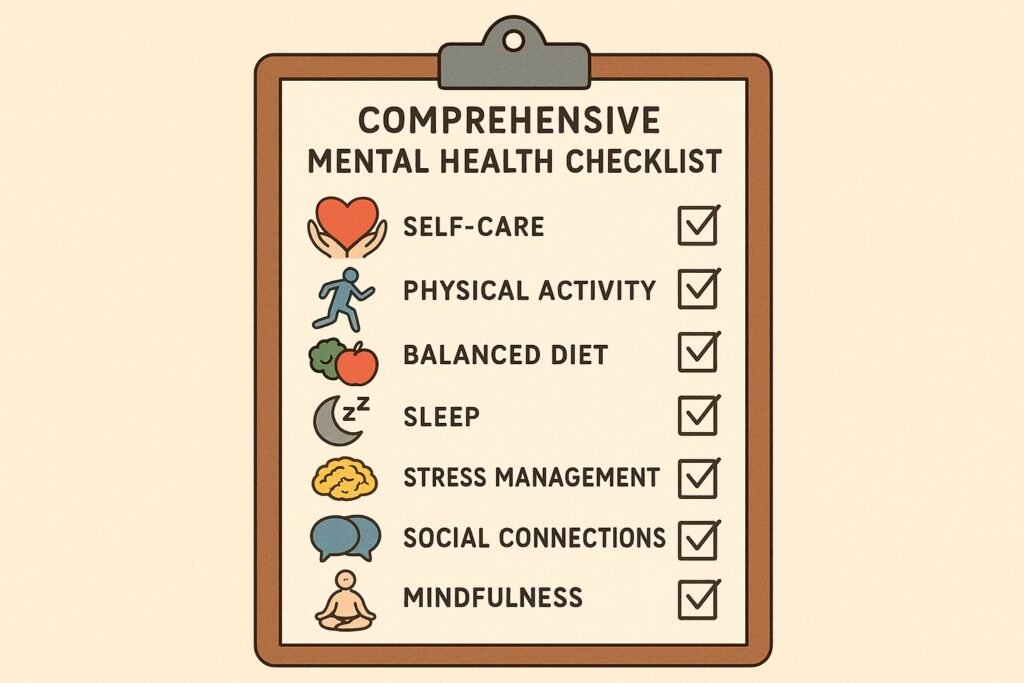
A daily mental health checklist is an actionable, evidence-based routine designed to support emotional stability, cognitive function, and stress resilience. It focuses on four essential pillars: nourishing nutrition, intentional movement, restorative sleep, and mindful self-care. Following a structured mental wellness checklist ensures you consistently meet your fundamental psychological and physiological needs throughout the day.
Why You Need a Mental Wellness Checklist
The human brain thrives on predictable routines. Without structure, decision fatigue sets in, making it far more likely that stress will dictate your actions and emotional responses. Following a dedicated mental health checklist reduces cognitive overload by systematizing healthy behaviors.
The Science Behind Small, Daily Habits
Neuroplasticity—the brain’s ability to adapt and form new neural pathways—is heavily driven by repetition. When you perform small self-care habits daily:
- Cortisol Levels Stabilize: Consistent meal times, light exposure, and physical activity help regulate the body’s primary stress hormone.
- Neurotransmitters Balance: Movement and mindfulness stimulate the release of dopamine, serotonin, and endorphins, elevating overall mood.
- Autonomic Nervous System Regulation: Intentional breathing and self-care activate the parasympathetic nervous system (the “rest and digest” state), combating chronic anxiety.
The Complete Daily Mental Health Checklist
Use this structured schedule to guide your daily routine. Each section targets key physiological and mental wellness touchpoints.
Morning Pillar: Setting the Baseline
How you begin your morning directly dictates your neurotransmitter balance and emotional capacity for the remainder of the day.
- [ ] Hydrate First Thing: Drink 16–24 oz of water immediately after waking to counter overnight mild dehydration, which impairs mood and cognitive speed.
- [ ] Get Early Sunlight Exposure: Step outside for 10–15 minutes within an hour of waking to set your circadian clock and boost serotonin production.
- [ ] Practice Morning Mindfulness: Spend 3–5 minutes doing breathwork, journaling, or quiet reflection before checking digital notifications.
- [ ] Eat a Balanced Breakfast: Include complex carbohydrates and clean protein to keep blood sugar stable and prevent late-morning mood swings.
Afternoon Pillar: Sustaining Focus & Stress Management
Afternoons are high-risk periods for fatigue, sugar cravings, and elevated workplace stress.
- [ ] Take Micro-Breaks: Follow the 50/10 rule—work for 50 minutes, then step away from your screen for 10 minutes to reduce eye strain and mental fatigue.
- [ ] Engage in Intentional Movement: Take a 15-minute brisk walk after lunch to enhance glucose disposal and improve afternoon brain function.
- [ ] Refuel with Brain Food: Choose snacks rich in healthy fats and antioxidant-dense polyphenols (such as walnuts, pumpkin seeds, or berries) rather than refined sugars.
- [ ] Check In with Your Emotional State: Ask yourself: What is my stress level right now on a scale of 1 to 10? What do I need in this moment?
Evening Pillar: Wind-Down & Neural Recovery
Evening habits dictate sleep architecture, which directly governs emotional regulation and memory consolidation.
- [ ] Enforce a Digital Sunset: Turn off phones, tablets, and TV screens 60 minutes before bed to allow natural melatonin synthesis.
- [ ] Perform a Brain Dump: Write down tomorrow’s to-do list and any lingering worries to clear mental space before sleep.
- [ ] Engage in Low-Impact Self-Care: Take a warm bath, read physical media, or practice gentle stretching.
- [ ] Protect Your Sleep Window: Aim for 7 to 9 hours of uninterrupted sleep in a dark, quiet, and cool room (around 65°F / 18°C).
Comparing Daily, Weekly, and Monthly Mental Wellness Habits
A successful wellness routine addresses short-term needs while fostering long-term resilience. Balancing daily practices with broader weekly and monthly routines creates a complete framework for physical and emotional health:
| Frequency | Target Focus Areas | Key Actionable Examples |
| Daily | Circadian alignment, immediate stress release, hydration, basic movement. | Morning sunlight, a 20-minute walk, digital sunset, nourishing meals. |
| Weekly | Social connection, deeper physical recovery, hobbies, reflection. | Nature excursions, phone calls with loved ones, meal prepping, fitness variety. |
| Monthly | Life balance reviews, systemic health tracking, digital detoxes. | Therapy sessions, health check-ups, spending a weekend offline, self-evaluation. |
Common Mistakes to Avoid in Your Mental Health Self-Care Routine
- Overcomplicating the Checklist: Adding dozens of strict tasks leads to perfectionism and anxiety. Start with 3 to 4 non-negotiable habits before building out a larger daily checklist.
- Using Self-Care as an Escape Strategy: Mindless scrolling or binge-watching shows under the guise of “relaxation” often increases cognitive strain rather than lowering stress.
- Neglecting the Mind-Gut Connection: Ignoring nutrition while trying to fix mental health overlooks the gut microbiome, where a significant portion of serotonin is synthesized.
- Relying Solely on Self-Care for Severe Distress: While a daily mental health checklist builds resilience, it is not a replacement for professional clinical care or therapy when dealing with severe mental health conditions.
Related Articles
- Functional Fitness: What It Is and Why It Matters in Everyday Life
- How to Build an Exercise Routine You Can Actually Maintain
- Why Do You Wake Up Tired? Common Lifestyle Factors to Consider
Conclusion
Building an effective daily mental health checklist is not about following a rigid set of rules; it is about honoring the fundamental biological needs that allow you to feel grounded, focused, and resilient. By balancing nutrition, daily movement, restorative sleep, and intentional self-care, you give your mind and body the environment required to thrive.
Future trends in preventive wellness emphasize personalized health routines that seamlessly fit into daily life. Start small—pick two or three habits from this mental wellness checklist today—and build a foundation for long-term emotional and physical health.
Frequently Asked Questions
How does a daily mental health checklist help lower stress?
A mental health checklist reduces cognitive fatigue by turning key self-care habits into predictable, automatic routines. This structure regulates the autonomic nervous system, lowers daily cortisol spikes, and helps maintain physiological balance.
What are the four core pillars of a mental wellness checklist?
The four essential pillars are nutrition (fueling the mind and gut), movement (regulating mood and neurotransmitters), sleep (restoring brain function), and self-care (managing stress and emotional health).
How long does it take for daily mental wellness habits to become automatic?
Research suggests that establishing a simple daily health habit takes roughly 21 to 66 days of continuous repetition, depending on the complexity of the task and individual consistency.
Can a mental health self-care routine replace professional therapy?
No. A self-care routine is a powerful preventive tool for managing everyday stress and promoting overall resilience. However, it should complement—not replace—professional medical or psychological treatment for clinical mental health conditions.
How do I stick to a daily mental health checklist when I feel overwhelmed?
Focus on “micro-habits.” Instead of aiming for a full workout or long meditation session, commit to just 2 minutes of deep breathing or a 5-minute walk. Momentum builds naturally when tasks feel effortless.