
Building a sustainable exercise routine for beginners often feels intimidating, especially if you think it requires an expensive gym membership, grueling hour-long workouts, or a complete lifestyle overhaul. However, evidence-based health data shows that consistency and small, incremental changes matter far more than workout intensity when starting out.
Whether your goal is to boost energy, support heart health, manage stress, or build long-term wellness habits, this comprehensive guide will walk you through how to create a realistic beginner workout plan that you can actually maintain.
How to Build an Exercise Routine That Sticks
To build a lasting exercise routine for beginners, start small with realistic, bite-sized goals rather than intense daily overhauls. Focus on workout consistency by integrating “activity snacks”—such as short 10-minute walks or bodyweight movements—into your daily schedule. Aim for a gradual progression toward the standard recommendation of 150 minutes of moderate-intensity aerobic activity and two days of strength training per week.
Why Most Beginner Workout Routines Fail (And How to Fix Yours)
Many people approach fitness with an all-or-nothing mindset: setting a goal to work out for an hour every single day, only to burn out or get sore within a week. Understanding the psychology and physiology of habit formation helps break this cycle.
- The All-or-Nothing Trap: Believing that a 10-minute workout “doesn’t count” leads to skipping movement entirely on busy days.
- Ignoring Progressive Overload: Jumping into high-intensity training too quickly spikes injury risks and overwhelming muscle soreness.
- Lack of Enjoyment: Forcing yourself to run or lift heavy weights when you despise those activities guarantees you will quit.
The Solution: Micro-Habits and Flexibility
Sustainable fitness operates like building a financial retirement account: small, regular contributions compound massively over time. Instead of aiming for perfection, focus on establishing daily exercise habits that seamlessly weave into your existing lifestyle.
Step-by-Step Blueprint: Building Your Beginner Workout Plan
1. Harness the Power of “Activity Snacks”
If carving out 30 uninterrupted minutes feels impossible, break your movement into smaller chunks. Activity snacks are short bursts of physical movement distributed throughout your day. Research indicates that these fragments accumulate to support metabolic health and preserve muscle mass.
- Take a 10-minute brisk walk immediately after lunch or dinner.
- Perform a set of 10 to 15 bodyweight squats while waiting for your morning coffee to brew.
- Do a quick 5-minute stretching or mobility break between work tasks.
- Opt for the stairs instead of the elevator every single time.
2. Scale Your Goals Gradually
If tracking 10,000 steps a day feels completely out of reach, do not start there. Begin at a baseline you can effortlessly manage, then scale up.
- Step 1: Target 2,500 daily steps for the first week or two.
- Step 2: Increase your target to 5,000 steps once the baseline feels natural.
- Step 3: Build toward 7,500, and eventually work up to the standard daily recommendations.For deeper insights into cardiovascular pacing, explore how a daily walking habit transforms your long-term health and reduces disease risk.
3. Incorporate Foundational Movement Categories
A well-rounded beginner workout plan combines two essential pillars of physical fitness: aerobic conditioning and strength training.
| Exercise Type | Primary Health Benefits | Beginner-Friendly Examples | Recommended Frequency |
| Aerobic Activity | Strengthens heart and lungs, improves mood, burns calories | Brisk walking, cycling, swimming, dancing | 150 minutes weekly total (e.g., 30 mins, 5 days/week) |
| Strength Training | Preserves muscle mass, supports bone density, boosts metabolism | Bodyweight squats, wall push-ups, resistance bands, light dumbbells | At least 2 non-consecutive days per week |
Sample 4-Week Beginner Workout Schedule
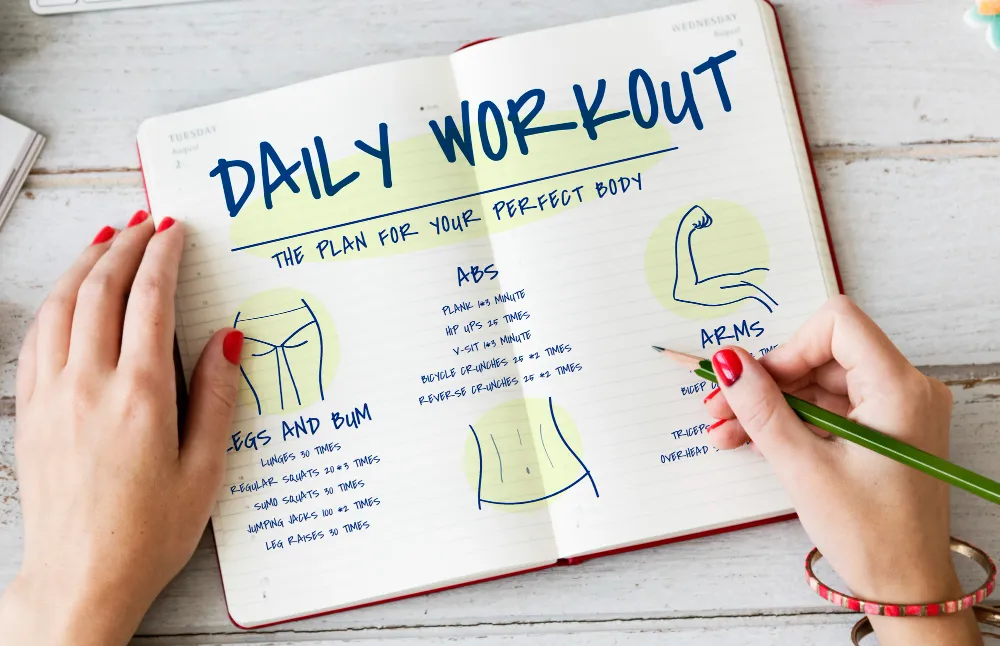
To remove guesswork, use this structured, low-barrier weekly schedule designed to foster workout consistency:
- Monday (Cardio & Core):
- 15-minute brisk outdoor walk.
- 3 sets of 30-second modified planks.
- Tuesday (Strength Foundation):
- Bodyweight squats: 2 sets of 10–15 repetitions.
- Wall or knee push-ups: 2 sets of 8–10 repetitions.
- Wednesday (Active Recovery):
- Light stretching or a casual 10-minute evening stroll.
- Thursday (Cardio Focus):
- 20-minute continuous walk or stationary cycling session.
- Friday (Strength & Mobility):
- Glute bridges: 2 sets of 12 repetitions.
- Light resistance band rows or seated pulls: 2 sets of 10 repetitions.
- Saturday (Recreational Movement):
- Enjoy a fun activity like hiking, gardening, or swimming for 30 minutes.
- Sunday (Rest Day):
- Complete physical rest to allow muscle tissue repair and recovery.
For a structured roadmap into running and endurance, review this progressive 6-week Couch to 5K training plan for safe pacing.
Proven Strategies for Boosting Exercise Motivation
Finding the drive to move can be challenging when life gets busy. Relying on sheer willpower is rarely enough; instead, build environmental cues and social systems that protect your habits:
- Pair Habits (Habit Stacking): Link your workout to an established routine. For instance, listen to your favorite podcast exclusively while walking, or stretch immediately after brushing your teeth.
- Find a Workout Buddy: Exercising with a friend or checking in with an accountability partner significantly increases adherence rates.
- Prioritize Enjoyment Over Optimization: The “best” workout is simply the one you will actually do. If you hate running, try water aerobics, dancing, or cycling instead.
- Track Your Progress: Keep a simple journal or use a fitness tracker to record your sessions. Looking back at physical proof of your consistency is a powerful psychological booster.
For a broader perspective on how modest movement transforms your physiological and mental well-being, read about the 10 ways 30 minutes of daily exercise improves overall health.
Beginner Safety Guidelines and Common Mistakes to Avoid
Protecting your body from strain ensures your new routine remains sustainable long-term.
- Skipping the Warm-Up: Always dedicate 5 to 10 minutes to light dynamic movement (such as slow marching or arm circles) to lubricate joints and elevate heart rate gradually.
- Ignoring Pain vs. Discomfort: Mild muscle fatigue is normal, but sharp, localized joint pain is a warning sign. Stop immediately and consult a sports medicine specialist if pain persists.
- Ramping Up Too Fast: Increase your workout duration or intensity by no more than 10% to 25% each week to avoid overuse injuries like shin splints or tendonitis.
- Consulting a Professional: If you have underlying chronic conditions, cardiovascular risk factors, or past injuries, schedule a visit with your primary care provider before starting any new fitness program.
Related Articles
- How 10 Minutes of Daily Yoga Can Support Flexibility and Mobility
- How to Read a Nutrition Label: A Beginner-Friendly Guide
- Benefits of Meditation Before Bed for a Calmer Evening Routine
Frequently Asked Questions
What is the best time of day to exercise for beginners?
The best time to work out is whatever time fits consistently into your personal schedule. Physiological benefits vary little between morning, afternoon, and evening sessions; adherence and consistency matter far more than clock time.
How many days a week should a beginner work out?
Beginners should aim for 3 to 4 days of intentional movement per week, combining short aerobic sessions with at least two days of light strength training, while filling gaps with light daily walking.
Can I get in shape without going to a gym?
Yes. Bodyweight movements (like squats, push-ups, and planks), resistance bands, and brisk neighborhood walks provide an exceptional stimulus for cardiovascular health and muscular strength without requiring a gym membership.
How long does it take to form a permanent exercise habit?
Research suggests that building an automatic health habit takes anywhere from a few weeks to several months, depending on the complexity of the routine and individual consistency. Starting with micro-habits accelerates the process.
Is walking enough exercise for weight management?
Brisk walking is a powerful aerobic exercise. When combined with a balanced, heart-healthy nutrition plan (such as the Mediterranean diet), regular walking helps manage weight, improve insulin sensitivity, and protect cardiovascular health.