
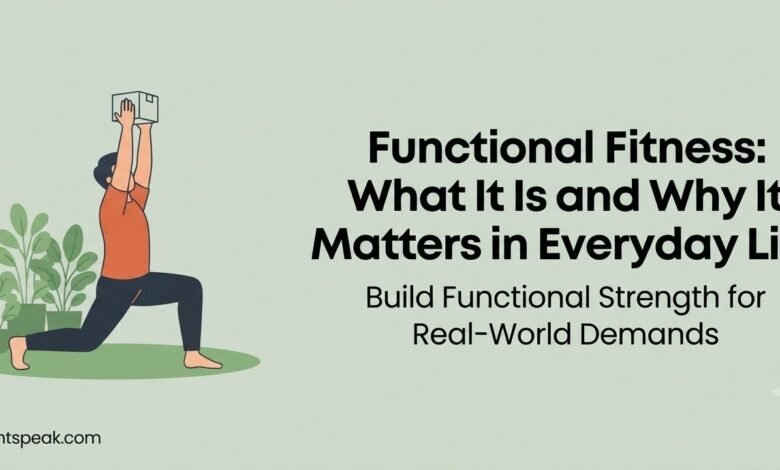
Functional fitness refers to conditioning your body for the specific physical demands of real-life activities rather than just isolating muscles on machines. By focusing on multi-joint, compound movements—such as squatting, pushing, pulling, hinging, and carrying—functional Fitness train your muscles to work together efficiently. This type of training directly improves everyday movement, enhances joint stability, optimizes posture, and significantly reduces your risk of injury both inside and outside the gym.
Modern fitness culture often overemphasizes aesthetics—shaping individual muscles through isolated movements like bicep curls or leg extensions. While these exercises have their place, they rarely prepare you for the unpredictable physical demands of daily life. Whether you are lugging heavy grocery bags up a flight of stairs, playing with your children, or gardening, your body relies on integrated movement patterns.
Embracing functional training bridges the gap between gym-based workouts and real-world physical capability.
Understanding Functional Fitness vs. Traditional Gym Workouts
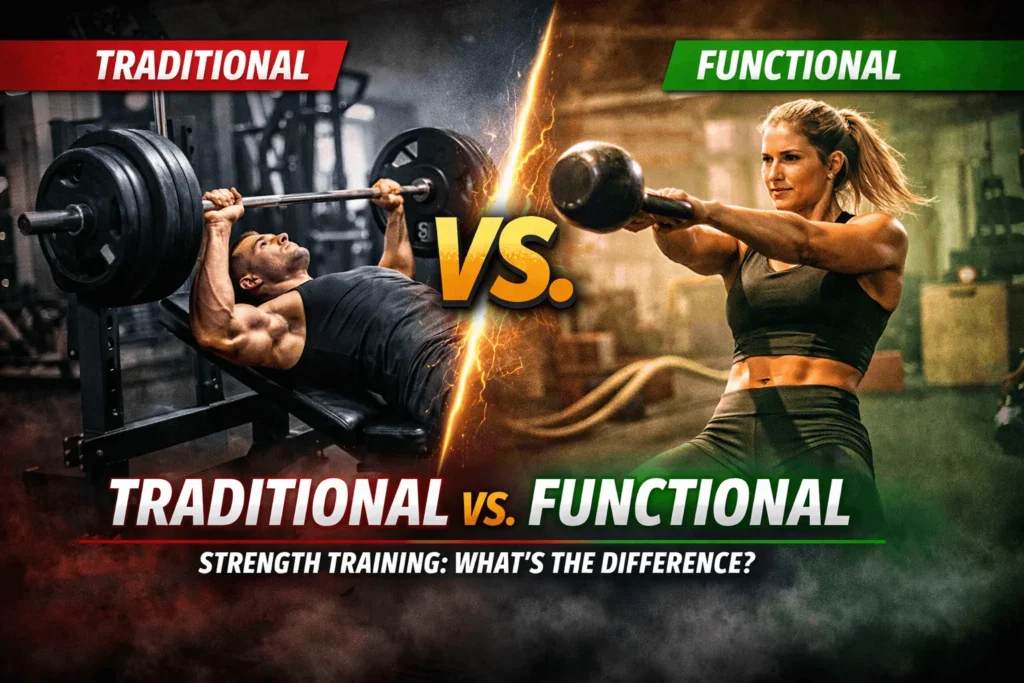
Traditional weightlifting generally isolates specific muscle groups in fixed planes of motion. While this builds localized muscular size, it does little to teach muscles how to cooperate under load or across different planes of motion.
Functional strength, on the other hand, trains the nervous system and musculoskeletal framework to handle multi-planar forces. When you perform a deadlift or a squat-to-overhead press, your core stabilizes your spine, your hips and ankles mobilize, and your upper and lower extremities sync up to execute the task.
The Core Pillars of Functional Movement
- Multi-Joint Involvement: Recruiting ankles, knees, hips, and shoulders simultaneously.
- Core Stability: Engaging deep abdominal and spinal stabilizers to protect the back.
- Balance and Proprioception: Training the body to remain stable on changing or unstable surfaces.
- Practical Translation: Directly mirroring actions you perform off the gym floor.
Core Benefits of Functional Training for Longevity
Investing time in functional exercises yields profound dividends for your long-term health span and physical independence.
- Injury Prevention: Strengthening stabilizing muscles and improving joint mechanics safeguards vulnerable joints like the knees, hips, and lower back against everyday strains.
- Enhanced Mobility: Regular practice of mobility exercises maintains full joint ranges of motion, keeping stiffness at bay as you age.
- Fall Reduction: Improving dynamic balance and proprioception lowers the risk of accidental slips and falls, a critical component of healthy aging.
- Metabolic Efficiency: Compound movements recruit large muscle masses simultaneously, driving higher caloric expenditure and cardiovascular conditioning than isolation exercises.
The Seven Foundational Movement Patterns
Effective functional programming revolves around seven fundamental movement patterns. Incorporating these into your routine ensures complete structural balance.
| Movement Pattern | Description | Primary Muscles Involved | Real-World Application |
| Squat | Lowering hips from a standing position and rising back up | Quadriceps, glutes, core | Sitting down, standing up from a chair, picking items off the floor |
| Hinge | Bending at the hips with a neutral spine | Hamstrings, glutes, lower back | Lifting heavy boxes, picking up groceries from the trunk |
| Push | Pressing weight away from the body horizontally or vertically | Chest, shoulders, triceps | Opening heavy doors, putting items on high overhead shelves |
| Pull | Drawing weight toward the body or body toward an object | Back, biceps, rear deltoids | Opening a heavy drawer, pulling open a stubborn door |
| Lunge | Stepping forward, backward, or laterally into a split stance | Glutes, quads, adductors, calves | Walking, climbing stairs, stepping over obstacles |
| Rotate | Twisting the torso against resistance | Obliques, transverse abdominis, spinal erectors | Turning to look behind you, swinging an object, throwing |
| Carry | Holding a load while walking a designated distance | Trap muscles, grip, core, forearms | Carrying suitcases, luggage, or multiple grocery bags |
Actionable Routine: Functional Exercises for Everyday Movement
You do not need an elite gym setup to build functional capacity. You can perform these foundational movements using body weight or minimal resistance equipment like resistance bands or light dumbbells.
- Bodyweight or Goblet Squats: Stand with feet shoulder-width apart. Lower your hips back and down as if sitting in an invisible chair, keeping your chest up and heels flat. Complete 3 sets of 12 repetitions.
- Glute Bridges (Hinge Pattern): Lie on your back with knees bent and feet flat on the floor. Drive through your heels to lift your hips toward the ceiling, squeezing your glutes at the top. Complete 3 sets of 15 repetitions.
- Incline or Standard Push-Ups: Keep your core braced and body in a straight line as you lower your chest toward the floor or an elevated sturdy surface. Complete 3 sets of 8 to 12 repetitions.
- Farmer’s Carries: Hold a pair of moderately heavy dumbbells or kettlebells at your sides. Walk slowly for 30 to 44 seconds with an upright posture and engaged core. Complete 3 sets.
- Bird-Dog (Core & Stability): On hands and knees, simultaneously extend your right arm forward and left leg backward. Hold for 3 seconds, then switch sides. Complete 3 sets of 10 reps per side.
Common Mistakes to Avoid in Functional Training
- Neglecting Progressive Overload: Sticking exclusively to body weight without gradually increasing resistance or complexity can stall strength gains.
- Sacrificing Form for Speed: Rushing through multi-joint movements compromises core engagement and increases joint vulnerability. Prioritize clean execution over velocity.
- Ignoring Rest and Recovery: Because functional movements recruit large amounts of muscle mass, adequate sleep and nutritional recovery are essential to prevent burnout.
- Overlooking Mobility: Focusing only on strength while ignoring flexibility limits your range of motion and diminishes the true intent of functional fitness.
Related Articles
- 5 Simple Yoga Poses for Beginners to Practice at Home
- How 10 Minutes of Daily Yoga Can Support Flexibility and Mobility
- Mobility vs Flexibility: What’s the Difference?
Frequently Asked Questions (FAQs)
What is the primary difference between functional fitness and traditional weightlifting?
Traditional weightlifting isolates single muscles using fixed machines, whereas functional fitness uses multi-joint, compound movements that prepare the body for real-world physical activities and multi-planar motion.
Can beginners safely practice functional training?
Yes, functional training is entirely scalable. Beginners can start with body-weight variations—such as sit-to-stands from a chair or wall push-ups—before progressing to external loads.
How often should I incorporate functional exercises into my routine?
Aim for 3 to 4 sessions per week, lasting anywhere from 20 to 45 minutes, allowing ample time for muscular recovery between workouts.
Do I need a gym membership to do functional training?
No. Most functional exercises utilize body weight, resistance bands, or household items, making them easy to perform safely at home.
How does functional training help prevent injuries?
By strengthening deep stabilizing core muscles and improving joint proprioception, functional training enhances overall balance and minimizes awkward movement strains during daily tasks.