
The Software-as-a-Service (SaaS) industry is undergoing a structural paradigm shift in 2026. What was once a delivery model for static, cloud-hosted productivity tools has evolved into an interconnected network of autonomous, intelligent systems. Driven by breakthrough machine learning algorithms and a sharp enterprise focus on ROI, the global SaaS market is moving past basic automation to reshape software architecture, monetization, and human-computer workflows.
For forward-thinking businesses and software builders, navigating this landscape requires moving beyond generic implementations. Succeeding with SaaS technologies in 2026 demands deep strategic integration, robust artificial intelligence governance, and hyper-scalable architectures.
The 2026 SaaS Paradigm: Autonomous vs. Assistive Systems
In 2026, the primary differentiator in the SaaS market is the evolution from assistive AI (software that requires human prompts to execute simple tasks) to autonomous systems (multi-agent workflows that cooperate to execute complex, end-to-end business operations with zero human intervention). Driven by specialized domain-specific language models and advanced orchestration layers, SaaS platforms are shifting value from “software as a tool” to “software as a digital coworker.”
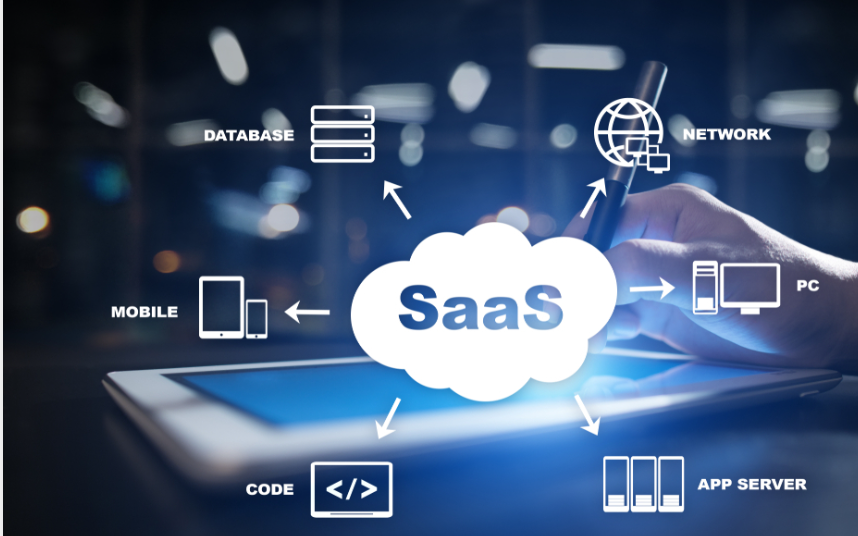
Top 5 Emerging SaaS Trends and Technologies in 2026
To maintain topical authority and drive operational efficiency, businesses must align their cloud infrastructure with the core technology trends dominating 2026:
1. Agentic AI Workflows and Multi-Agent Orchestration
AI integrations have advanced beyond basic generative text boxes. Next-generation business automation relies heavily on Agentic AI workflows. Instead of a single model responding to individual user inputs, enterprise SaaS tools now deploy cooperative multi-agent networks.
- Real-World Application: An HR SaaS platform can deploy one AI agent to source applicant resumes, a second agent to screen skills against compliance rules, and a third agent to coordinate interview calendar invites automatically.
- Productivity Impact: This self-correcting loop completely eliminates structural bottlenecks, boosting department-wide output without requiring linear headcount increases.
2. The Rise of “Shadow AI” and Cost Governance Chaos
As SaaS tools become easier to deploy, companies face a massive challenge: the explosive growth of Shadow AI—defined as business units purchasing or utilizing unauthorized AI applications directly without IT oversight.
- The Challenge: This decentralization creates massive data privacy liabilities, compliance risks, and cost volatility as multiple subscriptions overlap.
- The Strategy: The fastest-growing B2B SaaS sectors in 2026 are specialized governance, monitoring, and security management platforms designed to audit corporate data pipelines, enforce data privacy compliance, and consolidate unmanaged software spend.
Read More Blog :How SaaS Platforms Are Transforming Modern Business Operations
3. Reinventing SaaS Monetization: Value and Usage-Based Pricing
The traditional per-seat monthly license model is rapidly losing traction. In an ecosystem where an autonomous AI workflow can execute the work of multiple human data-entry seats, charging per human login no longer aligns with value.
- The Shift: In 2026, over 40% of enterprise software vendors utilize usage-based pricing models or value-driven tiers.
- Implementation: Organizations pay strictly based on the volume of data processed, API compute cycles used, or specific business metrics achieved (e.g., successful leads qualified), creating a transparent cost-to-value ratio.
Read More Blog :Top CRM SaaS Platforms for Scaling Startups
4. Hyper-Specialized Vertical and Micro-SaaS Systems
Horizontal, one-size-fits-all software ecosystems are giving way to highly customized alternatives. Vertical SaaS platforms—built from the ground up for highly specific industries like healthcare, construction logistics, or municipal real estate—are seeing the highest growth rates.
- The Advantage: These niche platforms come pre-trained on domain-specific compliance standards, legal frameworks, and industry terminology, eliminating the extensive customization times required by legacy, generic SaaS suites.
5. Composable Tech Stacks and API-First Architecture
Monolithic, tightly locked enterprise software bundles are being unbundled. Organizations prefer a modular approach, constructing highly agile tech stacks by linking specialized micro-services via advanced APIs.
- The Strategy: This allows companies to quickly switch individual components out as technology improves, avoiding vendor lock-in and maintaining an adaptive IT infrastructure.
Data Insights: Key SaaS Metrics in 2026
The following structured data outlines the primary technical pillars shaping SaaS applications, their operational use cases, and their direct impact on enterprise scalability:
| SaaS Technology Node | Core Enterprise Use Case | Key Productivity / Market Metric |
| Agentic AI Orchestration | End-to-end task execution (e.g., automated procurement, localized marketing outreach) | Reduces operational workflow execution times by up to 65% |
| Usage-Based Billing Layers | Dynamically mapping software costs to actual enterprise usage metrics | Over 40% adoption rate among leading B2B SaaS organizations |
| Vertical SaaS Engines | Niche industry automation (e.g., HIPAA-compliant healthcare billing, smart construction routing) | Accelerates compliance deployment timelines by 3x compared to horizontal apps |
| API-First Composable Modules | Rapid unbundling of monolithic software into agile, interchangeable micro-services | Decreases IT infrastructure migration friction and structural vendor lock-in |
| Low-Code/No-Code AI Builders | Democratic software expansion across non-technical company departments | Lowers software development cycle costs by enabling cross-team building |
Read More Blog :How AI Agents Are Replacing Apps in 2026
Practical Implementation: How to Deploy Next-Gen SaaS Responsibly
Navigating this transition successfully requires a balanced, phased deployment approach to mitigate common migration mistakes:
Practical Step-by-Step Strategy
- Audit Existing Workflows: Identify repetitive friction points currently managed via disparate manual inputs or rigid legacy spreadsheets.
- Prioritize Secure Data Streams: Before connecting any SaaS engine to corporate data, implement strict encryption and verify that the platform vendor adheres to modern data privacy standards.
- Run Isolated Pilot Projects: Deploy new agentic workflows within bounded, low-risk test scenarios (such as localized customer review routing) to optimize settings before an enterprise-wide launch.
- Enforce the 10-20-70 Rule: Dedicate 10% of your resources to selecting the right model, 20% to clean data architecture, and 70% to training and upskilling teams to effectively manage their new AI-driven workflows.
Common Pitfalls to Avoid
- Over-Automating Sensitive Processes: Automating tasks that require human empathy, nuanced legal review, or strategic relationship-building can damage client trust and introduce regulatory risks.
- Ignoring AI Overlap and Tool Sprawl: Failing to coordinate tech acquisitions across departments can lead to duplicate features, wasting budget and confusing team workflows.
Read More Blog :Top 5 Gadgets for Your Home Office
Strategic Takeaways for Future-Proofing Cloud Infrastructure
The future of SaaS belongs to intelligent, composable, and hyper-targeted software solutions. As autonomous workflows and consumption-driven models redefine market expectations, legacy software strategies will face escalating churn rates and integration bottlenecks.
To maintain a competitive advantage, businesses must actively inventory their tech stacks, establish robust internal data governance policies to eliminate Shadow AI risks, and design flexible, API-first software architectures. Treating advanced cloud tools as active productivity partners enables organizations to unlock unprecedented operational scale, turning digital transformation into a powerful, compounding growth engine.
Frequently Asked Questions (FAQ)
What is the difference between SaaS and Agentic AI in 2026?
SaaS represents the cloud-based software delivery model, whereas Agentic AI is an advanced architecture embedded within that software. While legacy SaaS tools require human workers to manually enter inputs and click buttons, Agentic SaaS uses autonomous, multi-agent networks to execute multi-step business workflows independently.
Why are companies shifting away from per-seat SaaS pricing models?
Per-seat billing models penalize companies for growing their staff and fail to reflect the value delivered by autonomous software. Because AI productivity tools execute high-volume data and operational tasks without requiring additional human users, usage-based and outcome-driven pricing structures offer a fairer, more transparent alignment of cost and value.
What is Shadow AI, and how can organizations prevent it?
Shadow AI refers to individual employees or departments independently purchasing or using AI tools without the explicit approval or security review of the central IT department. Organizations can mitigate this by deploying comprehensive SaaS governance platforms, maintaining transparent vendor screening protocols, and providing staff with approved, secure AI productivity tools.
How does vertical SaaS differ from traditional horizontal SaaS systems?
Horizontal SaaS platforms offer general solutions intended for a broad customer base across various industries (e.g., generic project management or spreadsheet tools). Vertical SaaS systems are purpose-built for a specific industry niche, featuring pre-built compliance architectures and domain-specific data models optimized for unique regulatory fields.
How do low-code and no-code tools impact enterprise SaaS development?
Low-code and no-code frameworks allow non-technical teams to build internal workflows, automate data syncs, and generate specialized interfaces without writing custom code. This takes the burden of repetitive, low-level technical maintenance off engineering departments, allowing them to focus on core system architecture and security.