
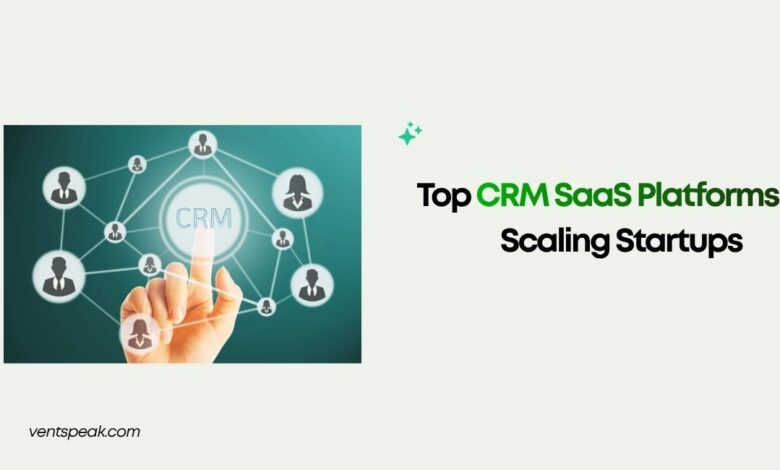
Scaling SaaS startups need agile CRM platforms that streamline lead tracking, automate marketing outreach, and centralize customer data without requiring massive upfront IT investments. In the fast-paced modern tech ecosystem, choosing a customer relationship management system that leverages AI automation and scalable SaaS systems is the ultimate shortcut to executing high-velocity sales pipelines.
By utilizing modern AI tools, a lean startup team can effectively build automated customer data environments that mimic the output of an enterprise revenue operations department.
The Top Startup CRMs at a Glance
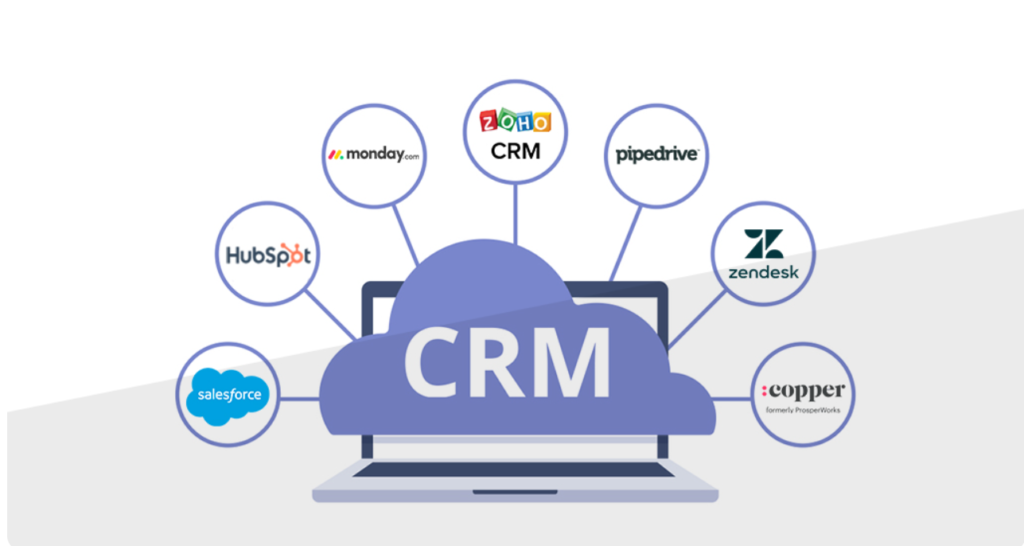
The best CRM SaaS platforms for scaling startups vary by operational focus. HubSpot CRM is the industry standard for fast-growing SaaS due to its intuitive free tier and powerful expansion hubs. Pipedrive leads in visual pipeline execution for sales-driven teams. Salesforce Starter provides enterprise-grade customization for hyper-growth companies, while Zoho CRM delivers robust machine learning features on a budget. Finally, Freshsales excels at native multi-channel communication tracking.
Direct Breakdown: Best CRMs for Startups by Use Case
1. HubSpot CRM: Best for Room to Scale Later
HubSpot is widely considered the premier foundation for fast-growing SaaS companies. It functions as an all-in-one growth suite that centralizes data across marketing, sales, and support.
- AI Functionality: Features Breeze, HubSpot’s built-in AI virtual assistant, which summarizes customer conversations, generates meeting notes, and performs basic task automation.
- Data Enrichment: Automatically enriches contact and company records by scraping public domain data and tech stacks, saving hours of manual data entry.
- The Startup Catch: While the core CRM is entirely free for unlimited users, advanced reporting, automation workflows, and AI-enhanced features are gated behind paid “Hubs” that get expensive quickly as your database expands.
2. Pipedrive: Best for Visual Pipeline Execution
Pipedrive is built specifically for sales teams that rely heavily on a highly visual, action-oriented sales process.
- Interface Style: Uses a clean, drag-and-drop kanban-style layout that lets reps track deals effortlessly across customizable deal stages (e.g., Prospecting → Demo Scheduled → Negotiation).
- Activity Focus: The system prioritizes “activity-based selling,” reminding sales reps exactly when to follow up, send a proposal, or log a call to keep deals moving forward.
- Limitations: It lacks built-in advanced marketing automation suites or deep product-analytics integrations compared to broader SaaS platforms.
3. Salesforce Starter: Best for Rapid, Enterprise-Bound Hyper-Growth
Salesforce Starter is a streamlined edition of the industry’s most powerful CRM, designed specifically to get early-stage teams up and running without complex, six-week implementation cycles.
- Scalability Path: Ideal for startups that anticipate highly intricate, custom sales architectures down the road. Starting here prevents a painful, costly data migration process later.
- Ecosystem Depth: Grants immediate access to the unmatched Salesforce AppExchange, allowing tech teams to link complex billing tools, custom databases, and product architectures seamlessly.
4. Zoho CRM: Best for Deep AI Capabilities on a Tight Budget
Zoho CRM provides a feature-dense environment designed for startups operating under real capital constraints.
- Predictive AI: Implements Zia, an AI companion capable of predicting sales anomalies, analyzing email sentiment, and suggesting the best times to contact individual leads.
- Customization: Offers extensive low-code and no-code layout customization tools, custom dashboards, and workflow routing rules that typically command enterprise pricing on other platforms.
5. Freshsales: Best for Native, Multi-Channel Communication
Freshsales is tailored for outbound-heavy sales teams that want communication channels embedded directly inside their pipeline management tool.
- Unified Communications: Features built-in cloud telephony, email tracking, and live chat widgets natively inside the platform. Reps can place phone calls or send email templates directly from a lead profile.
- AI-Driven Insights: Leverages Freddy AI to score leads based on engagement behavior and detect deal risks before opportunities stall in the pipeline.
Core Specification Comparison: Startup CRM Frameworks
To help you optimize your tech stack, this table highlights the primary specifications, ratings, and ideal deployment environments for top-tier platforms:
| CRM Platform | Target Startup Stage | G2 Rating | Primary Strengths | Native AI Automation Capabilities | Baseline Pricing Model |
| HubSpot CRM | Pre-MVP ➔ Scaling | 4.5/5 | Complete growth suite, centralized data, massive marketplace | Breeze AI virtual assistant for summaries, notes, and workflows | Free core tier; paid add-on Hubs start around $20–$50/mo |
| Pipedrive | Post-launch | 4.2/5 | Action-oriented sales tracking, visual kanban pipelines | Automated sales assistant for routine follow-up reminders | Tiered per-user seats starting at a modest monthly cost |
| Salesforce Starter | Scaling ➔ Hyper-Growth | 4.3/5 | Enterprise-ready architecture, high customization, deep APIs | Unified data tracking with extensible AI add-on options | Streamlined flat-rate entry tier built for smaller teams |
| Zoho CRM | Pre-MVP ➔ Post-launch | 4.1/5 | Exceptional affordability, rich feature density, analytics | Zia AI for lead scoring, anomaly detection, and sentiment | Highly competitive tiered pricing with free entry tiers |
| Freshsales | Post-launch ➔ Scaling | 4.4/5 | Built-in cloud phone/email, rapid multi-channel outreach | Freddy AI for predictive scoring and deal health insights | Tiered plans by feature set, including basic free layouts |
Methodology: How We Evaluate Startup SaaS Tools
When small teams choose scalable SaaS systems, selecting an invalid software foundation can cripple cash flow or cause extreme data fragmentation. We deploy a strict, data-driven framework across 6 evaluation criteria to audit CRM platform viability:
- 1. Time-to-Value (UX): Can a lean startup team adopt the platform, build their pipelines, and see clean data loops without a grueling six-week corporate onboarding phase?
- 2. Automation Capabilities: The strength of native AI workflows—including condition-based process builders, automatic data entry routing, and automated email generation.
- 3. Tech Stack Integration: The presence of robust, visual API connectors capable of cleanly syncing data with product analytics engines (like PostHog), billing infrastructure (like Stripe Billing), and communication apps (Slack).
- 4. Cost Predictability: Ensuring pricing models remain transparent as headcount or contact volume grows, shielding founders from unexpected financial scaling penalties.
- 5. Data Centralization: The tool’s ability to act as a single source of truth, moving data out of fragmented spreadsheets into unified, searchable workspaces.
- 6. Startup-Specific Incentives: Availability of official Startup Programs (e.g., HubSpot and Salesforce offer highly discounted tiers or credits for vetted, early-stage ventures).
Read More :How AI Agents Are Replacing Apps in 2026
Real-World Applications and Use Cases
Deploying an AI-driven CRM shifts software from a static database to an active member of your team:
- Product-Led Growth (PLG) Tracking: When an early adopter hits a specific usage threshold inside your SaaS product (tracked via analytics tools), the event triggers an automated webhook that passes data to your CRM. The CRM flags the user as a “Product Qualified Lead” (PQL) and assigns an outbound task to a founder.
- Automated Help Desk Escalation: Customer communication tools like Intercom capture support tickets and feed them to the CRM. AI systems instantly tag high-value accounts facing technical bugs, escalating them directly to engineering channels in Slack.
- Automated Invoicing Workflows: Once a deal state moves to “Closed-Won,” the CRM initiates a background workflow that tells Stripe Billing to generate a hosted invoice with precise tax calculations, tracking recurring revenue cycles without human data entry.
Crucial Deployment Mistakes to Avoid
Over-Engineering the Stack Early
The average business runs on over 100 apps, with IT-to-employee ratios widening. For pre-MVP or early post-launch teams, a massive software sprawl fragments data. Keep your early stack lean (e.g., a modular workflow tool like Jotform, a database workspace like Notion, and a simple CRM pipeline). Do not pay for massive enterprise automation systems until your product-market fit requires deep reporting structures.
Allowing System Sprawl & Broken Context
CRMs are only as powerful as the data entered into them. If your team fails to log huddle notes, email tracking links, or trial signups, your single source of truth falls apart. Choose a system with native browser extensions and deep email inbox syncing so data capture happens passively.
Future Technology Trends in CRM Ecosystems
The software market is moving past standard drag-and-drop record creation. Future technology trends are steering heavily toward completely prompt-based autonomous CRM agents.
Instead of manually building complex custom filters, setting up manual API connectors, or running tedious pipeline math, founders will soon communicate with their databases using conversational NLP. Natural language prompts like “Show me our highest-velocity sales loop from last quarter, identify where technical leads dropped out of the funnel, and draft an automated re-engagement sequence for them” will execute instantly, reshaping how startups scale operations.
Frequently Asked Questions (FAQ)
What is the ideal software stack stage-fit for a scaling startup?
Pre-MVP: Focus on thinking clearly and shipping fast. Use lightweight tools for internal communication (Slack), brainstorming documentation (Notion), and rapid intake forms.
Post-Launch: Expand your stack to capture explicit feedback loops, customer support tickets, early product analytics, and basic payments (Stripe).
At Scale: Inject structure. This is where you deploy dedicated CRM platforms, deep reporting, automated AI workflows, and robust API connectors.
Can a startup launch a SaaS product with a zero-dollar software budget?
Yes, but with functional boundaries. Most leading SaaS providers offer genuinely useful free or freemium tiers designed to support early teams. Startups can string together free plans from CRM platforms, form builders, and project management tools, effectively trading automated conveniences for manual founder effort until revenue is generated.
What is the core difference between CRM tools and project management boards?
CRM tools are explicitly designed to manage external customer relationships, lifecycle pipeline stages, financial deal values, and communication history. Project management tools (like Trello or Notion Projects) are built to manage internal team tasks, product feature sprints, onboarding documentation, and operational timelines.
How do AI agents lower customer acquisition costs in a CRM?
AI agents reduce acquisition costs by closing data loops autonomously. They run background processes like automated lead enrichment, instant FAQ triage, predictive lead scoring, and automated follow-up drafts. This enables a tiny, bootstrap-funded startup team to successfully manage thousands of incoming leads without needing an expensive, full-time operations hire.