GEO Explained: How Generative Engine Optimization Works Alongside SEO

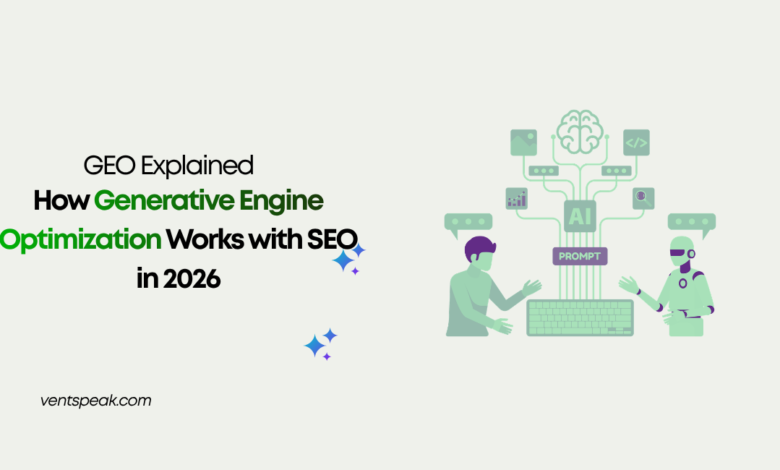
The search landscape is undergoing its most significant transformation since the invention of the desktop browser. Traditional Search Engine Optimization (SEO) is no longer the sole gatekeeper of digital visibility. With the rapid rise of AI-driven platforms like Google AI Overviews, Perplexity, ChatGPT, and Claude, users are increasingly bypassing traditional blue links in favor of direct, synthesized responses.
When an AI Overview appears in search results, webpages experience a 34.5% lower average click-through rate (CTR) than similar searches without an AI-generated summary.
To thrive in this zero-click ecosystem, digital marketers, copywriters, and enterprise brands must evolve. Enter Generative Engine Optimization (GEO) and Answer Engine Optimization (AEO). This comprehensive guide explores how GEO works alongside traditional SEO to future-proof your digital footprint, optimize AI workflows, and maximize visibility across scalable SaaS systems and future technology trends.
Read more blog : The Comprehensive Guide 2026: AI in Digital Marketing
Understanding the New Search Paradigm: SEO vs. GEO vs. AEO
To capture traffic and brand authority in 2026, you must understand how these three pillars of modern search interact:
- SEO (Search Engine Optimization): Maximizes visibility in traditional search engine results pages (SERPs) by optimizing for keywords, backlinks, technical site speed, and domain authority.
- GEO (Generative Engine Optimization): Structures and refines digital content so large language models (LLMs) can easily ingest, synthesize, and cite it as a trusted source inside conversational AI summaries.
- AEO (Answer Engine Optimization): Focuses specifically on providing direct, structured answers to explicit user queries, targeting featured snippets, “People Also Ask” (PAA) boxes, and voice search.

The Blueprint: How SEO and GEO Differ
While SEO pushes a website to rank on the first page to drive direct clicks, GEO operates on becoming the definitive “source of truth” within an AI-generated response. They are not mutually exclusive; they are complementary.
| Strategic Dimension | SEO (Search Engine Optimization) | GEO (Generative Engine Optimization) |
| Primary Goal | High keyword rankings and direct website organic traffic. | Citations, conversational visibility, and brand mentions within AI summaries. |
| Content Strategy | Target keywords, backlink acquisition, and high domain authority. | Factual clarity, logical structure, semantic entities, and conversational intent. |
| Success Metrics | Click-through rates (CTR), organic sessions, and bounce rates. | AI platform mentions, sentiment analysis, and synthesis inclusion. |
| Primary System | PageRank algorithms, web crawlers, and indexation mapping. | Natural Language Processing (NLP), LLM retrieval-augmented generation (RAG). |
How Generative Engine Optimization Works Under the Hood
AI search models do not simply read web pages the way older search indexers did. Instead, they use Retrieval-Augmented Generation (RAG). When a user inputs a complex query regarding SaaS technologies or AI automation workflows, the generative engine searches its database, pulls relevant snippets from authoritative web sources, synthesizes the data into an original response, and attributes the sources via inline citations.
To ensure your content is selected during this synthesis process, you must optimize for the core mechanics of NLP and machine learning.
1. Optimize for Intent Over Exact Keywords
Traditional search relied heavily on stringing fragmented phrases together. AI engines, however, process full-sentence, conversational human prompts. Content must be built around solving comprehensive problems rather than stuffing individual terms.
2. Utilize LLM-Friendly Structures
AI models crave scannability and structural logic.
- Use a strict, nested hierarchy of headers (##, ###).
- Incorporate bulleted lists to break down complex processes.
- Present data-heavy information, feature definitions, and step-by-step strategies in structured tables, as LLMs excel at parsing tabular layouts for comparison queries.
3. Establish Factual Authority and Citations
Generative tools prioritize highly accurate, verified data to avoid AI hallucinations. Back up your claims with unique statistics, industry quotes, and primary research. If your technical guides or software development overviews lack depth, AI engines will filter them out in favor of content-rich competitors.
Integrating AI Automation and SaaS Trends into GEO Strategy
As businesses transition to automated digital systems, GEO becomes essential for B2B SaaS companies and technology providers. Modern enterprises leverage AI workflows and scalable SaaS systems to automate operations; your content must reflect these future technology trends to capture highly qualified enterprise queries.
Practical Use Case: AI Automation Workflows
Consider a business looking to implement AI tools for revenue cycle management or customer service. They won’t just search “AI software.” They will ask an AI engine: “How do I build a scalable SaaS system using AI automation tools to reduce operational costs?”
To rank in the AI Overview for this query, your content must provide an authoritative, direct architectural breakdown that the LLM can extract:
- Data Ingestion Layer: Collecting unstructured customer touchpoints via API integrations.
- Processing & Automation Layer: Utilizing LLM-driven AI agents to categorize, flag, and route tickets within the workflow.
- Analytics Layer: Running real-time semantic analysis to optimize backend business automation.
By building deeply analytical, structured explanations of these technologies, your brand becomes the cited expert within the conversational answer box.
Read more blog : 10 Instagram Growth Hacks for Small Businesses 2026
Methodology: How We Evaluate Content for AI Readiness
To ensure digital assets are fully optimized for both traditional search engines and generative models, we utilize a strict evaluation framework. Every piece of content is audited against six primary criteria to guarantee maximum discoverability:
- Semantic Information Density: The content must avoid surface-level fluff. It must contain high-value, entity-based terminology relevant to the core topic (e.g., matching “AI automation” with terms like “neural networks,” “workflow orchestration,” and “RAG pipelines”).
- Structural Scannability: Evaluation of heading hierarchies, lists, and tabular data layouts to ensure machine-readability for LLM scrapers.
- Conversational Alignment: Assessing if the phrasing naturally answers long-tail, question-based user intents in a human-like tone.
- Authoritative Citations & Trustworthiness: Checking for the presence of verifiable data points, primary references, and expert insights to fulfill Google’s E-E-A-T guidelines and prevent AI exclusion.
- Topical Architecture Depth: Verifying that the content satisfies primary, secondary, and tertiary related queries comprehensively to build topical authority.
- Integration Scalability: Ensuring the technical definitions align with current SaaS architecture and future technology trends, keeping the information evergreen.
Generative Engine Optimization Toolset
To measure, monitor, and scale your brand’s visibility inside AI search systems, incorporate these advanced tools into your digital marketing stack:
- Google Search Central Insights: Track how often your website appears within traditional search previews and cross-reference it with emergent organic traffic patterns.
- Surfer AI & MarketMuse: Analyze real-time competitor structures to identify semantic gaps, ensuring your content contains the necessary information density required by LLMs.
- SE Ranking: Monitor your comprehensive AI visibility index, track brand mentions inside conversational summaries, and check how AI platforms frame your brand narrative.
Conclusion: Future-Proofing Your Digital Footprint
The intersection of SEO, GEO, and AEO represents the future of digital marketing and content development. As conversational AI platforms continue to gain market share, maintaining visibility requires moving beyond basic keyword tracking.
By restructuring your content to appeal to Large Language Models—prioritizing factual density, utilizing LLM-friendly structures, adopting conversational phrasing, and embedding highly scannable tables—you ensure your brand remains a recognized authority. Embrace these advanced optimization strategies today to secure your place as the trusted source of truth in the rapidly expanding AI-powered search ecosystem.
Frequently Asked Questions (FAQ)
What is the main difference between SEO and GEO?
SEO focuses on optimizing web pages to rank high on search engine result pages to drive traffic via clicks. GEO focuses on optimizing content so conversational AI models (like Google AI Overviews and ChatGPT) can easily parse, synthesize, and cite the information within their generated answers.
How do tables improve GEO optimization and AI Overview visibility?
AI engines and LLMs are trained to extract structured data efficiently. Tables provide a clean, logical format for data comparison, feature analysis, and technical metrics. This high scannability makes it easier for AI models to pull your data directly into summary boxes and featured snippets.
Will GEO replace traditional SEO entirely?
No. GEO builds upon foundational SEO principles. Traditional search optimization ensures your site is indexed, crawled, and viewed as authoritative by search engines, while GEO optimizes that authoritative content for AI-driven synthesis and natural language queries.
How can I optimize my business for zero-click searches?
Focus on answering long-tail, complex questions comprehensively within your content. Use clear headings, bullet points, a conversational tone, and include highly factual, cited data. Ensuring your brand is mentioned across external authoritative ecosystems like review platforms, forums, and industry publications also increases your inclusion rate in AI summaries.