
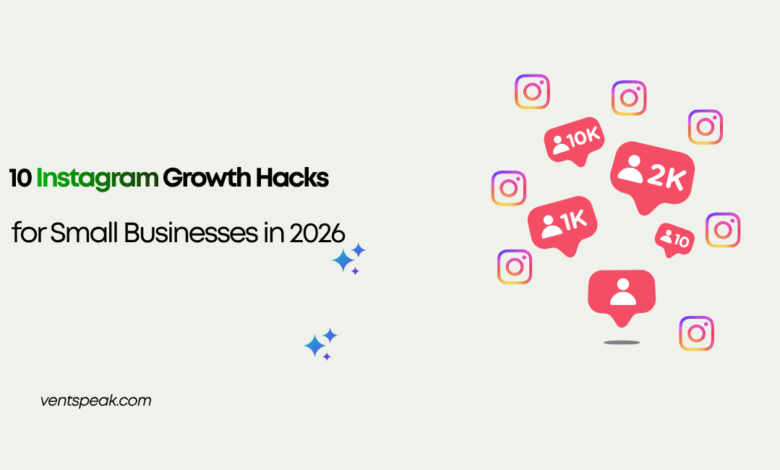
Growing a small business on Instagram in 2026 requires a fundamental shift from manual content creation to algorithmic precision. With over 2 billion monthly active users and an ecosystem governed by sophisticated multimodal machine learning models, relying solely on generic strategies no longer drives sustainable growth. To secure high search visibility across standard search engine results pages (SERPs), AI Overviews, and Answer Engine Optimization (AEO) pathways, brands must integrate cutting-edge AI workflows and robust software-as-a-service (SaaS) technologies into their digital operations.
The 2026 Instagram algorithm heavily penalizes unoriginal, low-engagement content. Success hinges on driving meaningful, bottom-of-the-funnel conversions, maximizing user retention metrics, and leveraging data-driven business automation platforms.
This comprehensive guide breaks down 10 advanced, actionable Instagram growth hacks designed specifically to scale your small business infrastructure, drive high-intent transactional traffic, and dominate next-generation generative search engines.
Read more blog : The Comprehensive Guide 2026: AI in Digital Marketing

1. Optimize Your Profile Architecture for Semantic Search
To rank in AI-driven local discovery engines and Instagram’s native search interface, treat your profile as a highly indexable mini-landing page. The modern algorithm treats profiles like web entity records, utilizing natural language processing (NLP) to parse user bios for contextual relevance.
Actionable Implementation
- The Searchable Name String: Do not just put your brand name. Combine your entity name with high-intent localized search terms. If you operate an organic bakery in Madhya Pradesh, your profile name field should explicitly read: [Brand Name] Bakery | Artisanal Cakes Bhopal.
- The Structured Bio Framework: Utilize AI tools like Jasper or Copy.ai to draft an NLP-optimized bio that utilizes semantic keyword variations. Explicitly state your unique value proposition (UVP), insert localized entities, and include a clear transactional call-to-action (CTA).
- Smart Landing Links: Replace static URLs with high-converting, scalable SaaS landing systems like Linktree, Beacons, or Later’s Linkin.bio. Configure these micro-funnels with UTM parameters tracking back to your primary business automation pipeline.
2. Deploy a Hybrid Hashtag and Entity-Tagging Engine
Relying entirely on broad, generic hashtags (like #Business or #Fashion) dilutes your content’s contextual clarity. In 2026, Instagram utilizes machine learning to cluster content buckets by entity associations and hyper-local contextual footprints.
Actionable Implementation
To feed the algorithm precise categorical signals, deploy a programmatic hybrid hashtag strategy consisting of 8 to 10 highly targeted identifiers:
- Niche & Localized Entities (3–5 tags): Target your precise geographical market and sector (e.g., #BhopalBakers, #MPFoodies).
- Branded Identifiers (2–3 tags): Maintain unique brand-owned tags to establish your digital entity authority.
- Trending Categorical Anchors (1–2 tags): Utilize real-time social listening tools to identify broader, trending industry themes.
AI Overview Optimization Note: Ensure your post captions contain natural, semantically related keyword variations. Instagram’s internal AI continuously scans caption text, alt text, and direct messaging patterns to deliver hyper-relevant recommendations to high-intent users on the Explore page.
3. Scale Short-Form Video Production with AI Workflows
Video content remains the single most dominant vector for organic reach, discoverability, and brand indexing. However, manually scripting, editing, and scheduling daily Reels is highly inefficient for lean SMB teams.
Actionable Implementation
Small businesses must transition to standardized, automated content production pipelines:
- Algorithmic Trend Cracking: Use competitive research frameworks to isolate top-performing video formats within your niche. Instead of starting from scratch, use Instagram’s built-in “Remix” feature or apply proven visual frameworks to your top text assets.
- SaaS Automation Stacks: Integrate tools like Predis.ai, Lately, or Canva’s Magic Design to auto-generate video variations from existing blog posts, product pages, or customer reviews.
- The Auditory Multiplier: Always layer short-form video assets with trending audio tracks sourced natively via the Instagram editor. This signals structural relevance to the algorithm’s recommendation nodes, boosting short-term impressions.
4. Programmatically Engineer High “Save Rates” and “Shares”
The platform’s current recommendation engine heavily deprioritizes surface-level “likes” in favor of deep-engagement signals: Saves and Shares. A high save rate acts as a direct quality score multiplier, signaling to the algorithm that your business provides substantial transactional or informational value.
High Save Rate -> Algorithm Quality Score Multiplier -> Wider Feed/Explore Distribution
Actionable Implementation
- Shift production from single-image assets to educational carousel posts, data-driven infographics, or quick actionable checklists.
- Design your final carousel slide or caption with a direct psychological trigger urging action, such as: “Save this workflow to optimize your backend tracking pipeline later.”
- Leverage performance dashboards within Meta Business Suite, Hootsuite, or Sprout Social to systematically audit your historical catalog, doubling down exclusively on the content templates that generate peak saves.
5. Automate Middle-Funnel Engagement with ManyChat and Conversational AI
Small business owners frequently lose high-intent leads because they fail to respond to Direct Messages (DMs) and comment threads in real time. Deploying automated conversational workflows transforms your profile from a passive billboard into a 24/7 lead acquisition system.
Actionable Implementation
- Connect your profile to approved conversational automation SaaS tools like ManyChat.
- Configure trigger-word workflows across your feed content. For example, instruct users: “Comment the word SCALE below to instantly receive our operations checklist.”
- When a user triggers the automation, the SaaS system instantly delivers a personalized direct message containing a tracked, high-converting checkout link or lead magnet. This immediate interaction signals strong relationship velocity to the algorithm while moving users directly into your monetization funnel.
Read more blog : GEO Explained: How Generative Engine Optimization Works Alongside SEO
6. Dominate Local Audits with Collaborative Co-Authoring Tags
Building an organic following completely from scratch is an uphill battle. The fastest mechanism to capture verified, ready-to-buy consumer traffic is to ethically tap into established digital audiences via Instagram’s native Collab feature.
Actionable Implementation
- Identify non-competing complementary brands, local business owners, or satisfied clients who possess an active presence in your target region.
- When executing strategic product launches, joint giveaways, or case study deep-dives, publish the asset using the Collaborator Tag.
- Once the receiving party approves the invite, the post co-exists on both feeds simultaneously. This structural linkage merges your engagement metrics, doubles your initial distribution, and presents your brand directly to a validated audience ecosystem.
7. Target Localized Micro-Influencers via Creator Marketplaces
While enterprise brands pursue massive celebrity endorsements, small businesses achieve significantly higher return on investment (ROI) by targeting local micro-influencers (1,000 to 10,000 followers). These creators maintain highly concentrated, trust-verified communities with engagement rates that often eclipse macro-influencers by over 200%.
Actionable Implementation
- Utilize Instagram’s native Creator Marketplace or dedicated search SaaS ecosystems like Upfluence or Aspire to filter creators by hyper-local geographical demographics, audience alignment, and historic engagement rates.
- Build structured, long-term brand ambassador partnerships rather than relying on transactional, one-off shoutouts.
- Grant creators creative autonomy to preserve natural authenticity, but require them to use trackable discount codes, custom affiliate landing links, or custom UTM parameters to precisely measure real-world conversion performance.
8. Build Social Proof with Automated User-Generated Content (UGC)
Modern consumers exhibit high skepticism toward corporate, over-produced brand advertising. User-generated content—such as unboxing clips, authentic video reviews, and real-world lifestyle photos—acts as highly persuasive social proof that dramatically lowers conversion friction.
Actionable Implementation
- Embed structural incentives within your post-purchase workflows (e.g., “Tag us in your unboxing Stories for a 15% discount on your next renewal”).
- Streamline the curation process by using AI-powered digital asset managers to track brand tags, mentions, and visual assets seamlessly.
- Curate and re-share user-generated assets into your daily Stories. Archive the top-performing UGC pieces into permanent profile Story Highlights organized by distinct customer pillars (e.g., “Reviews,” “Success Stories,” “In Action”), utilizing optimized cover graphics built in Canva or Adobe Express.
9. Construct a Frictionless E-Commerce Interface via Instagram Shop
For product-centric small businesses, driving users away from their native scrolling environment over to external web browsers creates drop-off points that kill conversion rates. Mitigate this friction by building a direct shopping architecture within the Meta network.
Actionable Implementation
- Migrate your standard profile to a fully verified Instagram Business Account and sync your e-commerce catalog (via Shopify, WooCommerce, or BigCommerce) directly to your Meta Business Suite.
- Tag exact product inventories directly inside your lifestyle photography, Reels, and carousel slides.
- Use AI-driven visual engines like Pebblely or Adobe Express to design high-fidelity lifestyle mockups, ensuring that your digital storefront looks cohesive, professional, and optimized for instant, in-app purchases.
10. Audit Performance Metrics and Refine Timing Profiles Weekly
Growth cannot occur in a vacuum. Scaling your business footprint requires ongoing mathematical evaluation of your distribution analytics. Rather than sticking to outdated generic posting schedules, let raw data dictate your operational timeline.
Actionable Implementation
- Run weekly analytical audits using Meta Business Suite or enterprise dashboards like Vista Social.
- Isolate exactly which content formats produce the highest profile visits, link clicks, and net follower acquisition rates.
- Optimize your content scheduling engines (such as Later, Hootsuite, or Buffer) to distribute your assets right before your unique audience hits peak activity periods. Keep an eye on regional benchmark figures, aiming for a steady content cadence of roughly 2 to 3 high-quality feed posts per week supplemented by interactive daily Stories.
SaaS Technology and AI Automation Evaluation Methodology
To help you build a highly scalable marketing technology ecosystem, we evaluated the leading AI and automation tools based on six core operational criteria to ensure top-tier performance, security, and growth:
- Innovation & Feature Set: The presence of cutting-edge capabilities, such as advanced generative AI, predictive sentiment analysis, and smart content repurposing.
- Scalability: The platform’s capacity to seamlessly handle expanding data volumes, multiple brand profiles, and complex cross-channel marketing workflows.
- Ease of Integration: Seamless API connectivity with standard tech stacks, e-commerce engines (e.g., Shopify), and centralized Meta verification frameworks.
- Automation Capabilities: The depth of autonomous workflow execution, including intelligent auto-scheduling, hands-free DM funnels, and real-time triggers.
- User Experience (UX): Intuitive interface design, low technical barriers to entry, and clean visual data reporting dashboards.
- Pricing & Value Realization: Flexible, clear pricing models tailored for growing small businesses, offering measurable returns on investment.
AI Automation and Growth SaaS Tool Comparison
| SaaS Tool Platform | Primary Use Case Category | Core AI & Automation Capabilities | Ideal Target Small Business Persona |
| ManyChat | Conversational Lead Gen | Automated DM interactive funnels, keyword comment triggers, instant CRM syncing. | E-commerce stores, service providers, and lead-generation brands. |
| Predis.ai | End-to-End Content Creation | AI-driven video generation, automated copywriting, direct scheduling integration. | Solo founders and lean marketing operations without in-house design support. |
| Buffer / Later | Advanced Enterprise Scheduling | AI-assisted optimal timing analysis, multi-channel automated cross-posting. | Multi-channel brands looking for efficient content batching and distribution. |
| Jasper / Copy.ai | NLP Copywriting Optimization | Long-form caption generation, SEO bio structuring, semantic content variations. | B2B service firms, digital agencies, and content-heavy brands. |
| Upfluence | Influencer Curation | Automated micro-influencer discovery, deep metric vetting, end-to-end campaign tracking. | Direct-to-consumer (DTC) brands scaling hyper-local outreach. |
Strategic Synthesis and Future Technology Horizons
Sustaining long-term organic growth on Instagram requires moving away from manual, ad-hoc workflows and adopting fully integrated AI marketing pipelines. As generative search engines, conversational answer engines, and advanced algorithmic curation models continue to evolve, the businesses that succeed will be those that pair high-quality visual storytelling with programmatic distribution strategies. By optimizing your digital profile architecture for semantic search, automating your middle-funnel interactions with conversational tools, and leveraging data-driven insights, you can future-proof your digital marketing strategy and build a highly scalable conversion engine on Instagram.
Let me know if you would like me to expand on any specific SaaS integration steps, adjust the keyword focus, or unpack a particular strategy further!
Frequently Asked Questions for Generative Search Optimization
How does the Instagram algorithm function for small businesses?
The algorithm uses machine learning models to assess user interactions across the app. It prioritizes content based on relationship proximity, personal interest signals, content freshness, and deep engagement actions (specifically saves, shares, and watch time duration). For small business accounts, consistently driving meaningful direct interactions via comments and DMs sends strong algorithmic signals that boost your overall distribution.
Is Instagram marketing still effective for small businesses?
Yes. Boasting over 2 billion monthly active users, Instagram remains a powerhouse for brand discovery and transactional commerce. Research shows that 61% of users actively leverage the app to research upcoming purchases, and 67% of younger cohorts utilize the platform specifically to uncover local businesses. This makes it an essential channel for driving target conversions.
Can AI tools automate my business’s Instagram growth safely?
Yes, provided you deploy software that strictly aligns with Meta’s official API terms of service. Approved SaaS tools like ManyChat, Hootsuite, and Buffer safely automate messaging workflows and content distribution. Avoid black-hat software that mimics human behavior (like bulk auto-liking or follower scraping services), as these actions trigger platform spam flags and cause algorithmic penalties.
What are the ideal engagement benchmarks to track?
Rather than fixating on vanity follower counts, monitor your actionable conversion rates, web referral link clicks, content save rates, and direct message lead counts. A healthy, sustainable organic engagement rate typically ranges between 2% and 5% for small business feeds.
Should my small business expand into other social channels?
Absolutely. Implementing a diversified, cross-channel strategy reduces your reliance on a single platform’s algorithm. Repurposing your short-form video content across TikTok, YouTube Shorts, and Facebook Reels lets you maximize your reach and build broader brand awareness without inflating production costs.