Essential Vitamins and Minerals: Benefits, Food Sources & Daily Requirements

Every single second, your body performs billions of chemical reactions. It converts food into usable energy, repairs cellular damage, sends electrical signals through nerves, and defenses against microscopic invaders. To sustain these vital processes, your body relies on micronutrients: essential vitamins and minerals.
Because your body cannot manufacture these health vitamins in adequate amounts, they must be obtained through a balanced, nutrient-dense diet. Understanding the distinct roles of these nutrients is the first step toward optimizing your vitality and practicing effective preventive healthcare.
What Are Essential Vitamins and Minerals?
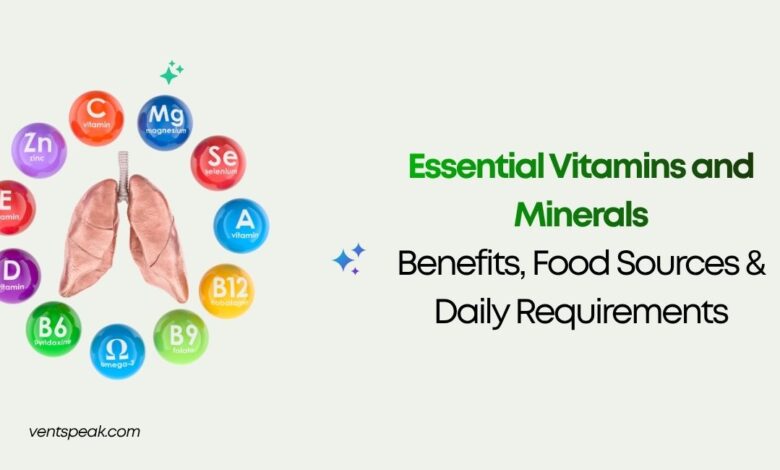
Vitamins are organic compounds (produced by plants or animals) classified as either water-soluble or fat-soluble. Minerals are inorganic elements derived from soil and water. Together, these micronutrients act as essential catalysts for energy production, bone integrity, DNA synthesis, and immune defense.
The most important vitamins and minerals include Vitamins A, C, D, E, K, the B-complex family, and macro-minerals like calcium, magnesium, potassium, and iron. Meeting your Recommended Dietary Allowance (RDA) through whole foods is the safest and most bioavailable method to keep your body running optimally.
The Core Blueprint: Water-Soluble vs. Fat-Soluble Vitamins
To build an optimal dietary framework, it helps to understand how the essential vitamins for body functions are absorbed and stored.
1. Water-Soluble Vitamins
These nutrients dissolve in water and pass directly into your bloodstream during digestion. Because your body does not store them long-term, any excess is excreted through urine. This means you need a continuous, daily supply of these vitamins for body upkeep.
- The B-Complex Family (B1, B2, B3, B5, B6, B7, B9, B12): These serve as cellular coenzymes that extract energy from carbohydrates, fats, and proteins while supporting neurological health.
- Vitamin C: A potent antioxidant crucial for collagen synthesis, immune cell function, and tissue repair.
2. Fat-Soluble Vitamins
Vitamins A, D, E, and K require dietary fat to be absorbed properly by your intestinal tract. Unlike water-soluble nutrients, your body stores excess fat-soluble vitamins in liver and adipose (fat) tissues for future use.
- Risk Warning: Because they accumulate in your body, overconsumption through high-dose synthetic supplements can lead to toxicity (hypervitaminosis).
Deep Dive: Vital Micronutrients, Sources, and Target Intakes
The table below breaks down the primary baseline requirements and premium food sources for the most critical micronutrients, based on guidelines from the National Institutes of Health (NIH) and Harvard T.H. Chan School of Public Health.
| Nutrient | Primary Biological Benefits | Recommended Daily Intake (Adults) | Rich Food Sources |
| Vitamin A | Vision health, cellular growth, robust immune defense | 700–900 mcg RAE | Sweet potatoes, carrots, spinach, beef liver, eggs |
| Vitamin C | Collagen synthesis, wound healing, antioxidant defense | 75–90 mg (Smokers: add 35 mg) | Citrus fruits, strawberries, bell peppers, broccoli |
| Vitamin D | Calcium absorption, bone mineralization, immunity | 15–20 mcg (600–800 IU) | Fatty fish (salmon), fortified milk, egg yolks, sunlight |
| Vitamin E | Cell membrane protection, antioxidant powerhouse | 15 mg | Sunflower seeds, almonds, spinach, avocados |
| Vitamin K | Blood clotting regulation, arterial and bone health | 90–120 mcg | Kale, collard greens, Brussels sprouts, broccoli |
| Vitamin B12 | DNA synthesis, red blood cell formation, nerve function | 2.4 mcg | Shellfish, beef, dairy, fortified nutritional yeast |
| Folate (B9) | Cellular division, neural tube protection during pregnancy | 400 mcg DFE | Leafy greens, legumes, asparagus, citrus fruits |
| Calcium | Skeletal strength, muscle contractions, nerve signaling | 1,000–1,200 mg | Yogurt, cheese, milk, tofu, fortified plant milks |
| Iron | Hemoglobin production, systemic oxygen transport | 8–18 mg (Higher for menstruating individuals) | Lean red meat, lentils, spinach, pumpkin seeds, beans |
| Magnesium | 300+ biochemical reactions, muscle relaxation, sleep | 310–420 mg | Dark chocolate, almonds, black beans, pumpkin seeds |
| Potassium | Fluid balance, blood pressure regulation, cardiac health | 2,600–3,400 mg | Potatoes (with skin), bananas, avocados, coconut water |
Actionable Strategies for Nutrient Absorption
Simply eating nutrient-dense food is only half the battle; your body must be able to break down and absorb those nutrients effectively.
Maximize Bioavailability with Smart Food Synergies
- Pair Iron with Vitamin C: Non-heme iron (found in plant foods like spinach and lentils) is notoriously difficult for the body to absorb. Squeezing lemon juice (Vitamin C) over a spinach salad increases iron absorption by up to 300%.
- Consume Fats with Fat-Soluble Vitamins: Drizzle a healthy fat, like extra virgin olive oil or avocado oil, over roasted carrots (Vitamin A) or kale (Vitamin K) to unlock their full nutritional value.
- Unite Vitamin D and Calcium: Your intestines cannot absorb calcium efficiently without adequate Vitamin D. Ensure your calcium-rich foods are consumed alongside healthy Vitamin D levels, whether through diet or structured sunlight exposure.
Common Mistakes That Drain Your Nutrients
- Over-cooking Vegetables: Boiling vegetables for extended periods leaches water-soluble vitamins (like Vitamin C and B vitamins) directly into the cooking water. Opt for steaming, blanching, or roasting instead.
- Excessive Caffeine Intake: Drinking large amounts of coffee or tea immediately before or after a meal can inhibit the absorption of iron and calcium due to the presence of compounds called tannins and polyphenols.
Read More Blogs: How Mindfulness Can Improve Your Focus and Memory
Best Foods for Brain Health and Mental Clarity
A Complete Wellness Guide for 2026: Mental, Physical, and Nutritional Health
Components of Wellness: Why Each One Matters for Your Well-Being
How to Start a Holistic Wellness Journey in 30 Days
Emerging Wellness Trends: Precision Micronutrition
The health landscape is shifting away from generic “one-size-fits-all” multivitamins toward personalized, data-driven supplementation. Driven by advancements in functional medicine and nutrigenomics, health-conscious individuals are utilizing biomarker testing (blood panels) to uncover specific biochemical gaps.
For instance, genetic variations in the MTHFR gene can impair how a person processes standard folic acid, making methylated folate a superior choice. Always consult a healthcare professional to tailor your supplement strategy based on objective lab work rather than guesswork.
Summary for Long-Term Vitality
Prioritizing your intake of essential vitamins and minerals is one of the most reliable strategies for preventive, long-term health. Rather than seeking a quick fix in a synthetic multivitamin bottle, aim to source your health vitamins from a colorful, diverse plate of whole foods. By matching smart food pairings with mindful cooking methods, you give your body the exact tools it needs to thrive from the inside out.
Frequently Asked Questions
What are the symptoms of a vitamin deficiency?
Deficiency symptoms depend entirely on the missing nutrient. Common warning signs include chronic fatigue (Iron or Vitamin B12), poor night vision (Vitamin A), frequent muscle cramps (Magnesium or Potassium), brittle hair and nails (Biotin), and bleeding gums (Vitamin C). If you notice persistent changes, ask your doctor for a routine micronutrient panel.
Can you take too many essential vitamins for body health?
Yes. Overconsuming water-soluble vitamins generally just results in expensive urine, but mega-dosing fat-soluble vitamins (A, D, E, and K) can cause them to accumulate to toxic levels in your liver and tissues. Excessive Vitamin A, for example, can cause liver damage, while overdoing Vitamin D can lead to dangerous calcium build-ups in the blood.
Is it better to get vitamins from food or supplements?
Whole foods are always superior. Whole foods deliver a matrix of complex fibers, phytochemicals, and synergistic nutrients that help your body absorb vitamins naturally. Dietary supplements should only be used to fill specific diagnostic gaps, not as a replacement for a poor diet.
Why do women need different daily amounts of iron than men?
Pre-menopausal women require significantly more iron (18 mg daily) than men (8 mg daily) due to the regular loss of blood and hemoglobin during menstruation. This requirement spikes even further to 27 mg daily during pregnancy to support fetal development and blood volume expansion.
What blocks the absorption of essential vitamins and minerals?
Several factors hinder absorption, including high alcohol consumption, chronic gut inflammation (such as Celiac or Crohn’s disease), phytates found in unsoaked grains, and certain medications like proton pump inhibitors (PPIs), which lower stomach acid and reduce Vitamin B12 and magnesium uptake.
How can vegans get enough Vitamin B12 naturally?
Because Vitamin B12 is synthesized by bacteria and found almost exclusively in animal products, vegans must rely on fortified foods. Excellent sources include fortified plant milks, enriched breakfast cereals, fortified nutritional yeast, or a clean, high-quality B12 supplement (methylcobalamin).