
Search engines no longer rank websites based purely on isolated keyword density or raw backlink counts. As Google continues to refine algorithms like RankBrain and the Helpful Content System, along with generative search features like Google AI Overviews, search platforms now reward sites that demonstrate complete, authoritative expertise in an entire subject matter.
This measure of expertise is known as topical authority. Building high topical authority is the single most effective way to rank higher on Google SERPs, secure citations in Large Language Models (LLMs) like ChatGPT, Claude, and Perplexity, and establish a sustainable organic growth engine for your business.
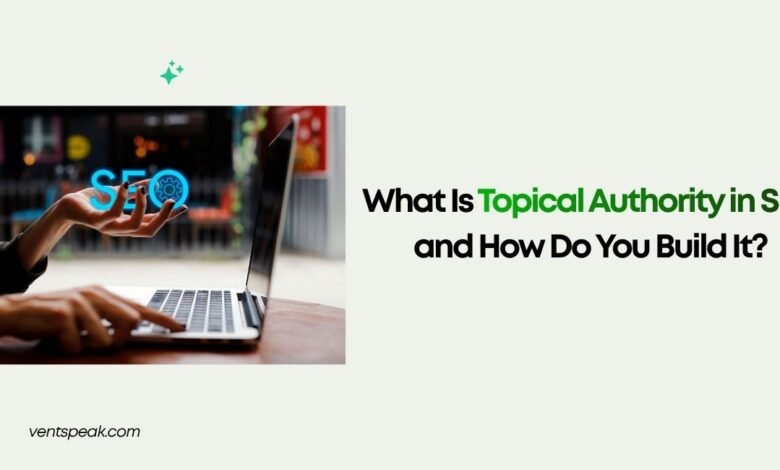
What Is Topical Authority & How to Build It?
Topical authority is a search engine evaluation metric that measures a website’s depth of expertise, depth of content coverage, and perceived credibility on a specific subject. Search platforms determine topical authority by analyzing whether a domain covers an entire topic comprehensively rather than publishing isolated articles on unrelated keywords.
How to Build Topical Authority in 5 Steps:
- Define Your Core Entity & Boundaries: Select a tightly defined primary topic aligned directly with your niche or product offering.
- Perform Topic-Based Keyword Research: Identify all head terms, long-tail subtopics, user questions (PAA), and search queries within your subject area.
- Build Structured Content Clusters: Create a central pillar page for the broad topic and surround it with comprehensive cluster articles for each subtopic.
- Establish Contextual Internal Links: Connect every cluster article to the central pillar page and interlink related subtopics to signal semantic relationships to search engines.
- Maintain Topical Relevance & Accuracy: Regularly update existing content, address emerging user questions, and satisfy E-E-A-T (Experience, Expertise, Authoritativeness, Trustworthiness) standards.
What Is Topical Authority in Modern SEO?
Topical authority is the degree of trust and expertise a website earns from search engines and AI answer engines by publishing complete, interconnected, and highly accurate content across every subtopic of a given subject.
Rather than attempting to rank for standalone keywords with one-off blog posts, a website with strong topical authority acts as an exhaustive library on a subject. When search algorithms see that your domain consistently answers all sub-questions, addresses user intent across different journey stages, and links related concepts logically, they recognize your site as the go-to resource for that subject.
Why Topical Authority Matters for SEO, GEO, and AEO
Establishing domain-level depth has become essential across all search paradigms:
- Traditional SEO (Google & Bing): Search engines prioritize topically authoritative domains because they provide a better user experience. Sites with high topical authority often rank new content faster and require fewer backlinks to reach page one.
- Answer Engine Optimization (AEO): Featured Snippets and People Also Ask (PAA) boxes draw heavily from pages that offer structured, direct answers backed by site-wide context.
- Generative Engine Optimization (GEO): Generative AI tools (such as Google AI Overviews, Perplexity, ChatGPT, and Gemini) pull synthesized facts from sources with coherent semantic entities and complete topic coverage.
+—
Topical Authority vs. Domain Authority
Many SEO practitioners confuse Topical Authority with Domain Authority (or Ahrefs Domain Rating). While both influence rankings, they measure entirely different signals:
| Feature Metric | Topical Authority | Domain Authority / Rating |
| Primary Focus | Content depth, semantic coverage, and subtopic completeness. | Total backlink quantity, link authority, and domain trust. |
| Measurement | Measured by entity connection, internal links, and topic coverage. | Measured on a third-party logarithmic scale (0–100) based on link profiles. |
| Competitive Impact | Enables lower-DR sites to outrank high-DR sites for niche terms. | Reflects general domain strength across diverse search queries. |
| Optimization Focus | Topical mapping, topic clusters, semantic SEO, and structured internal linking. | PR outreach, link building, unlinked brand mentions, and guest posting. |
| AI Engine Priority | High (LLMs cite sources with high semantic density and clear entity alignment). | Medium (LLMs favor trusted domains, but prioritize direct relevance and contextual depth). |
Step-by-Step Strategy: How to Build Topical Authority
Step 1: Define Your Core Subject and Topic Boundaries
Before creating content, establish clear boundaries around your primary field of expertise. Publishing content outside your core niche dilutes your site’s topical relevance.
- Select One Central Theme: If you run a SaaS accounting tool, your core subject is financial management for businesses—not broad technology or consumer lifestyle advice.
- Determine Sub-Categories: Divide the main topic into 4–6 core sub-categories (e.g., Invoicing, Tax Compliance, Payroll, Financial Reporting).
Step 2: Build a Comprehensive SEO Topical Map
A topical map outlines every query, subtopic, user question, and semantic variant required to cover a subject exhaustively.
- Extract Seed Keywords & Subtopics: Use keyword research tools (such as Ahrefs, Semrush, or Ubersuggest) to list all related keywords regardless of search volume. Even zero-volume long-tail questions add value to a topic cluster.
- Identify Competitor Content Gaps: Run competitive gap analyses to uncover subtopics that top competitors failed to cover or answered poorly.
- Incorporate AI Search Subtopics: Query AI platforms (e.g., ChatGPT, Perplexity) to discover sub-questions LLMs naturally associate with your primary topic.
Read More Blog:
What is Digital marketing — A complete guide 2026
Digital Marketing Fundamentals: Key Concepts, Tools, and Techniques
Digital Marketing Pillar: The Comprehensive Guide 2026: Ai in Digital Marketing
Ethical Challenges of AI in Digital Marketing
Step 3: Implement Content Clusters (Pillar-Cluster Model)
Organize your content into a hub-and-spoke model (Pillar Pages and Cluster Content):
- Pillar Page: A comprehensive, high-level guide covering the overarching topic in depth (e.g., “The Ultimate Guide to B2B Content Marketing”).
- Cluster Articles: Dedicated, granular articles answering specific sub-questions or long-tail topics (e.g., “How to Write a B2B Case Study,” “B2B Content Marketing Distribution Tactics”).
Step 4: Construct Strategic Internal Link Structures
Internal links act as neural pathways for search crawlers and AI agents, passing topical relevance between pages.
- Link Upward: Every cluster page must link back to the main pillar page using descriptive, keyword-rich anchor text.
- Link Cross-Cluster: Interlink related cluster pages where subtopics naturally intersect.
- Avoid Dead Ends: Ensure every article links to relevant next steps in the user journey.
Step 5: Optimize for E-E-A-T and Semantic NLP Entities
Search engines evaluate author credibility alongside content depth.
- Demonstrate First-Hand Experience: Include unique case studies, original metrics, screenshots, and expert quotes to satisfy Google’s E-E-A-T standards.
- Use Clear Structured Data: Implement Article, FAQPage, and HowTo Schema markup to help machine learning models parse entity relationships easily.
- Match NLP Search Entities: Use Natural Language Processing (NLP) tools to identify key entities and semantic terms associated with your target subject.
Best Practices for Maintaining Topical Dominance
- Update Content Regularly: Revisit pillar and cluster pages annually to refresh statistics, replace outdated steps, and answer new user queries.
- Prune Irrelevant Pages: Remove or redirect legacy blog posts that deviate from your target topical boundaries.
- Avoid Keyword Cannibalization: Assign a distinct, primary intent to each piece of content so cluster pages complement rather than compete with one another.
- Build Relevant Backlinks: Earn backlinks from websites within your same industry vertical to validate your domain’s topical authority.
How AI and Generative Search Engines Measure Topical Authority
Generative engines like Perplexity, Gemini, and Google AI Overviews do not simply retrieve pages based on keyword matching. Instead, they map concepts using Knowledge Graphs and Vector Search Engine Embeddings.
When a user asks a complex question, LLMs evaluate:
- Entity Depth: Does the domain discuss all entities, terms, and context connected to the core concept?
- Contextual Continuity: Does the site show logical internal linking patterns that validate deep knowledge across related subtopics?
- Consensus and Accuracy: Is the information consistent with verified facts across authoritative Web graphs?
Websites that build comprehensive topical maps are significantly more likely to be featured as cited sources in AI-generated answers.
Common Mistakes When Building Topical Authority
- Publishing Random Content: Writing un-connected articles on trending keywords that don’t relate to your core domain authority focus.
- Stopping at Head Keywords: Failing to create dedicated cluster pages for low-volume or zero-volume long-tail questions.
- Ignoring Internal Linking: Writing complete topic clusters but failing to interlink pages systematically.
- Prioritizing Quantity Over Information Gain: Regurgitating top-ranking search results without providing new data, insights, or actionable utility.
Key Takeaways
Building topical authority requires shifting from a keyword-by-keyword approach to a complete topic ownership model. By building structured topical maps, organizing content into pillar-cluster architectures, and establishing strong internal links, you build a resilient organic content engine that satisfies both human searchers and AI engines.
Frequently Asked Questions (FAQs)
How long does it take to build topical authority?
Building topical authority typically takes 3 to 9 months, depending on your domain’s baseline history, publication frequency, domain authority, and how comprehensively you cover your chosen topic map.
Can a new website build topical authority without backlinks?
Yes. While high-quality backlinks accelerate authority signals, a new site can outrank older, higher-authority domains for targeted long-tail terms by publishing a complete, structured content cluster that answers user intent better than competitors.
How do I know if my website has earned topical authority?
While search engines do not publish an official “Topical Authority Score,” you can measure progress by tracking keyword rank velocity for new articles, monitoring impressions across long-tail queries, and checking your visibility in Google AI Overviews and Featured Snippets.
What is the ideal size for a content cluster?
There is no single fixed size. A content cluster generally consists of one comprehensive pillar page supported by 5 to 20 cluster articles, depending on the breadth and complexity of the subtopic.