
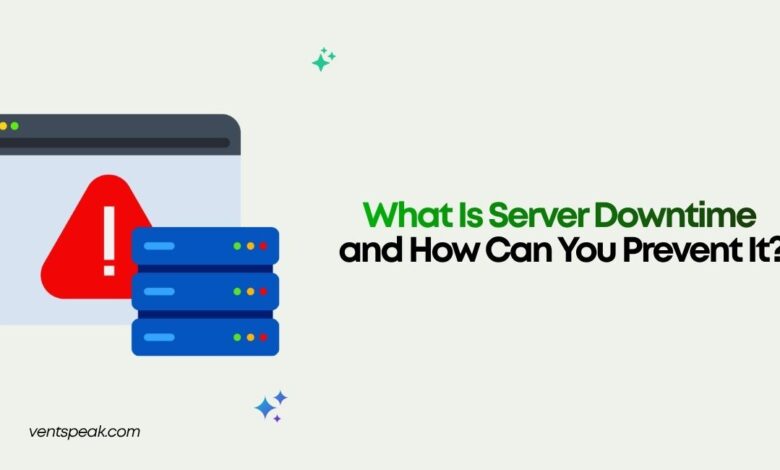
Server downtime refers to any period when a web server is offline, non-operational, or unable to process incoming requests from users. During downtime, websites, applications, web mail, and online services hosted on that server become completely inaccessible. Server downtime is typically prevented by migrating to redundant infrastructure like Cloud Hosting, utilizing load balancers, deploying 24/7 automated monitoring tools, enforcing proactive security patches, and establishing automated disaster recovery backups.
In today’s hyper-connected digital economy, your website or application is often the front door to your entire business. Whether you operate a fast-growing e-commerce store, a SaaS platform, or a corporate portal, users expect zero lag and 100% availability.
However, no physical or virtual system is completely immune to disruptions. What is server downtime, why does it happen, and how can you proactively shield your online assets from catastrophic outages?
This comprehensive guide breaks down the core causes of server downtime, its true financial and operational impact, and actionable, step-by-step strategies to ensure maximum uptime for your website infrastructure.
What Is Server Downtime?
Server downtime is the duration during which a server fails to fulfill its primary function—delivering hosted content, running applications, or responding to network requests. When a server experiences downtime, any browser or client attempting to connect will typically encounter connection timeouts, HTTP 500-level error codes (such as 502 Bad Gateway, 503 Service Unavailable, or 504 Gateway Timeout), or a blank page.
Scheduled vs. Unscheduled Downtime
To manage server health effectively, it is vital to distinguish between two fundamental forms of downtime:
- Scheduled Downtime: Planned maintenance windows during which system administrators temporarily take a server offline to apply critical security patches, upgrade operating system kernel software, or replace physical hardware components. Scheduled downtime is communicated in advance to users and typically performed during off-peak hours to minimize disruption.
- Unscheduled Downtime: Sudden, unexpected server crashes or network blackouts caused by unexpected hardware failures, software bugs, traffic surges, or cyberattacks. Unscheduled downtime is the primary threat to business continuity.
Server Downtime vs. Server Outage
While often used interchangeably, server downtime usually describes the operational state of a specific server or application, whereas a server outage implies a broader infrastructure failure—such as an entire data center losing power or a major Tier-1 network carrier going offline.
The True Cost of Server Downtime on Your Business
Server downtime is far more than a minor technical inconvenience; it directly erodes your bottom line, user trust, and search engine visibility.
- Immediate Revenue Loss: According to IT industry benchmark surveys, the average cost of IT downtime ranges between $300,000 and $400,000 per hour for mid-sized to enterprise businesses. For an e-commerce platform during peak sale events, even five minutes of downtime can mean thousands of dollars in abandoned shopping carts.
- SEO & Google Search Damage: Search engine crawlers (like Googlebot) regularly index your site. If Googlebot encounters repeated 5xx server errors, Google will temporarily decrease your crawl rate and eventually drop your pages from search rankings to protect user experience.
- Productivity Halts: Internal applications, databases, CRM tools, and email hosting tied to an affected server become inaccessible, causing employees to sit idle.
- Customer Churn & Reputational Harm: Modern web users have near-zero tolerance for slow or broken websites. When a site crashes, users instantly switch to competitors, damaging long-term customer loyalty.
Top 5 Causes of Server Downtime
Understanding why servers go down is the first step toward building an bulletproof prevention strategy.
1. Hardware Failure
Physical server hardware operates under constant load. Hard drives (HDDs/SSDs) wear out, power supply units (PSUs) fail, RAM modules develop uncorrectable errors, and cooling fan failures cause severe CPU thermal throttling or emergency server shutdowns.
2. Traffic Overloads & Resource Exhaustion
A sudden surge in traffic—whether from a viral marketing campaign, a news mention, or seasonal sales—can exhaust server resources (CPU, RAM, database connection limits, and bandwidth limits). When capacity limits are breached, the web server crashes or freezes.
3. Software Glitches, Bad Code & Misconfigurations
Unchecked software bugs, unoptimized database queries, corrupted plugin updates, or misconfigured web server files (e.g., .htaccess or Nginx configuration files) can instantly trigger infinite loops or kernel panics.
4. Cyberattacks (DDoS & Ransomware)
Cybercriminals frequently target servers using Distributed Denial of Service (DDoS) attacks, flooding server ports with billions of junk requests until legitimate users cannot connect. Malware, ransomware, and unpatched security vulnerabilities can also allow attackers to compromise and disable operating systems.
5. Human Error & Maintenance Mistakes
Inadvertent mistakes made by system administrators—such as accidentally deleting critical system configuration files, running incorrect terminal commands, or failing to renew SSL certificates and domain registrations—account for a massive percentage of downtime incidents.
Server Uptime Tiers vs. Allowed Downtime
When evaluating web hosting environments, uptime guarantees are specified in your Service Level Agreement (SLA). The table below illustrates what different percentage guarantees mean in real terms over the course of a year:
| Uptime Percentage Tier | Availability Standard | Allowed Downtime per Month | Allowed Downtime per Year | Recommended Hosting Solution |
| 99.0% (“Two Nines”) | Basic | 7 hours, 18 minutes | 3.65 days | Basic Shared Hosting (Personal blogs) |
| 99.9% (“Three Nines”) | Industry Standard | 43 minutes, 49 seconds | 8.76 hours | VPS Hosting (Small business sites) |
| 99.99% (“Four Nines”) | High Availability | 4 minutes, 23 seconds | 52.60 minutes | Cloud Hosting (E-commerce / Enterprise) |
| 99.999% (“Five Nines”) | Mission Critical | 26.3 seconds | 5.26 minutes | Enterprise Multi-Region Cluster / Dedicated Servers |
7 Proven Strategies to Prevent Server Downtime
Preventing downtime requires a proactive, multi-layered approach to web infrastructure, software development, and network monitoring.
1. Upgrade to a High-Availability Hosting Architecture
If you are currently hosting a mission-critical website on legacy shared hosting, your site shares hardware resources with hundreds of other websites. A traffic spike on an unrelated site can cause downtime on yours.
- Switch to Cloud Hosting: Cloud infrastructure decouples your server data from a single physical host, spreading load across clustered virtual servers for instant hardware failover.
- Utilize VPS Hosting or Dedicated Servers: VPS and dedicated configurations allocate guaranteed CPU cores, RAM, and dedicated network ports strictly to your applications.
2. Implement Load Balancers & System Redundancy
Single points of failure (SPOFs) are the primary cause of prolonged downtime.
- Load Balancing: Deploy a load balancer (such as Nginx, HAProxy, or AWS ALB) to distribute incoming web traffic across multiple application servers evenly.
- Redundancy: Ensure your databases operate in master-replica or multi-master setups across independent availability zones. If Server A fails, Server B automatically picks up the traffic without end-user disruption.
3. Deploy 24/7 Automated Monitoring & Predictive Alerts
You cannot fix what you do not track. Set up real-time uptime monitoring tools (e.g., UptimeRobot, Datadog, or New Relic) that run automated HTTP ping tests every 30 to 60 seconds.
- Synthetic Monitoring: Simulate user journeys (such as checkout operations or login forms) continuously.
- Predictive Alerting: Configure threshold alerts for high CPU usage, memory leaks, and disk space limits so system engineers can resolve issues before a server crashes.
4. Establish Robust Backup & Disaster Recovery (BDR)
Always prepare for worst-case scenarios. Implement a 3-2-1 backup strategy:
- Maintain 3 total copies of your data.
- Store backups across 2 different storage media types.
- Keep at least 1 offsite copy (e.g., automated cloud storage snapshots).
- Test your automated restore processes regularly via Backup and Disaster Recovery Solutions to ensure clean restoration within minutes during critical failures.
5. Enforce Enterprise-Grade Security & DDoS Mitigation
Prevent security breaches from pulling down your servers.
- DDoS Protection: Integrate a Web Application Firewall (WAF) and Content Delivery Network (CDN) like Cloudflare or Sucuri to absorb malicious traffic spikes before they hit your origin server.
- Automated Patch Management: Keep operating systems, web server engines (Apache/Nginx), programming frameworks (PHP, Python, Node.js), and CMS platforms updated with the latest security patches.
6. Optimize Code, Caching, and CMS Performance
Bloated code and unoptimized database queries tie up CPU cycles and RAM unnecessarily.
- Implement Object & Page Caching: Use Redis or Memcached along with server-level caching (Varnish) to serve static pages instantly without hammering your database.
- Optimize CMS Environments: If running WordPress, choose specialized, managed infrastructure like Managed WordPress Hosting that includes built-in staging environments, lightweight database optimization, and isolated worker processes.
7. Enforce Staging Environments & CI/CD Testing
Never push untested code directly to production servers. Use Continuous Integration/Continuous Deployment (CI/CD) pipelines and dedicated staging environments to run automated unit and edge-case tests before deploying updates to live users.
Read More Blogs:
5 Best Web Hosting Providers in 2026: Features, Pricing, and Expert Reviews
9 Best Free Web Hosting With cPanel : Ultimate Guide 2026
What is server hosting? The Ulitimate Guide
How CDN Improves Website Speed and Performance
Best Server Performance Monitoring Software to Try in 2026
Future Trends in Server Reliability & Uptime
As web infrastructure continues to evolve, keeping servers online relies heavily on automated, intelligent systems:
- AI-Driven Predictive Maintenance: Modern cloud platforms utilize machine learning algorithms to analyze server metrics in real time, detecting anomalies and hardware degradation days before a failure occurs.
- Edge Infrastructure & Serverless Computing: Serverless architectures (such as AWS Lambda or Cloudflare Workers) remove single-server reliance completely by executing code dynamically across globally distributed edge nodes.
- Autonomous Self-Healing Networks: Kubernetes and cloud container orchestration engines automatically detect unresponsive server containers and spin up healthy replacements in milliseconds without human intervention.
Conclusion
Understanding what server downtime is—and knowing how to stop it before it impacts your users—is vital for running a resilient online business. While hardware wear-and-tear, traffic surges, and software glitches will always pose risks, investing in redundant cloud infrastructure, automated backups, 24/7 proactive monitoring, and robust security measures will keep your system available when it matters most.
By proactively upgrading your website infrastructure and eliminating single points of failure, you guarantee maximum reliability, protect your search engine rankings, and deliver a seamless experience to every user.
Frequently Asked Questions (FAQs)
What is the main cause of server downtime?
The most common causes of server downtime are network connectivity outages, hardware component failures (such as hard drive or power supply failure), software bugs or misconfigurations, and cyberattacks like Distributed Denial of Service (DDoS).
How does server downtime affect SEO rankings?
Frequent or extended server downtime negatively affects SEO rankings because search engine crawlers (like Googlebot) cannot access your site. If Google encounters persistent 503 or 500 errors, it reduces its crawl frequency and can temporarily or permanently de-index your affected web pages.
What is the difference between uptime and downtime?
Uptime is the total percentage of time that a server remains online, operational, and accessible to end-users. Downtime is the period when a server is offline, inaccessible, or failing to respond to user requests.
Is 99.9% uptime good for a website?
While 99.9% (“three nines”) is standard for basic websites, it permits up to 8.76 hours of unexpected downtime per year. For e-commerce stores, SaaS platforms, and enterprise businesses, a high-availability SLA of 99.99% (“four nines”) or higher is strongly recommended.
How can I monitor if my server is experiencing downtime?
You can track server downtime using automated 24/7 uptime monitoring tools like UptimeRobot, Pingdom, or Site24x7. These tools send instant SMS, email, or Slack notifications the second your server stops responding to ping or HTTP requests.