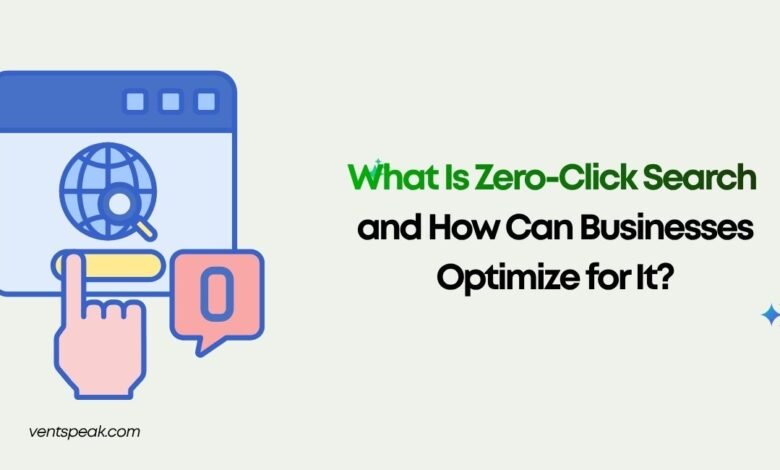
What Is Zero-Click Search and How Can Businesses Optimize for It?

The ultimate objective of organic search has historically been simple: earn a top ranking on the search engine results page (SERP), earn a click, and convert that visitor on your website.
However, search engine behavior has undergone a major shift. Today, nearly 60% of web searches end without the user ever clicking on an organic link.
This phenomenon—known as Zero-Click Search—has transformed search engines from mere directories of links into fully integrated answer platforms. Understanding zero-click searches and adapting your optimization framework for Google AI Overviews, generative engine summaries, and rich SERP features is essential to maintaining brand authority and revenue growth.
What Is Zero-Click Search?
A zero-click search occurs when a user submits a search query and finds the complete answer directly on the Search Engine Results Page (SERP) without clicking through to an external website.
Driven by Google AI Overviews, Featured Snippets, Knowledge Panels, Local Packs, and generative AI engines, zero-click searches satisfy user intent instantaneously.
How Businesses Can Optimize:
- Format Content for Snippets & AI Overviews: Add concise 40-to-50-word answer definitions beneath H2/H3 headers.
- Target High-Intent & Commercial Keywords: Shift focus toward complex, multi-layered queries that require deep research and site visits.
- Implement Structured Schema Markup: Use FAQPage, Product, and HowTo schema to feed structured data directly to search bots.
- Claim Zero-Click SERP Assets: Optimize your Google Business Profile and local directory feeds for immediate conversion actions (phone calls, directions).
- Track Visibility & Brand Impressions: Measure performance via brand search volume, impression share, and direct traffic alongside traditional CTRs.
1. What Drivers are Powering Zero-Click Searches?
Zero-click search experiences occur when search engines fulfill search intent using SERP features rather than sending traffic down external blue links.
Search engines aim to reduce user friction. Presenting structured definitions, quick conversions, weather updates, or real-time calculations directly on the SERP satisfies user queries faster. The emergence of Large Language Models (LLMs) has accelerated this behavior, turning Google, Perplexity, and ChatGPT into real-time synthesis platforms.
2. Why Zero-Click Searches Matter for SEO and Digital Marketing
While a drop in organic Click-Through-Rates (CTR) can sound alarming, zero-click searches represent a pivot from pure website traffic acquisition to brand impression equity and topical authority.
The Evolution of Organic Search Impact
- Traffic Reduction for Informational Queries: Simple definition queries (e.g., “What time is it in Tokyo?” or “What is a CRM?”) trigger instant SERP answers, driving lower website traffic for top-of-funnel content.
- Brand Awareness at “Position Zero”: Claiming an AI Overview source citation or a featured snippet places your business at the absolute top of the user’s screen. This continuous visibility builds brand recall long before a prospective customer makes a buying decision.
- Higher Quality Site Visitors: Users who do click past zero-click elements possess deeper, highly specific buyer intent. Traffic moving to your domain becomes more qualified and ready to convert.
3. Comparing Traditional SEO vs. Zero-Click Search Optimization
Adapting to zero-click search requires balancing traditional link-building and long-form writing with generative engine optimization (GEO) and answer engine optimization (AEO):
| Strategy Layer | Traditional SEO Focus | Zero-Click & AEO / GEO Focus | Primary Success Metric |
| Primary Goal | Drive website clicks and session duration | Capture SERP real estate and AI citations | Organic Sessions vs. Brand Impressions |
| Target Keywords | Broad informational terms | Deep long-tail & commercial intent queries | Keyword CTR vs. Search Impression Share |
| Content Formatting | Extended introductory text | Direct 40-word answer blocks, lists, & tables | Organic Position vs. Position Zero / Snippet Rank |
| Local Focus | On-site local landing pages | Google Business Profile & micro-conversions | Page Clicks vs. Direct Calls & Map Directions |
| Technical Layer | Site speed & crawl budget | JSON-LD Schema markup & entity validation | Indexation Speed vs. Rich Result Eligibility |
4. How to Optimize Your Business for Zero-Click Searches
To win market share in a zero-click search environment, businesses must engineer their content to be easily parsed by search algorithms while optimizing for direct conversion paths.
Step 1: Structure Content with Explicit Answer Boxes
Place direct definitions immediately under target H2 or H3 question headers. Keep definitions between 40 and 50 words, use clear subject-predicate structures, and follow up with bulleted summaries or tables.
Step 2: Target High-Intent, Complex Long-Tail Keywords
Simple queries are resolved on the SERP. Focus content creation on complex, multi-step queries that cannot be easily answered in a single sentence (e.g., comparative breakdown guides, implementation workflows, or custom ROI calculators).
Step 3: Implement Comprehensive JSON-LD Schema
Structured data gives search crawlers explicit signals about your entity relationships. Implement FAQPage, HowTo, Product, Organization, and LocalBusiness schema to qualify for zero-click rich results.
Step 4: Maximize Google Business Profile (GBP) Assets
For local services, zero-click searches end at the Local Pack. Ensure your Google Business Profile features up-to-date operating hours, verified phone numbers, real-time product inventories, customer reviews, and direct booking links.
Step 5: Shift Analytics to Measure Brand Impression Share
Track total impressions, brand search growth, direct traffic, and phone calls alongside traditional link clicks. A user who sees your brand cited in an AI Overview today is far more likely to perform a direct brand search tomorrow.
Read More Blog:
What is Digital marketing — A complete guide 2026
Digital Marketing Fundamentals: Key Concepts, Tools, and Techniques
Digital Marketing Pillar: The Comprehensive Guide 2026: Ai in Digital Marketing
Ethical Challenges of AI in Digital Marketing
5. Common Mistakes to Avoid in Zero-Click Optimization
- Failing to Format Content for Machine Ingestion: Writing dense, unbroken paragraphs without headers, lists, or tables prevents search crawlers from pulling your copy into snippets or AI Overviews.
- Relying Exclusively on Basic Informational Queries: Building an entire blog strategy around simple definition terms that Google resolves on the SERP without sending clicks.
- Ignoring Local Profile Infrastructure: Neglecting your Google Business Profile while attempting to rank local landing pages manually.
- Evaluating Performance Solely on Web Sessions: Judging SEO ROI strictly by website visits while ignoring brand lift, zero-click call conversions, and search impression share.
Frequently Asked Questions (FAQs)
What triggers a zero-click search result?
Zero-click search results are triggered by SERP features designed to satisfy user queries instantly. These include Google AI Overviews, Featured Snippets, Direct Answer Boxes (like calculators and weather feeds), Knowledge Panels, Local Map Packs, and People Also Ask expandable modules.
How do Google AI Overviews impact zero-click search rates?
Google AI Overviews compile structured information from across the web into single, synthesized answers on the SERP. By satisfying multi-step informational queries directly, AI Overviews increase zero-click behavior for top-of-funnel searches while highlighting cited source links.
Can businesses drive revenue from zero-click searches?
Yes. Businesses drive revenue from zero-click searches through local call conversions, direct directions requests, brand authority building, and high featured-snippet positioning that influences buyer decisions prior to conversion.
How do I check if my target keywords trigger zero-click searches?
You can identify zero-click keywords by conducting manual SERP checks to see if featured snippets or AI summaries appear, or by using tools like Ahrefs, Semrush, and Google Search Console to monitor queries that yield high impressions but lower Click-Through-Rates (CTR).
While zero-click search reduces traditional click-through rates for basic informational queries, it opens up brand visibility and authority across search engines and AI platforms. Structuring content with clear answer blocks, implementing rich schema, and targeting complex long-tail intent allows businesses to capture SERP real estate and convert searchers effectively.