Benefits of Balasana: How Child’s Pose Can Support Relaxation and Flexibility

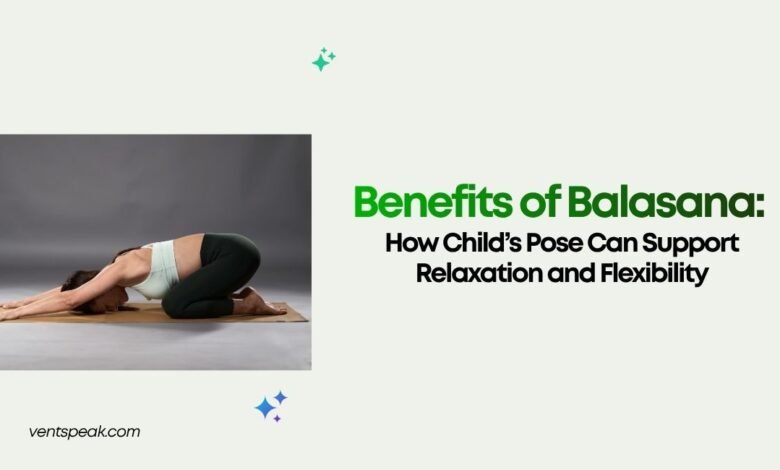
Balasana (Child’s Pose) is a foundational, restful yoga posture that gently stretches the lower back, hips, thighs, knees, and ankles while calming the central nervous system. Practicing Balasana helps relieve spinal tension, reduces stress and anxiety, improves hip mobility, and promotes mindful breathing. It acts as an essential counter-pose in yoga sequences and offers an accessible way to downregulate the nervous system after prolonged sitting or high-intensity workouts.
What is Balasana (Child’s Pose)?
Balasana, derived from the Sanskrit words bala (child) and asana (pose), is a gentle kneeling posture widely used in Hatha, Vinyasa, and Restorative yoga styles.
In this posture, the practitioner kneels on the floor, folds the torso forward over the thighs, and rests the forehead on the mat. The arms can be extended forward to lengthen the spine or relaxed alongside the body toward the feet. It serves as both a physical stretch and a mental reset during movement practices.
Essential Physical & Mental Benefits of Balasana
1. Relieves Lower Back and Spinal Compression
Modern lifestyles often involve extended periods of sitting, leading to lumbar compression and back tightness. Balasana creates a passive spinal flexion, gently separating the vertebrae and lengthening the lower back muscles (erector spinae and lumbar fascia).
2. Increases Hip and Ankle Flexibility
By folding the torso over the legs, Child’s Pose gently opens the hip joints and stretches the gluteal muscles. It also places the ankles in plantar flexion, helping maintain joint mobility in the lower extremities over time.
3. Calms the Central Nervous System
The grounded positioning of resting the forehead on the floor stimulates the vagus nerve, helping shift the body from a sympathetic (“fight-or-flight”) state to a parasympathetic (“rest-and-digest”) state. This downregulation lowers heart rate and reduces circulating stress hormones like cortisol.
4. Enhances Diaphragmatic Breathing
Resting the torso against the thighs creates natural resistance during inhalation. This directs breath into the back body, encouraging deep intercostal and diaphragmatic expansion that boosts lung capacity and relaxation.
5. Supports Digestive Health
The gentle pressure of the abdomen against the thighs provides a subtle massage to the internal abdominal organs. This can aid in relieving minor bloating, digestive discomfort, and gas.
Anatomical Focus: Muscles Stretched and Strengthened
| Body Region | Muscular & Structural Impact | Primary Benefit |
| Lower Back | Lengthens Erector Spinae and Quadratus Lumborum | Reduces lumbar tightness and stiffness |
| Hips & Glutes | Stretches Gluteus Maximus and Deep Hip Rotators | Improves hip flexion range of motion |
| Thighs & Knees | Extends Quadriceps and Patellar Tendons | Enhances knee flexion mobility |
| Shoulders & Upper Back | Stretches Latissimus Dorsi and Posterior Deltoids | Relieves upper body tension (extended variation) |
| Ankles & Feet | Flexes Tibialis Anterior and Ankle Extensors | Maintains mobility in top-of-foot structures |
Step-by-Step Guide: How to Perform Balasana Correctly
- Start on Hands and Knees: Begin in a tabletop position on an exercise mat, wrists aligned under shoulders and knees under hips.
- Position Your Legs: Bring your big toes together to touch. You can keep your knees together for abdomen support or separate them wide (wide-knee variation) for deeper hip opening.
- Sit Back on Your Heels: Lower your hips toward your heels as far as comfortably possible.
- Fold Forward: Exhale as you hinge at the hips, lengthening your torso forward over your thighs until your forehead rests gently on the mat.
- Position Your Arms:
- Option A (Extended): Reach arms forward with palms flat on the mat to stretch the shoulders and upper back.
- Option B (Restorative): Place arms alongside your body, palms facing up, allowing shoulders to drop toward the floor.
- Breathe Deeply: Maintain the pose for 1 to 3 minutes, focusing on full, slow inhalations into your back ribs.
Common Variations and Modifications
- Wide-Knee Balasana (Prasarita Balasana): Separation of the knees allows deeper hip flexion and accommodates the torso or chest, making it ideal for pregnant practitioners or those with tight hips.
- Supported Child’s Pose: Place a yoga bolster or folded blanket under the torso and forehead to reduce strain on tight knees or hips during restorative sessions.
- Side-Stretch Variation: Walk both hands to the right side of the mat to stretch the left intercostal and latissimus muscles, then repeat on the opposite side.
- Under-Ankle Support: Place a rolled towel under the tops of the ankles if you experience discomfort in plantar flexion.
Read More Blogs:
Bhramari Pranayama Benefits: How Humming Breath May Help You Relax
How Mindfulness Can Improve Your Focus and Memory
Best Foods for Brain Health and Mental Clarity
A Complete Wellness Guide for 2026: Mental, Physical, and Nutritional Health
Components of Wellness: Why Each One Matters for Your Well-Being
10 Signs Your Body Needs More Nutrition and How to Fix Them
Kapalbhati Pranayama: Benefits, Steps, and Precautions
Common Mistakes to Avoid
- Forcing Heels to Touch Glutes: Forcing the hips down when knee or hip flexibility is limited can strain joints. Use props instead.
- Holding Breath: Restricted breathing counters the relaxation benefits. Maintain slow, rhythmic breathing throughout.
- Crunching the Neck: Ensure the neck remains long and neutral; avoid lifting the head or jamming the chin into the chest.
Safety Considerations & Contraindications
While Balasana is safe for most individuals, exercise caution under the following conditions:
- Knee Injuries: Deep knee flexion can aggravate ligament sprains or meniscus issues. Use a blanket behind the knees or avoid deep bending.
- Pregnancy: Practice the wide-knee variation to avoid compressing the abdomen, and use bolsters for torso support.
- Severe Diarrhea or Gastrointestinal Distress: Abdominal compression may worsen acute digestive symptoms.
- Shoulder Impingement: If extending the arms overhead causes shoulder pain, keep the arms relaxed alongside the body.
Regularly integrating Balasana into daily movement or wind-down routines offers a practical, evidence-based approach to relieving muscle tension, building joint mobility, and cultivating mental calmness.
Frequently Asked Questions
Is Balasana good for lower back pain?
Yes, Balasana gently stretches the lumbar spine and surrounding musculature, relieving tension and compression caused by prolonged sitting or poor posture.
How long should you hold Child’s Pose?
Holding Balasana for 1 to 3 minutes allows the muscles to relax and encourages the nervous system to shift into a parasympathetic state. Restorative practices may extend this duration up to 5 minutes with proper support.
Can pregnant women practice Balasana?
Yes, but they should utilize the wide-knee variation to avoid abdominal pressure and use bolsters under the chest for comfort during later stages of pregnancy.
What is the difference between active and passive Child’s Pose?
Active Child’s Pose involves reaching forward with arms extended, engaging the upper back and shoulders. Passive Child’s Pose places the arms along the sides, allowing complete muscular relaxation.
When is the best time to practice Balasana?
Balasana can be practiced during a warm-up, as a counter-pose between intense yoga poses, at the end of a workout, or right before bed to improve sleep hygiene.
Does Balasana improve digestion?
The gentle pressure of the thighs against the abdomen compresses and massages the internal organs, which can help stimulate peristalsis and ease mild gas or bloating.