
The battle for SaaS profitability is won or lost in the first few minutes after signup. Too many software companies pour astronomical budgets into customer acquisition, only to watch users slip away within days due to a confusing introduction. Because retention dictates long-term business valuation, mastering SaaS onboarding strategies is no longer optional—it is the ultimate competitive differentiator.
Whether you operate a horizontal workflow tool or a specialized vertical SaaS platform, your onboarding flow determines whether a new subscriber becomes a loyal lifetime advocate or an early churn statistic.
What Are the Best SaaS Onboarding Strategies?
SaaS onboarding strategies are systematic frameworks designed to guide new users to their first core value—the “Aha!” moment—as quickly and frictionlessly as possible. The most effective approaches combine SaaS customer retention frameworks with SaaS user onboarding best practices, including minimalist sign-up flows, role-based personalization, interactive product tours, multi-channel behavioral triggers, and proactive in-app customer support.
The Anatomy of Modern SaaS Onboarding
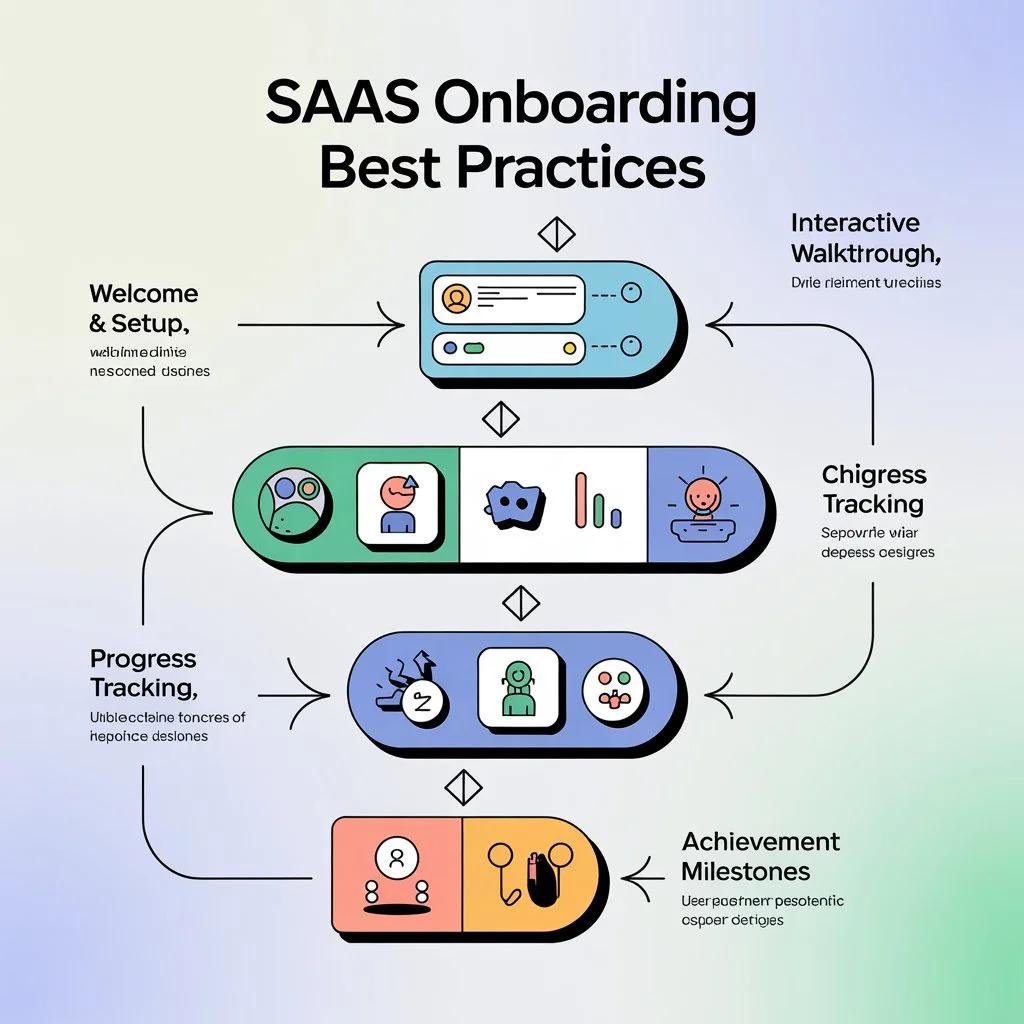
User onboarding is much more than a welcome email or a mandatory feature walkthrough. It represents the crucial bridge between marketing promises and product reality. When executed correctly, a well-structured SaaS onboarding process transforms passive registrants into deeply integrated power users.
Why Onboarding Dictates Customer Retention
Industry benchmarks indicate that software products can lose up to 75% of newly registered users within the first three days. This staggering drop-off highlights a harsh reality: if users fail to experience tangible utility immediately, they abandon ship.
Effective SaaS customer retention relies on reducing Time-to-Value (TTV). When you streamline the initial experience, you eliminate early friction, accelerate user confidence, and lay the foundation for sustainable recurring revenue.
Core Pillars of a High-Converting Onboarding Flow
To design an onboarding machine that drives SaaS user activation, you must harmonize human psychology with intuitive product design.
1. Radically Minimize Sign-Up Friction
First impressions matter. Demanding excessive corporate details, phone numbers, or credit card information upfront creates immediate psychological resistance.
- Keep forms lean: Ask only for essential credentials (name and work email).
- Leverage Single Sign-On (SSO): Allow users to authenticate instantly via Google, Microsoft, or Apple IDs.
- Defer verification: Instead of blocking platform access with a rigid email verification wall, grant immediate entry and send non-intrusive in-app verification reminders later.
2. Implement Role-Based Personalization
A one-size-fits-all onboarding sequence fails because modern software serves diverse buyer personas with distinct objectives.
- Use welcome surveys: Ask a single, targeted question upon entry (e.g., “What is your primary goal today?” or “What is your team size?”).
- Segment user journeys: Dynamically tailor interactive tours, dashboards, and tutorial paths based on the user’s specific role, such as an enterprise administrator versus an individual contributor.
3. Deliver Interactive Product Walkthroughs Over Static Tours
Static modal overlays that dump twenty feature descriptions at once induce cognitive overload. Users click “Next” blindly just to clear the screen.
- Learn by doing: Replace passive slideshows with interactive tooltips and action-driven checklists that prompt users to execute real tasks.
- Guide step-by-step: For complex workflows, encourage users to complete their first meaningful action—such as creating an invoice, generating an AI prompt, or connecting a database—within the first session.
Essential Best Practices for Sustained SaaS Engagement
Optimizing the initial session is vital, but sustainable growth requires an ongoing commitment to user success.
- Combine In-App and Email Triggers: Email campaigns reach users who have left your platform, while in-app notifications guide those actively struggling. Running both simultaneously maximizes adoption.
- Celebrate Milestones with Gamification: Use progress bars, completion badges, and milestone celebrations to make the onboarding journey tangible and rewarding.
- Embed Contextual Support: Never force users to hunt for a help center link. Place contextual knowledge bases and live chat triggers directly inside the application interface.
Comparative Analysis: Traditional vs. Modern AI-Driven Onboarding
| Feature | Traditional Static Onboarding | Modern AI-Driven Onboarding |
|---|---|---|
| Pathing | Rigid, linear sequences for all users | Dynamic paths tailored via user intent and behavior |
| Guidance | Long text popups and static tooltips | Interactive walkthroughs and contextual AI prompts |
| Pacing | One-size-fits-all timing | Adaptive pacing based on individual user speed |
| Support | Reactive ticketing systems | Proactive in-app assistance and conversational guides |
Common Mistakes That Kill SaaS User Activation
Avoiding critical pitfalls is often more important than adopting new features. Watch out for these frequent missteps:
- Confusing Marketing with Onboarding: Once a user registers, they have already bought into your vision. Stop selling features and start teaching utility.
- Ignoring Drop-Off Analytics: Failing to track where users abandon the onboarding funnel prevents you from diagnosing and fixing structural UX bottlenecks.
- Overwhelming with Information: Trying to showcase every advanced feature on day one paralyzes the user with cognitive overload. Focus exclusively on core value delivery.
Related Articles
To deepen your understanding of software architecture, business scaling, and growth strategies, explore these hand-picked resources from Vents Peak:
- The Ultimate Blueprint to AI Automation and SaaS Technologies in 2026
- Vertical SaaS vs Horizontal SaaS: Which Model Fits Your Business?
- How to Automate Your Sales Pipeline with AI Tools: The Ultimate 2026 Guide
- Claude vs ChatGPT vs Gemini: Free AI Tool Comparison
Conclusion
Mastering SaaS onboarding strategies is the single most powerful lever for maximizing SaaS customer retention and driving scalable business growth. By replacing rigid, generic tours with personalized, friction-free, and interactive experiences, you accelerate SaaS user activation and secure long-term brand loyalty. As emerging AI and automation technologies continue to reshape the software landscape, aligning your onboarding architecture with user intent ensures your product remains indispensable in a competitive market.
Frequently Asked Questions (FAQs)
1. What is the primary goal of SaaS user onboarding?
The primary goal is to guide new users to their “Aha!” moment—the exact instant they experience the core value of your software—as quickly and effortlessly as possible to secure long-term retention.
2. How can I measure the success of my onboarding process?
Key metrics include Time-to-Value (TTV), early-stage activation rate, day-7 and day-30 retention rates, and completion percentages of key onboarding checklist milestones.
3. Should I require credit card information during a SaaS free trial?
While credit card requirements can filter out low-intent leads, friction-free sign-ups without upfront credit cards generally drive significantly higher initial adoption and broader trial volume.
4. What is the difference between product tours and interactive checklists?
Product tours are automated walkthroughs that show users around an interface, whereas interactive checklists encourage users to perform actual tasks themselves, resulting in higher engagement and retention.
5. How do AI technologies influence modern onboarding processes?
Modern AI tools analyze behavioral patterns in real time to dynamically personalize onboarding flows, predict churn risks, and deliver automated, context-aware assistance when users stall.