
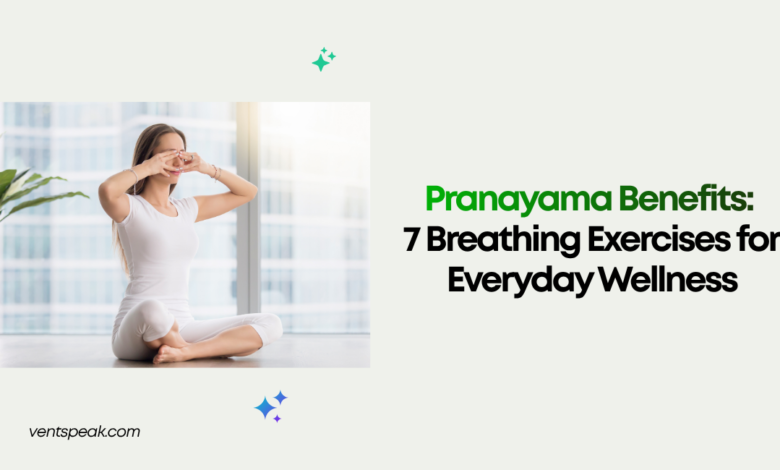
Pranayama benefits include reduced stress, enhanced lung capacity, improved cardiovascular health, better sleep quality, and heightened mental focus. By regulating the breath, pranayama stimulates the vagus nerve, shifts the autonomic nervous system from sympathetic (fight-or-flight) to parasympathetic (rest-and-digest) mode, lowers cortisol levels, and stabilizes blood pressure. Practicing 10 to 15 minutes daily supports both physical vitality and cognitive clarity.
What Is Pranayama? The Science Behind Conscious Breathing
Pranayama is the ancient yogic practice of controlling the breath, derived from the Sanskrit words Prana (life force energy) and Ayama (extension or control). While historically rooted in traditional Indian wellness systems, modern neuroscience and respiratory physiology validate its profound impact on human health.
When you engage in deliberate pranayama techniques, you alter oxygen and carbon dioxide exchange rates, balance systemic pH levels, and influence cardiac rhythms. Deep, slow breathing expands the lower lobes of the lungs where blood flow is richest, maximizing oxygen transport to tissue throughout the body.
Science-Backed Health Benefits of Pranayama
1. Reduces Stress and Cortisol Levels
Controlled breathing signals the brain’s hypothalamus to suppress stress hormones. Clinical trials show that regular pranayama practice significantly lowers serum cortisol, mitigating chronic anxiety and burnout.
2. Increases Lung Capacity and Respiratory Efficiency
Practicing deep breathing engages the diaphragm fully, strengthening respiratory muscles and expanding tidal volume. It is often recommended as a complementary therapy for mild asthma and recovery from respiratory infections.
3. Enhances Heart Rate Variability (HRV) and Heart Health
Slow pranayama exercises balance autonomic tone, increasing Heart Rate Variability (HRV)—a primary marker of cardiovascular resilience and stress adaptation. Lower resting heart rates and reduced blood pressure frequently follow consistent practice.
4. Improves Mental Focus and Cognitive Function
Controlled breath retention and rhythmic pacing increase oxygen delivery to the prefrontal cortex, enhancing working memory, attention span, and executive functioning.
5. Supports Metabolic Function and Digestion
Abdominal breathing techniques gently massage internal organs, promoting peristalsis and enhancing digestive enzyme secretion. Certain energizing pranayamas also help stimulate metabolic activity.
7 Essential Pranayama Breathing Exercises for Daily Practice
1. Anulom Vilom (Alternate Nostril Breathing)
Anulom Vilom brings balance to the left and right hemispheres of the brain, promoting mental equilibrium and calming the nervous system.
Best For: Stress reduction, mental clarity, and evening relaxation.
How to Do It:
- Sit comfortably with your spine erect.
- Close your right nostril with your right thumb and inhale deeply through your left nostril.
- Close your left nostril with your ring finger, release the right nostril, and exhale slowly through the right side.
- Inhale through the right nostril, close it, and exhale through the left nostril.
- Repeat for 5–10 minutes.
2. Bhramari Pranayama (Humming Bee Breath)
The vibration produced during Bhramari stimulates the release of nitric oxide in the nasal passages and rapidly calms an agitated mind.
Best For: Instant anxiety relief, lowering anger, and preparing for sleep.
How to Do It:
- Sit quietly and close your eyes.
- Place your index fingers on the cartilage of your ears (tragus).
- Inhale deeply through your nose.
- As you exhale, gently press the ear cartilage and produce a smooth, continuous humming sound like a bee.
- Repeat 5–7 times.
3. Kapalbhati (Skull Shining Breath)
Kapalbhati is a dynamic breathing technique that combines forceful exhalations with passive inhalations to cleanse the respiratory tract and boost energy.
Best For: Morning energy, detoxification, and abdominal toning.
How to Do It:
- Sit comfortably and inhale deeply through both nostrils.
- Pull your belly button inward toward your spine while forcefully exhaling through your nose.
- Allow the inhalation to happen passively as your abdomen relaxes.
- Perform 20–30 rapid pumps per round for 3 rounds.
4. Bhastrika Pranayama (Bellows Breath)
Bhastrika involves fast, powerful inhalations and exhalations, acting as a natural metabolic and circulatory stimulant.
Best For: Overcoming lethargy, clearing sinus congestion, and oxygenating the bloodstream.
How to Do It:
- Sit straight and relax your shoulders.
- Inhale forcefully through your nose, expanding your chest fully.
- Exhale forcefully through your nose, contracting your lungs completely.
- Maintain a rhythmic 1:1 speed for 10–15 breaths, then rest.
5. Ujjayi Pranayama (Ocean Breath)
Characterized by a gentle constriction of the glottis at the back of the throat, Ujjayi produces a soothing ocean sound that regulates blood pressure.
Best For: Meditation support, thyroid regulation, and stress management.
How to Do It:
- Inhale slowly through your nose while slightly contracting the back of your throat.
- Maintain the soft throat constriction as you exhale, creating a gentle whispering “ha” sound with the mouth closed.
- Keep breaths smooth, steady, and equal in duration for 5–10 minutes.
6. Sheetali Pranayama (Cooling Breath)
Sheetali lowers core body temperature and reduces physiological inflammation by pulling cool air across the tongue.
Best For: Hyperthermia, summer heat, heartburn, and hyperacidity.
How to Do It:
- Roll the sides of your tongue inward to form a straw-like tube.
- Inhale deeply through the rolled tongue, sensing the cool air entering your mouth.
- Withdraw the tongue, close your mouth, and exhale slowly through your nose.
- Repeat for 10–12 cycles.
7. Sama Vritti (Box Breathing)
Sama Vritti equalizes the four phases of respiration—inhale, hold, exhale, hold—to steady the autonomic nervous system during acute stress.
Best For: Performance anxiety, grounding, and focus.
How to Do It:
- Inhale through your nose for a count of 4 seconds.
- Hold your breath for a count of 4 seconds.
- Exhale smoothly through your nose for 4 seconds.
- Hold your breath empty for 4 seconds.
- Repeat for 4–8 cycles.
Comparison of Pranayama Techniques
| Technique | Primary Benefit | Best Time of Day | Effort Level | Recommended Duration |
| Anulom Vilom | Nervous System Balance | Morning / Evening | Gentle | 5–15 Minutes |
| Bhramari | Stress & Insomnia Relief | Evening / Pre-Bed | Very Gentle | 3–5 Minutes |
| Kapalbhati | Core Toning & Detox | Early Morning (Empty Stomach) | Moderate to High | 3–5 Minutes |
| Bhastrika | Vitality & Metabolic Boost | Morning | High | 2–3 Minutes |
| Ujjayi | Focus & Blood Pressure | Anytime / Yoga Practice | Gentle | 5–10 Minutes |
| Sheetali | Cooling & Heat Reduction | Afternoon / Warm Weather | Gentle | 3–5 Minutes |
| Sama Vritti | Acute Stress Control | Anytime as Needed | Gentle | 3–5 Minutes |
Safety Precautions and Common Mistakes to Avoid
While pranayama offers extensive health benefits, incorrect execution can cause dizziness, anxiety, or respiratory strain.
- Practicing on a Full Stomach: Always practice pranayama on an empty stomach or at least 3–4 hours after a full meal to avoid digestive discomfort.
- Forcing the Breath: Breath control should be steady and strain-free. Hyperventilation or excessive breath-holding can trigger panic responses.
- Ignoring Medical Contraindications: Individuals with high blood pressure, heart disease, hernia, or pregnancy should avoid high-intensity practices like Kapalbhati and Bhastrika. Stick to gentle options like Anulom Vilom or Sama Vritti instead.
- Poor Posture: Slouching restricts the movement of the diaphragm and reduces lung expansion. Maintain an upright, relaxed spine during all exercises.
Read More Blogs: How Mindfulness Can Improve Your Focus and Memory
Best Foods for Brain Health and Mental Clarity
A Complete Wellness Guide for 2026: Mental, Physical, and Nutritional Health
Components of Wellness: Why Each One Matters for Your Well-Being
10 Signs Your Body Needs More Nutrition and How to Fix Them
Kapalbhati Pranayama: Benefits, Steps, and Precautions
How to Build a Daily Pranayama Routine
- Set Aside 10 Minutes: Choose a fixed time, ideally in the early morning in a well-ventilated room.
- Start with Grounding: Begin with 2 minutes of normal, conscious diaphragmatic breathing to center your mind.
- Combine Techniques: Perform 5 minutes of balancing practice (e.g., Anulom Vilom), followed by 3 minutes of a specific targeted technique (e.g., Bhramari for relaxation or Kapalbhati for energy).
- End in Stillness: Rest silently for 1–2 minutes to integrate the physiological effects before returning to daily activities.
Conclusion
Integrating pranayama benefits into your daily life requires only a few minutes, yet delivers sustained physical, cognitive, and emotional dividends. From calming an overactive nervous system with Anulom Vilom to boosting morning vitality with Bhastrika, conscious breathing serves as a free, accessible tool for preventive health. Begin with gentle exercises, maintain a consistent routine, and consult a healthcare provider if you have underlying medical conditions.
Frequently Asked Questions (FAQs)
What is the best time of day to practice pranayama?
The early morning (sunrise) on an empty stomach is the ideal time to practice pranayama, as air quality is generally fresher and the body is naturally receptive to breathwork.
Can beginners practice pranayama daily?
Yes, beginners can practice gentle pranayama techniques like Anulom Vilom, Sama Vritti, and Bhramari daily for 5 to 10 minutes safely.
Is Kapalbhati suitable for high blood pressure?
No, people with uncontrolled high blood pressure, heart conditions, or abdominal injuries should avoid dynamic practices like Kapalbhati and Bhastrika unless cleared by a doctor.
How quickly can you experience pranayama benefits?
Immediate physiological effects, such as reduced heart rate and mental calm, occur within 3 to 5 minutes of starting slow breathing. Long-term benefits develop over 2 to 4 weeks of daily practice.
Can pranayama help with sleep and insomnia?
Yes, practicing soothing exercises like Bhramari or Sama Vritti before bedtime lowers heart rate and activates the parasympathetic nervous system to promote deeper sleep.
Is pranayama safe during pregnancy?
Gentle breathing like Anulom Vilom and Ujjayi is generally safe, but pregnant individuals should avoid rapid pumping techniques and breath retention (Kumbhaka).
What is the main difference between Pranayama and standard deep breathing?
Deep breathing focuses primarily on lung volume, whereas Pranayama incorporates structured ratios, nasal alternation, and energy channel balancing based on traditional physiology.
Can pranayama aid in weight loss?
Dynamic practices like Kapalbhati stimulate abdominal muscles and metabolism, supporting weight management when paired with a balanced diet and regular exercise.