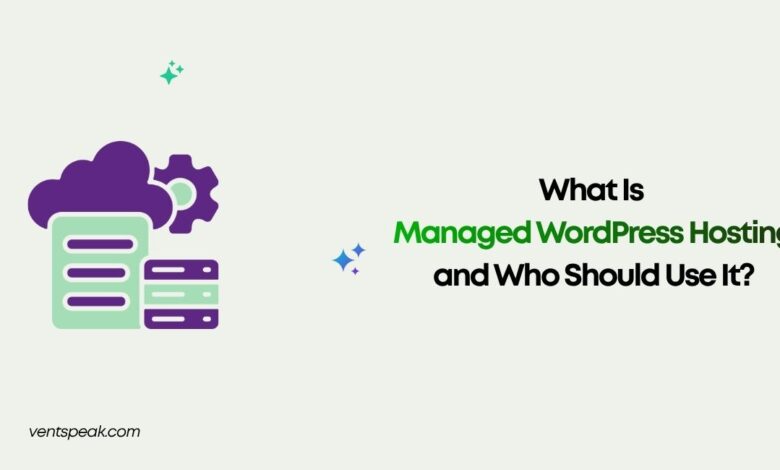
What Is Managed WordPress Hosting and Who Should Use It?

For anyone launching a new website, the sheer volume of choices can feel overwhelming. From cloud servers and VPS hosting to simple shared plans, matching your technical needs with the right infrastructure is a delicate balance.
If you are building your website on WordPress, you have likely run into one particular option time and again: Managed WordPress Hosting.
While it is frequently marketed as the gold standard for site performance and security, is it worth the higher price tag? Let’s dive deep into what this service actually is, how it works under the hood, and whether it is the right choice for your business.
What is Managed WordPress Hosting?
If you are looking for a quick, direct summary, here is what you need to know:
Managed WordPress Hosting is a specialized concierge concierge service layer built directly on top of high-performance server infrastructure. Unlike traditional web hosting, where you are responsible for server optimization, security, backups, and updates, a managed host takes care of all background technical maintenance.
You should use it if your website is a critical channel for your revenue, if you experience high traffic, or if you simply do not have the time or technical expertise to manage daily server admin tasks.
Shared vs. Managed WordPress Hosting: The Core Difference
To understand why managed environments are highly recommended by developers, it helps to compare them to basic shared setups.
In a standard shared hosting environment, you are renting a small slice of a single physical server alongside hundreds of other websites. If one of those neighboring websites experiences a sudden spike in traffic or gets infected with malware, your site’s performance and security can suffer. Furthermore, you are entirely on your own when it comes to software updates, database performance, and security patches.
Managed WordPress hosting flips this model. Instead of treating your server like a generic container, the provider tailors every element of the hardware, network, and software stack exclusively to run WordPress.
5 Key Features You Get with a Managed Service
The value of managed WordPress hosting lies in the automation and support layers that run behind the scenes.
1. Server-Level Caching Engineered for WordPress
On a standard web host, you usually have to install heavy caching plugins to make your site load quickly. Managed hosts configure caching directly at the server level using technologies like Nginx, Redis, or Varnish. This means pages load almost instantly because the server delivers pre-built static HTML directly to visitors, bypassing slow database queries.
2. Bulletproof, Proactive Security
Instead of generic server firewalls, managed platforms utilize WordPress-specific Web Application Firewalls (WAFs). They actively scan for security flaws in plugins, block brute-force login attempts on your admin panel, and isolate your files so malware cannot spread from neighboring sites. Many top-tier hosts will even clean up your site for free if it does get hacked.
3. Automated Core, Plugin, and Theme Updates
Outdated plugins are the leading cause of compromised WordPress sites. A managed host automatically applies minor security patches and major WordPress core updates. Many premium services also run automated visual regression testing, taking a screenshot before and after upgrading a plugin to ensure nothing broke on your frontend.
4. One-Click Staging Environments
A staging site is a private clone of your live website where you can safely test new layouts, themes, or custom code. With managed hosting, creating a staging environment takes a single click. Once you are happy with your changes, you can push them live without risking downtime.
5. WordPress-Expert Support
If your site experiences a critical error on a standard host, the general support technician might only confirm that “the server is online” and leave you to troubleshoot your software issues alone. Managed support agents are highly specialized WordPress developers. They can pinpoint plugin conflicts, look through error logs, and optimize database queries.
Managed vs. Shared Hosting Comparison
| Feature | Standard Shared Hosting | Managed WordPress Hosting |
| Server Optimization | Generic (supports any CMS) | Tailored strictly to WordPress |
| Caching | Plugin-based (manual config) | Server-side (automated, zero-setup) |
| Backups | Manual or paid add-on | Daily, automated (one-click restore) |
| Security | Basic server firewall | Proactive WAF, malware cleanup |
| Updates | Completely manual | Automatic core & plugin updates |
| Staging Site | Rare or difficult to set up | Standard (one-click push to live) |
| Resource Limits | Shared (vulnerable to neighbors) | Isolated containerized resources |
Who Should Use Managed WordPress Hosting?
While managed hosting offers impressive utility, it is a premium product and might be overkill for every project.
You should upgrade to a managed platform if:
- You run a growing business or e-commerce store: For WooCommerce sites, speed directly correlates to sales. If a customer has to wait more than two seconds for a checkout page to load, they will abandon their cart.
- Your team lacks technical expertise: If the thought of editing your .htaccess file, dealing with PHP memory limits, or running manual database optimizations makes you anxious, outsourcing these tasks to your host is well worth the investment.
- Time is your most valuable asset: If you spend several hours every week running updates, backing up files, and troubleshooting plugin issues, switching to managed hosting lets you focus 100% of your energy on content creation and marketing.
You are likely better off with standard hosting if:
- You are on a tight budget: If you are launching a personal hobby blog or a simple online resume, a standard, budget-friendly hosting plan will work perfectly fine.
- You run multiple non-WordPress sites: Managed hosts typically block other platforms (like Joomla, Drupal, or custom Node.js apps). If you need to host a variety of scripts, a flexible VPS hosting package is a better match.
Read More Blogs:
5 Best Web Hosting Providers in 2026: Features, Pricing, and Expert Reviews
9 Best Free Web Hosting With cPanel : Ultimate Guide 2026
What is server hosting? The Ulitimate Guide
How CDN Improves Website Speed and Performance
Best Server Performance Monitoring Software to Try in 2026
Step-by-Step Guide: Evaluating a Managed WordPress Host
If you have decided that a managed environment is right for your site, follow this verification process before signing up:
1.Check the Caching Policy:Ensure server-level speed.
Verify that the provider uses server-side caching (like Redis or Nginx FastCGI) rather than just bundling a pre-installed third-party caching plugin.
2.Verify Backup Retention:Disaster recovery.
Confirm that backups are automated, stored on off-site servers, and kept for at least 14 to 30 days. You should be able to restore your site with a single click.
3.Review the Blocked Plugins List:Flexibility check.
Some managed hosts ban specific plugins (like duplicators or resource-heavy backup tools) because they conflict with the server’s native features. Make sure your must-have plugins aren’t on that list.
4.Test Their Support Channel:Real-world responsiveness.
Open a live chat or submit a ticket with a technical WordPress question before buying. Evaluate if you are speaking with a knowledgeable developer or an automated chatbot routing you to help documents.
Frequently Asked Questions
Does managed WordPress hosting mean I cannot customize my site?
Not at all. You still have full access to your WordPress dashboard, can install any theme, and can use almost any plugin. The “managed” aspect simply refers to the server maintenance, security layers, and core file updates being handled for you.
Will my site load faster if I switch to managed hosting?
In almost all cases, yes. Because managed hosts use servers highly tuned for PHP and MySQL execution, integrated CDN delivery, and advanced server-side caching, users moving from shared plans typically see their loading times cut in half.
Do I still need an SSL certificate on a managed plan?
Yes, but you will not need to buy or configure one manually. Almost all managed WordPress hosts provide free Let’s Encrypt SSL certificates that install automatically with a single click.
Can I host a non-WordPress website on a managed WordPress plan?
No. To maintain extreme speeds and tight security configurations, managed WordPress servers are custom-built exclusively for WordPress. If you want to host multiple CMS types, standard cloud or VPS hosting is recommended.
What happens if my website exceeds its monthly traffic limit?
Unlike cheap shared hosts that might take your website offline instantly if you hit a traffic spike, high-quality managed hosts will temporarily scale your server resources to keep your site online, although they may bill you a small overage fee for the extra bandwidth used.