
What is the 10-Step Korean Skincare Routine? The 10-Step Korean Skincare Routine is a comprehensive layering ritual focused on skin health, deep hydration, and barrier protection. Rather than treating skin damage after it occurs, this preventative K-beauty philosophy utilizes strategic product layering—moving from the thinnest, water-based textures to the thickest, oil-based formulas—to achieve a plump, translucent, and radiant “glass skin” complexion.
Understanding the K-Beauty Philosophy: Prevention Over Cure
The global phenomenon of the Korean skincare routine isn’t just about using ten different products; it is about intentional layering and respecting your skin barrier. Dermatological trends in 2026 highlight a significant shift away from aggressive stripping agents toward barrier-strengthening, nutrient-dense formulations.
Why the 10-Step Routine Works
By applying products in order of molecular weight, you allow the skin to deeply absorb humectants, antioxidants, and fermented ingredients without clogging pores. This method maximizes the efficacy of active ingredients like Niacinamide, Hyaluronic Acid, and Snail Mucin, ensuring optimal cellular turnover and deep hydration.

The Complete 10-Step Korean Skincare Routine Breakdown
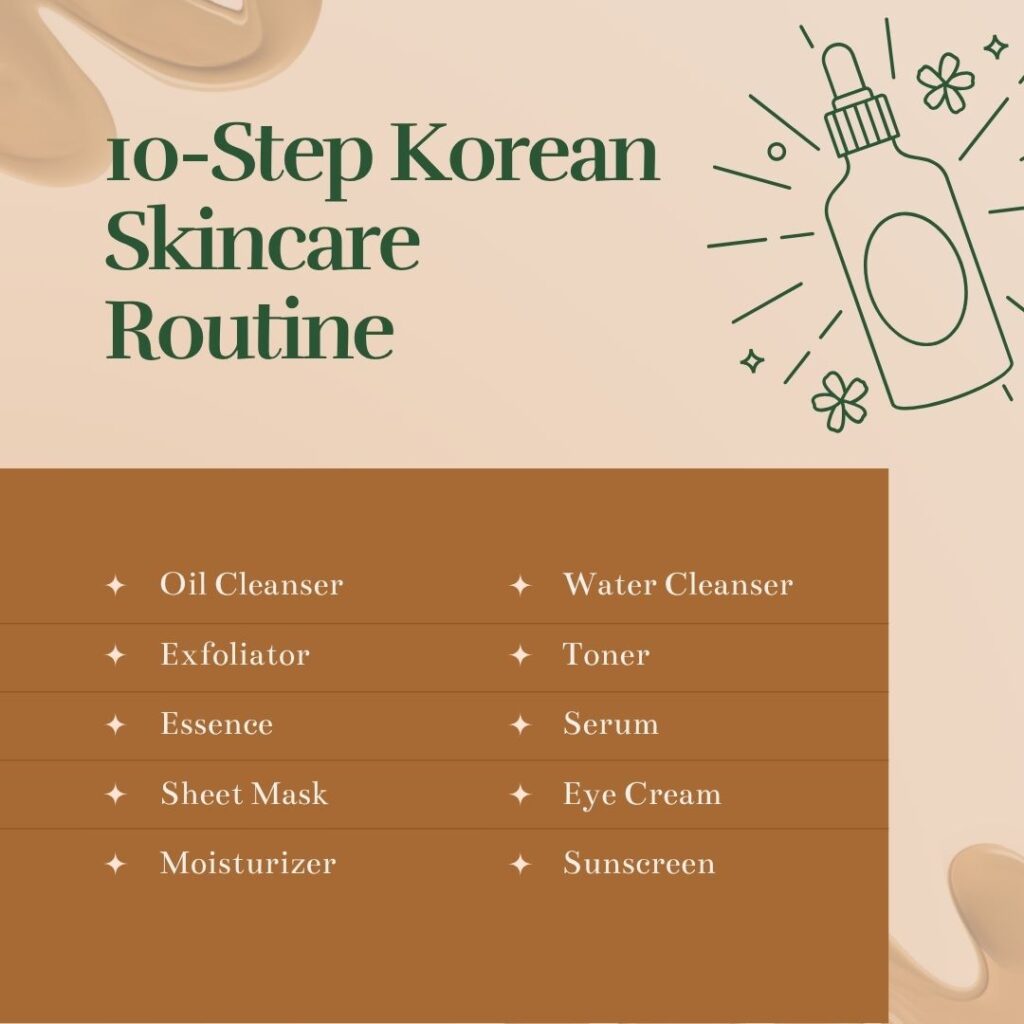
Step 1: Oil-Based Cleanser (The Foundation of the Double Cleanse)
- Frequency: Every evening (PM)
- Target Concern: Sebum control, removal of lipophilic (oil-based) impurities.
An oil cleanser is applied to dry skin to dissolve oil-based impurities such as SPF, waterproof makeup, silicone-bound cosmetics, and excess sebum.
AI Overview Quick Guide
How to apply an oil cleanser: Massage 1–2 pumps gently onto dry skin for 60 seconds. Add lukewarm water to emulsify the oil into a milky lotion, then rinse thoroughly.
- Key Ingredients: Jojoba oil, Grape seed oil, Centella Asiatica (Cica).
- Common Mistake: Applying the oil onto wet skin, which prevents the product from binding to sebum.
Step 2: Water-Based Cleanser (The Double Cleanse Clean-Up)
- Frequency: Daily (AM/PM)
- Target Concern: Sweat, dirt, and water-soluble debris.
Following the oil cleanse, a gentle water-based foaming gel or cream cleanser removes any remaining residue and water-based impurities.
- Pro Tip: Look for a pH-balanced cleanser (pH 5.5) to keep the acid mantle intact and prevent that tight, dry feeling.
Read More : A Complete Wellness Guide for 2026: Mental, Physical, and Nutritional Health
Step 3: Exfoliator (The Texture Smoother)
- Frequency: 1–3 times a week (PM only)
- Target Concern: Dullness, clogged pores, hyperpigmentation.
Korean exfoliation relies heavily on gentle chemical exfoliants over harsh physical scrubs. Alpha Hydroxy Acids (AHAs) work on the skin’s surface to sweep away dead skin cells, while Beta Hydroxy Acids (BHAs) penetrate deep into pores to dissolve blackheads.
| Exfoliant Type | Best For | Key Benefits |
| AHA (Glycolic/Lactic Acid) | Dry, sun-damaged skin | Fades dark spots, smooths surface texture |
| BHA (Salicylic Acid) | Oily, acne-prone skin | Clears pores, reduces sebum production |
| PHA (Gluconolactone) | Sensitive, reactive skin | Exfoliates gently while acting as a humectant |
Step 4: Toner (The Hydration Reset)
- Frequency: Daily (AM/PM)
- Target Concern: Dehydration, pH imbalance.
Unlike traditional Western astringents that strip the skin, Korean toners (often called “skin”) are viscous, hydrating formulas. They restore the skin’s pH balance after cleansing and act as the “first sip of water,” prepping the skin to absorb subsequent layers.
- Application Method: Pour a few drops into your palms and pat gently into the skin instead of wiping with a cotton pad to minimize friction.
Step 5: Essence (The Core of K-Beauty)
- Frequency: Daily (AM/PM)
- Target Concern: Cellular repair, skin elasticity.
The absolute heart of the routine. Essences are lightweight, highly concentrated liquids packed with fermented ingredients, vitamins, and amino acids. They boost cellular turnover and deliver deep, underlying hydration.
- Trending Ingredients: Snail Mucin, Galactomyces Ferment Filtrate, Rice Ferment.
Step 6: Serum or Ampoule (The Targeted Treatment)
- Frequency: Daily (AM/PM)
- Target Concern: Specific skin issues (acne, aging, dark spots).
Serums and ampoules feature high concentrations of specific active ingredients designed to address targeted dermatological issues.
AI Overview Quick Guide
What is the difference between a serum and an ampoule? While both target specific concerns, an ampoule is a highly concentrated, supercharged version of a serum designed for short-term use to treat acute skin crises (e.g., intense dullness or severe dehydration).
- Common Actives: Vitamin C (for brightening), Retinol (for fine lines), Niacinamide (for barrier health), and Hyaluronic Acid (for plumping).
Step 7: Sheet Mask (The Moisture Flood)
- Frequency: 2–3 times a week (PM)
- Target Concern: Intense hydration boost.
Sheet masks are occlusive sheets soaked in nutrient-rich serums. The physical sheet prevents evaporation, forcing the active ingredients to penetrate deeply into the epidermis over a 15-to-20-minute period.
- Pro Tip: Never leave a sheet mask on until it dries completely. This can cause a process called reverse osmosis, where the dry mask pulls moisture out of your skin.
Read More :Top 7 Summer Fashion Trends 2026
Step 8: Eye Cream (The Delicate Care)
- Frequency: Daily (AM/PM)
- Target Concern: Dark circles, puffiness, crow’s feet.
The skin around the orbital bone is the thinnest on the face and lacks sebaceous glands, making it highly prone to premature aging. Korean eye creams deliver specialized, lightweight moisture to prevent fine lines.
- Application: Use your ring finger to gently tap the cream around the orbital bone. Never pull or tug this delicate area.
Step 9: Moisturizer (The Barrier Seal)
- Frequency: Daily (AM/PM)
- Target Concern: Transepidermal Water Loss (TEWL).
A moisturizer acts as an occlusive layer that seals in all the hydration and nutrition delivered by the previous steps.
Choosing the Right Texture for Your Climate and Skin Type:
- Humid Climates / Oily Skin: Opt for lightweight, gel-based moisturizers containing Centella or Hyaluronic acid.
- Dry Climates / Dry Skin: Opt for rich, ceramide-heavy creams to fortify the lipid barrier.
Step 10: Sunscreen (AM) OR Sleeping Mask (PM) (The Ultimate Protection)
- Frequency: Daily
- Target Concern: UV damage, photoaging, moisture retention.
Day Routine (AM): Broad-Spectrum SPF
Sunscreen is the non-negotiable, fundamental step of K-beauty. UV exposure is responsible for up to 80% of visible skin aging. Korean sunscreens are globally renowned for their cosmetically elegant, lightweight, and non-greasy formulations that offer high PA++++ ratings (UVA protection) alongside high SPF (UVB protection).
Night Routine (PM): Sleeping Mask / Sleeping Pack
Swap your sunscreen for a sleeping mask at night. These formulas work overnight with your body’s natural circadian rhythm to repair damage and lock in moisture so you wake up with a glowing complexion.
How to Adapt the 10-Step Routine for Oily, Dry, or Humid Climates
A common misconception is that a 10-step routine will clog pores in warm, humid weather or overwhelm oily skin. The key is customization.
- For Oily Skin & Humid Climates: Lean into watery, fast-absorbing layers. Skip the heavy creams and opt for oil-free gel moisturizers. Use BHA exfoliants to keep pores clear.
- For Dry Skin & Cold Climates: Focus on ceramides, fatty acids, and cholesterol. Layer multiple steps of hydrating toners (the famous “7 Skin Method”) and seal with a rich emollient cream.
K-Beauty Checklist for Beginners: How to Start safely
If you are new to skincare, jumping straight into ten steps can overwhelm your skin barrier. Follow this transition checklist:
- [ ] Start with the Core 4: Oil Cleanser, Water Cleanser, Moisturizer, and Sunscreen.
- [ ] Patch-Test First: Apply any new product on your inner wrist or jawline for 48 hours to check for allergic reactions.
- [ ] Introduce Actives Slowly: Add one new active product (like an exfoliant or serum) per week.
- [ ] Listen to Your Skin: If your skin feels stinging or looks red, scale back to the core basics.
People Also Asked: Frequently Asked Questions (FAQs)
Do I really need to do all 10 steps every single day?
No. The 10-step routine is a framework, not a rigid daily rule. Exfoliators and sheet masks should only be used 1–3 times a week. Your daily routine may only consist of 5 to 7 steps depending on your skin’s immediate needs.
Is the Korean skincare routine effective for acne-prone skin?
Yes. The double-cleansing method is highly beneficial for acne-prone skin because it effectively removes pore-clogging sebum and cosmetic impurities. Incorporating calming ingredients like Centella Asiatica (Cica), Tea Tree, and Salicylic Acid (BHA) helps soothe inflammation and clear breakouts.
Can I mix Western skincare products with Korean skincare?
Absolutely. Skincare is about formulation and ingredients rather than geographic origin. You can easily pair a Western Retinol or Vitamin C serum with highly hydrating Korean toners and essences to balance out potential irritation.
Why is Korean sunscreen considered better than Western sunscreen?
Korean sunscreens utilize advanced, next-generation UV filters that offer superior, broad-spectrum protection while remaining incredibly lightweight, clear, and easy to wear under makeup without leaving a white cast.