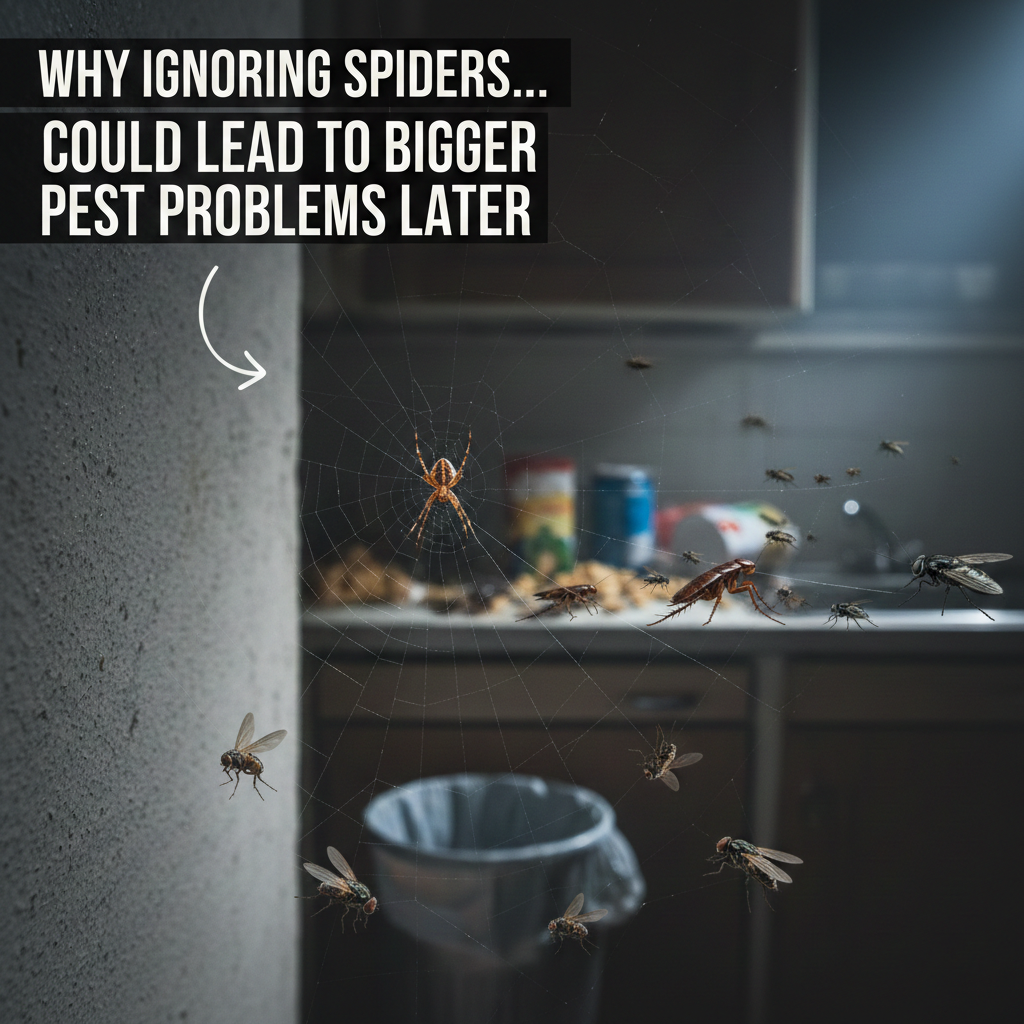
Why Ignoring Spiders Could Lead to Bigger Pest Problems Later
You see one spider and think, “Eh, harmless.” You swipe away the web, maybe mutter something about nature doing its thing, and move on. But that’s how it always starts, isn’t it? One becomes two. Then suddenly you’re spotting webs in corners you swear you just cleaned last week.
And here’s the kicker — it’s not just a spider problem anymore. It’s a sign of something else going on behind the walls, under the furniture, in the dark corners. That’s when spider pest control stops being an afterthought and becomes a real conversation.
But we’ll get there. Let’s start with why those quiet, eight-legged freeloaders shouldn’t be underestimated.
The Myth of the “Harmless Spider”
People love to say, “spiders eat other pests, so they’re good to have around.” And sure, that’s true — to a point. But when spiders start multiplying, that “natural pest control” theory starts to backfire.
Why? Because a spider invasion usually means something else has already invaded. Their food chain starts with insects — ants, flies, moths, silverfish. If you’ve got a growing spider population, you’ve got a full-on bug buffet somewhere nearby.
So, by ignoring spiders, you’re not really saving nature. You’re feeding it.
This is where spider pest control actually becomes about balance. It’s not about wiping out every spider on Earth (we need them, sure), but about keeping the population where it belongs — outside.
The Web Is Just the Tip of It
Every web you see? That’s a signal. It’s like a little flag that says, “Good hunting spot here.” And when you start seeing multiple webs in the same areas — corners, vents, near lights — that’s a pattern.
Spiders don’t stay where there’s no food. So, multiple webs = ongoing food source. And that means other pests are thriving quietly in the background.
When professional spider pest control specialists walk into a property, the first thing they look at isn’t the spider itself. It’s where the webs are. Web placement tells a story — where the insects come in, where moisture sits, where light attracts bugs at night.
That web in the ceiling corner? That’s more than decoration. It’s data.
The Hidden Domino Effect
Ignoring spiders doesn’t just let them stay. It enables them to spread.
And not just them — the things that attract them too. Webs trap insects, dead insects attract other scavengers, and the cycle keeps building. You end up with a food web literally in your home.
Redbacks on the porch. White-tails near the skirting boards. Huntsmans in the car (because of course). It starts to feel like the house belongs more to them than you.
A proper spider pest control treatment breaks that cycle early. It doesn’t just remove the visible webs; it handles the deeper structure of the problem — where the food comes from, how they’re getting in, what’s keeping them comfortable enough to stay.
Because here’s the truth: spiders are survivors. But they’re not unstoppable.
What Happens When You Wait Too Long
Let’s be honest — most people don’t call spider pest control at the first sign. It usually takes a scare. A bite. Or that one night when you wake up and spot a Huntsman doing laps above the bed.
By then, the population’s already established. Egg sacs tucked under eaves, behind furniture, in sheds. Each one can hold hundreds of spiderlings. So even after a spray, you might still see movement for a while.
That’s the frustrating part — and also why timing matters. Waiting too long doesn’t just mean more spiders. It means more breeding. More webs. More cleanup.
And honestly? More stress.
How Spiders Signal Other Pests
You’d be surprised how often spider pest control leads to discovering other infestations. Cockroaches behind dishwashers. Silverfish in linen closets. Ants crawling through air vents.
Spiders are like little living pest alarms. They show up where conditions are right for everyone else, too — warmth, moisture, food. So if you’ve been ignoring them, chances are something else is thriving under the radar.
That’s why most pest control technicians don’t treat spiders in isolation. They combine spider treatments with broader insect management. Take away their food, and the spiders naturally follow.
A Word on DIY
Ah, yes, the home remedies. The essential oils. The vinegar sprays.
Look, peppermint oil smells nice. And yes, maybe it’ll keep one or two spiders from building webs on your mirror. But it’s not a long-term plan.
DIY tricks can help a little — cleaning webs, sealing cracks, turning off outdoor lights that draw bugs — but when spiders keep returning, it’s time for proper spider pest control. Professionals use residual treatments, dusts, and barriers that last months, not hours.
And the best part? They know exactly where to look — the spots most of us never think to check.
Prevention Isn’t Pretty, But It Works
You know what spiders hate? Disruption.
Clean corners. No clutter. No dark, quiet places to hide. Regular vacuuming, sealing window gaps, storing firewood away from the house — it’s not glamorous, but it works.
Professional spider pest control usually comes with these tips, too, because the best results happen when the environment stops inviting them in.
If they can’t build comfortably, they move on.
When the Quiet Corners Go Quiet Again
The best moment after a treatment? That first week when you realise there are no new webs. No tiny strands of silk catching in the light. No slight movement on the wall as you reach for the light switch.
It’s a subtle piece. But it’s peace nonetheless.
That’s what spider pest control from OzPest Solutions gives you, really. Not just a service, but a reset. A return to that quiet, easy feeling where your home feels like yours again.
And maybe next time you spot that lone spider in the corner, you’ll take it as a gentle warning. Not panic. Just a sign to act early.
Because ignoring spiders might seem harmless now… until it isn’t.
About the Author